
Genome Med. 2022;14(1):111.
Transcriptional signatures of the BCL2 family for individualized acute myeloid leukaemia treatment.
제1저자 이찬섭, 이선영 · 교신저자 윤성수, 윤홍석, 고영일
소속 (13)
- Cancer Research Institute, Seoul National University College of Medicine, Seoul, Republic of Korea.
- Center for Medical Innovation, Seoul National University Hospital, Seoul, Republic of Korea.
- Department of Genomic Medicine, Seoul National University Hospital, Seoul, Republic of Korea.
- Center for Precision Medicine, Seoul National University Hospital, Seoul, Republic of Korea.
- Division of Hematology and Medical Oncology, Department of Internal Medicine, Seoul National University Hospital, Seoul, Republic of Korea.
- Department of Genomic Medicine, Seoul National University Hospital, Seoul, Republic of Korea. entropy.yun@gmail.com.
- Center for Precision Medicine, Seoul National University Hospital, Seoul, Republic of Korea. entropy.yun@gmail.com.
- Cancer Research Institute, Seoul National University College of Medicine, Seoul, Republic of Korea. snuhgo01@gmail.com.
- Center for Medical Innovation, Seoul National University Hospital, Seoul, Republic of Korea. snuhgo01@gmail.com.
- Division of Hematology and Medical Oncology, Department of Internal Medicine, Seoul National University Hospital, Seoul, Republic of Korea. snuhgo01@gmail.com.
- Cancer Research Institute, Seoul National University College of Medicine, Seoul, Republic of Korea. ssysmc@snu.ac.kr.
- Center for Medical Innovation, Seoul National University Hospital, Seoul, Republic of Korea. ssysmc@snu.ac.kr.
- Division of Hematology and Medical Oncology, Department of Internal Medicine, Seoul National University Hospital, Seoul, Republic of Korea. ssysmc@snu.ac.kr.
Abstract
BACKGROUND Although anti-apoptotic proteins of the B-cell lymphoma-2 (BCL2) family have been utilized as therapeutic targets in acute myeloid leukaemia (AML), their complicated regulatory networks make individualized therapy difficult. This study aimed to discover the transcriptional signatures of BCL2 family genes that reflect regulatory dynamics, which can guide individualized therapeutic strategies.
METHODS From three AML RNA-seq cohorts (BeatAML, LeuceGene, and TCGA; n = 451, 437, and 179, respectively), we constructed the BCL2 family signatures (BFSigs) by applying an innovative gene-set selection method reflecting biological knowledge followed by non-negative matrix factorization (NMF). To demonstrate the significance of the BFSigs, we conducted modelling to predict response to BCL2 family inhibitors, clustering, and functional enrichment analysis. Cross-platform validity of BFSigs was also confirmed using NanoString technology in a separate cohort of 47 patients.
RESULTS We established BFSigs labeled as the BCL2, MCL1/BCL2, and BFL1/MCL1 signatures that identify key anti-apoptotic proteins. Unsupervised clustering based on BFSig information consistently classified AML patients into three robust subtypes across different AML cohorts, implying the existence of biological entities revealed by the BFSig approach. Interestingly, each subtype has distinct enrichment patterns of major cancer pathways, including MAPK and mTORC1, which propose subtype-specific combination treatment with apoptosis modulating drugs. The BFSig-based classifier also predicted response to venetoclax with remarkable performance (area under the ROC curve, AUROC = 0.874), which was well-validated in an independent cohort (AUROC = 0.950). Lastly, we successfully confirmed the validity of BFSigs using NanoString technology.
CONCLUSIONS This study proposes BFSigs as a biomarker for the effective selection of apoptosis targeting treatments and cancer pathways to co-target in AML.
© 2022. The Author(s).
Keywords
Acute myeloid leukaemiaB-cell lymphoma-2 familyTranscriptional signatures
Figures
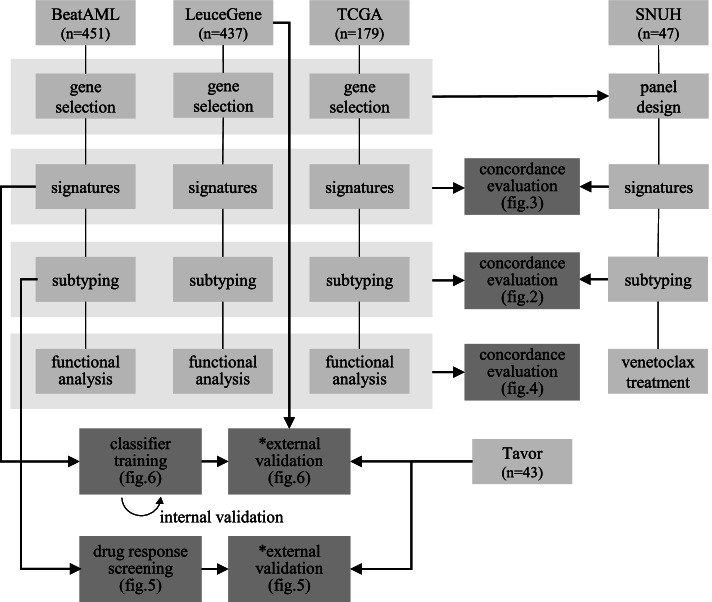
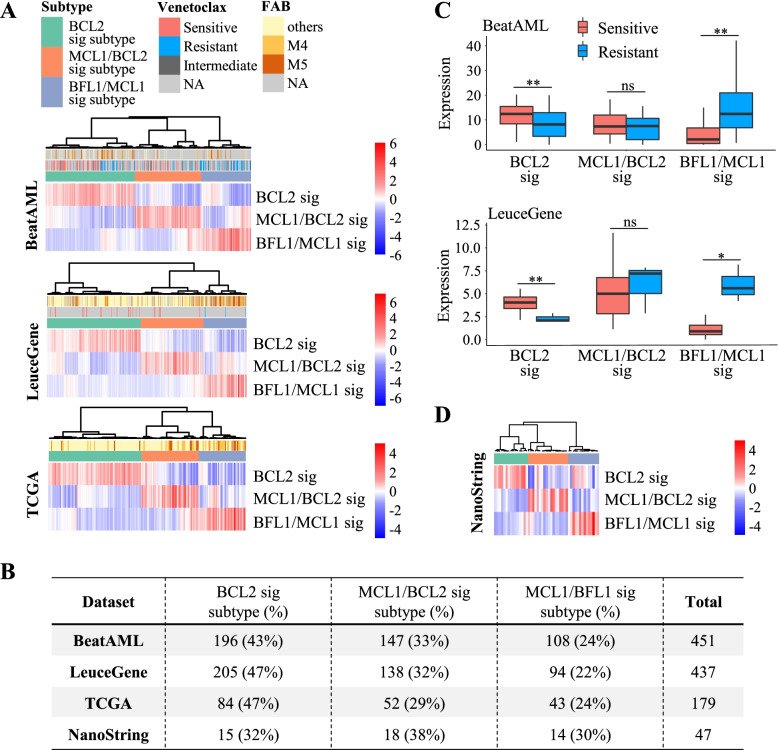
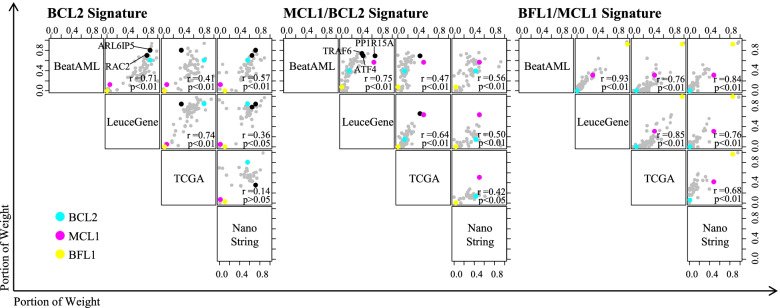
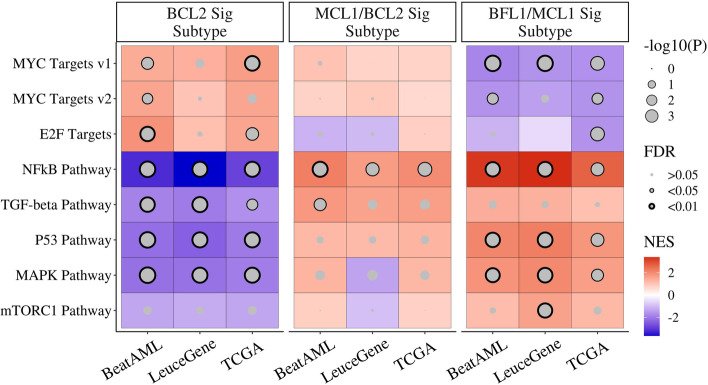
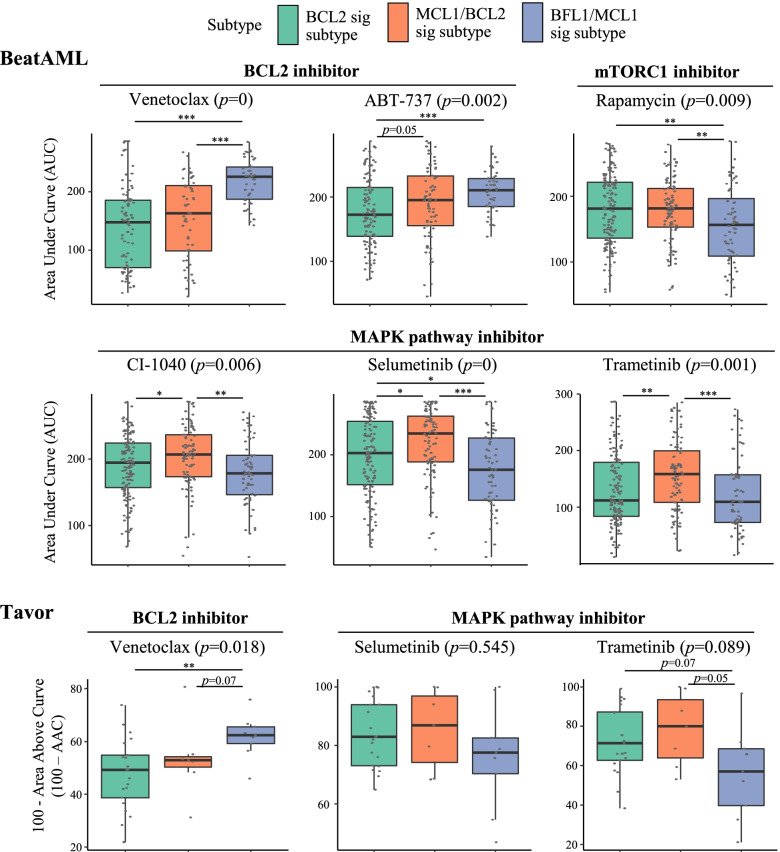
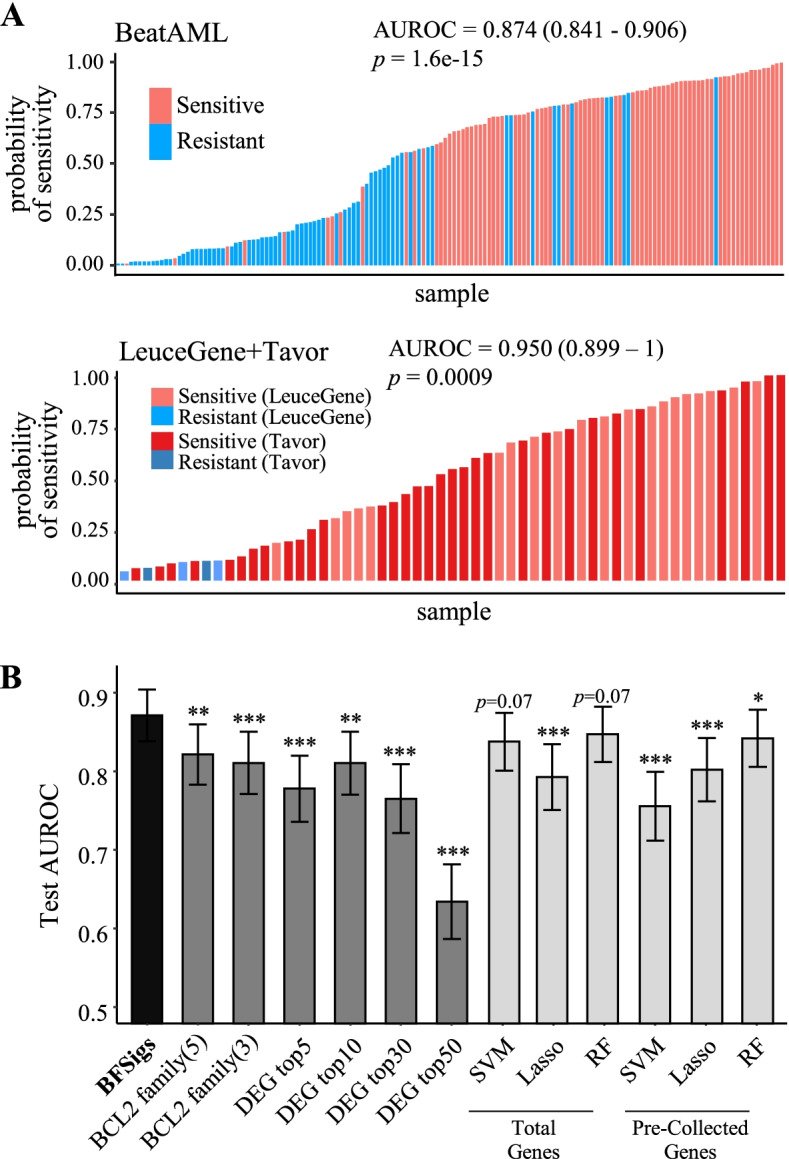
그림 출처: PubMed Central 공개 논문 (PMC9520894)
Conflict of interest statement
The authors declare that they have no competing interests.
그 밖의 정보
- 출판 형태
- Journal Article, Research Support, Non-U.S. Gov't
- 저널
- Genome medicine · eISSN 1756-994X
- 전자 출판
- 2022-09-28
- MeSH
- Antineoplastic Agents* / therapeutic use · Humans · Leukemia, Myeloid, Acute* / drug therapy / genetics / metabolism · Mechanistic Target of Rapamycin Complex 1 · Myeloid Cell Leukemia Sequence 1 Protein / metabolism / therapeutic use · Proto-Oncogene Proteins c-bcl-2 / genetics / metabolism / therapeutic use
- Substances
- Antineoplastic Agents · BCL2 protein, human · Myeloid Cell Leukemia Sequence 1 Protein · Proto-Oncogene Proteins c-bcl-2 · Mechanistic Target of Rapamycin Complex 1
- 참고문헌
- 82편