
Sci Rep. 2024;14(1):30308.
Toll-like receptor 3 signaling attenuated colitis-associated cancer development in mice.
제1저자 정기영, 김슬지 · 교신저자 고성준
소속 (10)
- Department of Internal Medicine and Liver Research Institute, Seoul National University College of Medicine, 101 Daehak-ro, Jongno-gu, Seoul, 03080, Korea.
- Laboratory of Intestinal Mucosa and Skin Immunology, Seoul National University College of Medicine, Seoul, Korea.
- Division of Gastroenterology, Department of Internal Medicine, Korea Cancer Center Hospital, Korea Institute of Radiological and Medical Sciences, Seoul, Korea.
- Department of Dermatology, SMG-SNU Boramae Medical Center, Seoul, Korea.
- Division of Gastroenterology, Department of Internal medicine, Seoul National University Hospital, Seoul, Korea.
- Division of Gastroenterology, Department of Internal medicine, SMG-SNU Boramae Medical Center, Seoul, Korea.
- Department of Internal Medicine and Healthcare Research Institute, Seoul National University Hospital Healthcare System Gangnam Center, Seoul, Korea.
- Department of Internal Medicine and Liver Research Institute, Seoul National University College of Medicine, 101 Daehak-ro, Jongno-gu, Seoul, 03080, Korea. jel1206@snu.ac.kr.
- Laboratory of Intestinal Mucosa and Skin Immunology, Seoul National University College of Medicine, Seoul, Korea. jel1206@snu.ac.kr.
- Division of Gastroenterology, Department of Internal medicine, Seoul National University Hospital, Seoul, Korea. jel1206@snu.ac.kr.
Abstract
Inflammatory bowel disease is associated with a high risk of colitis-associated cancer (CAC). We evaluated the role of TLR3 in CAC using a murine model. Wild-type (WT) and TLR3-knockout (TLR3-/-) mice received azoxymethane (AOM) 12.5 mg/kg intraperitoneally on day zero, followed by three cycles of 2% dextran sulfate sodium (DSS) for five days and free water for two weeks. We evaluated clinical indices, such as weight change, colon length, histological severity of colitis, and tumor number. We performed immunofluorescence assays for phospho-IκB kinase and β-catenin in colon tissues. To elucidate the antitumorigenic mechanism of TLR3 signaling, we injected poly(I: C) or phosphate-buffered saline intraperitoneally into an AOM/DSS-induced tumorigenesis model in WT mice. We also evaluate the direct antitumor effect of TLR signaling in AOM-treated WT and TLR3-/- mice without DSS. TLR3 deficiency increased tumor burden and colitis severity in the colon tissue than in the WT mice. β-catenin immunoreactivity was higher in TLR3-/- mice, while phospho-IκB kinase expression was similar. TLR3 activation by poly(I: C) did not reduce tumor burden in WT mice, but long-term AOM administration without DSS significantly increased tumor burden in TLR3-/- mice. TLR3 signaling attenuates CAC development, suggesting it may be a target for preventing CAC in inflammatory bowel disease.
© 2024. The Author(s).
Figures
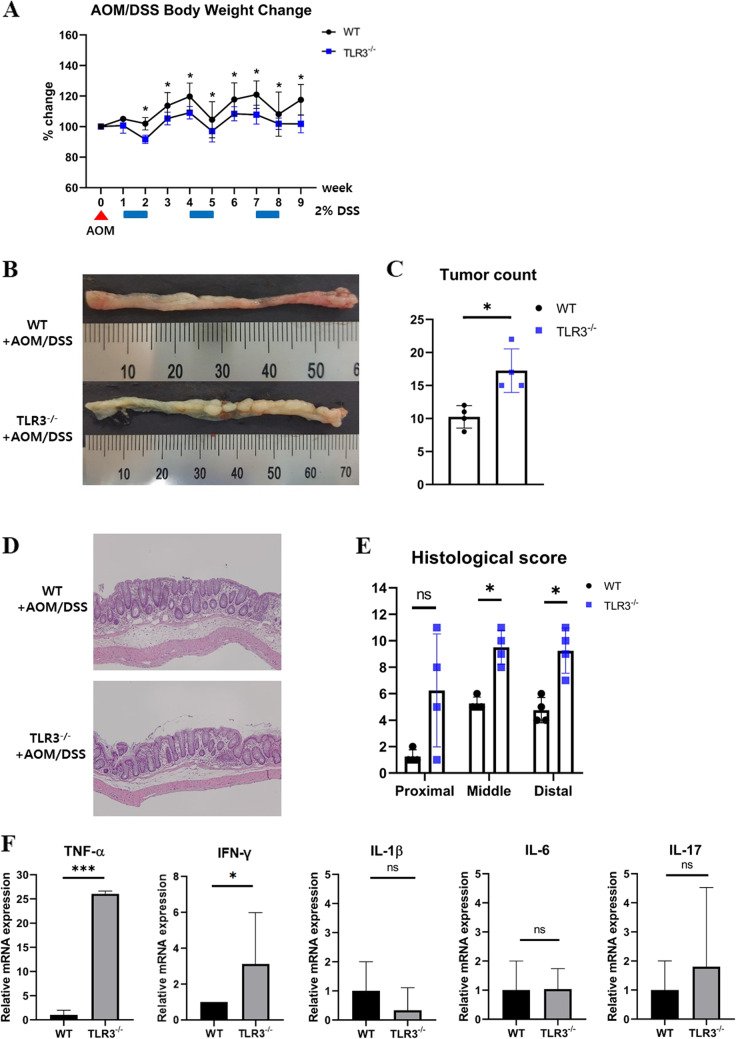
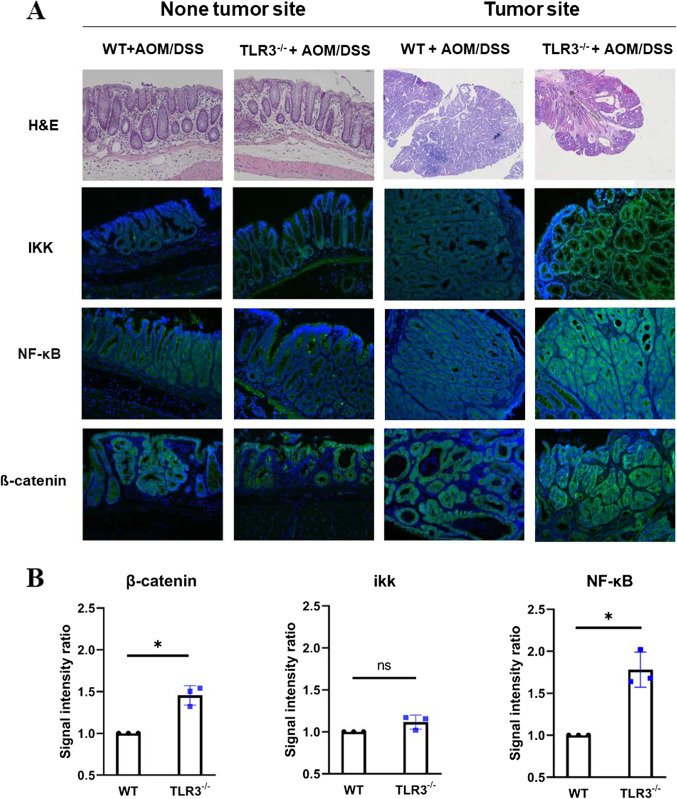
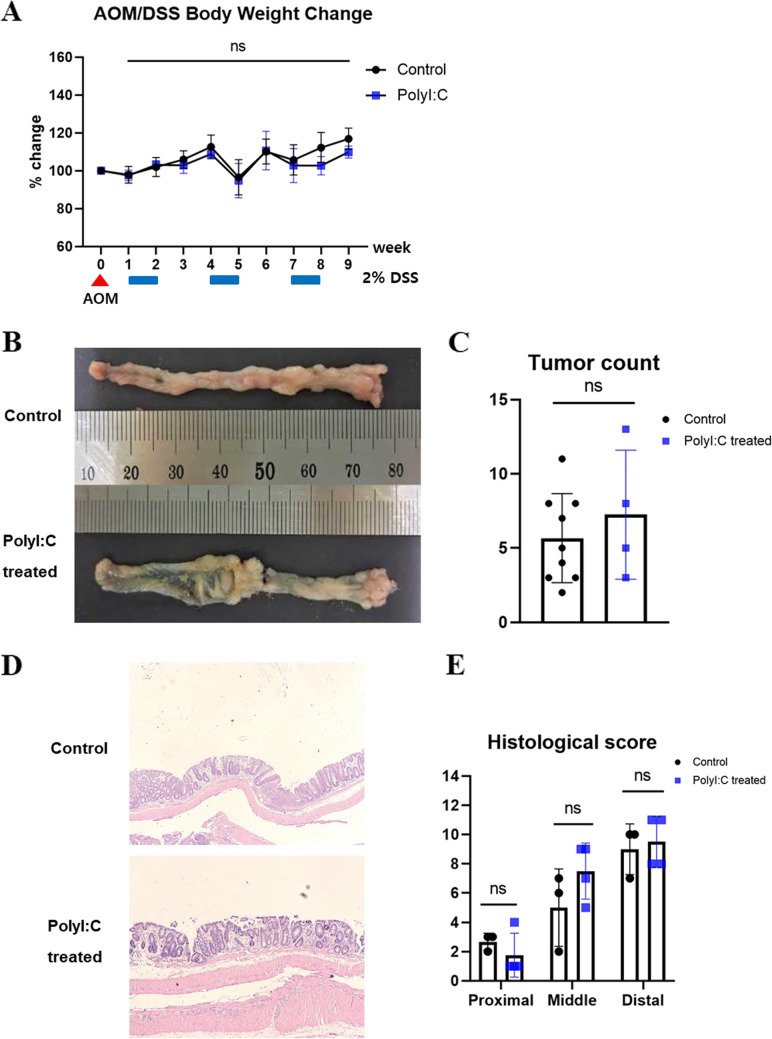
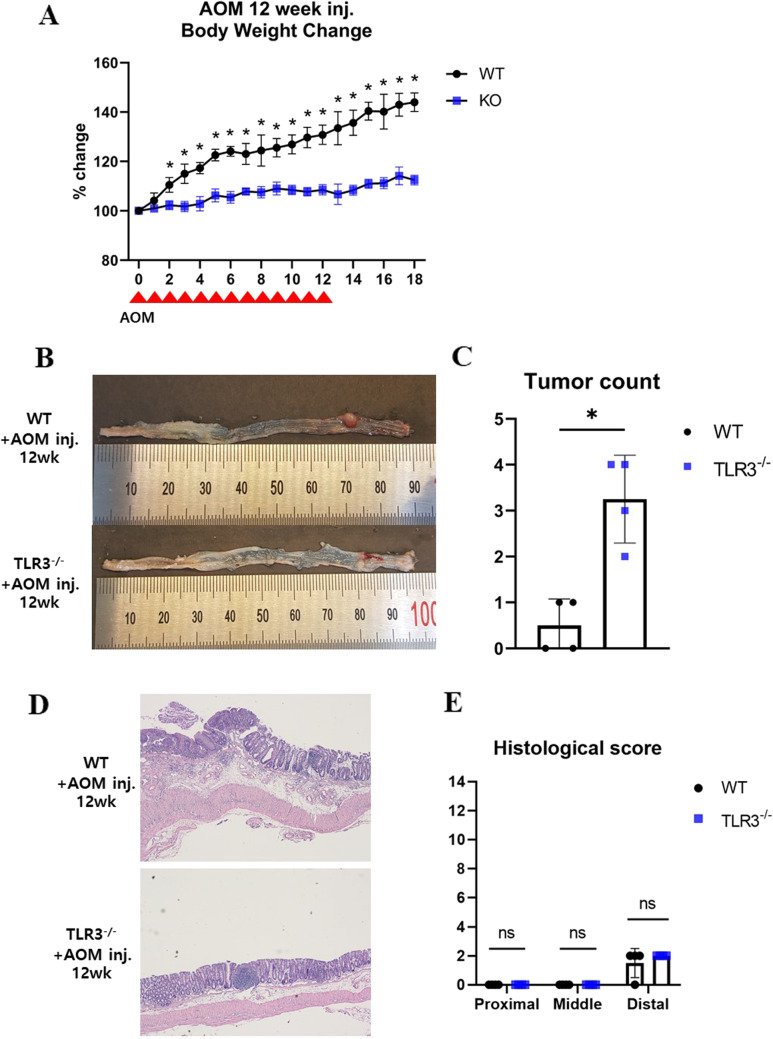
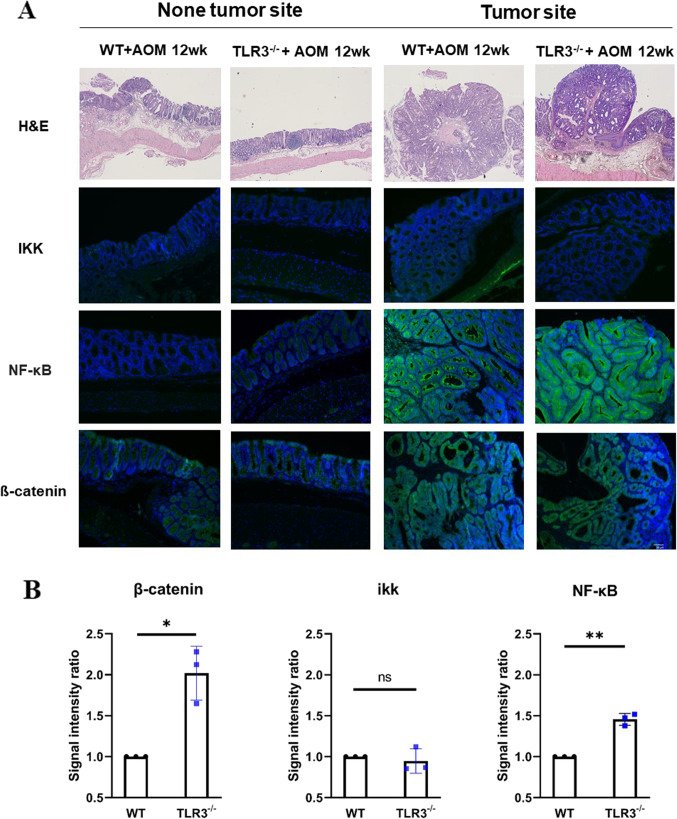
그림 출처: PubMed Central 공개 논문 (PMC11621332)
Conflict of interest statement
Declarations. Competing interests: The authors declare no competing interests.
그 밖의 정보
- 출판 형태
- Journal Article
- 저널
- Scientific reports · eISSN 2045-2322
- 전자 출판
- 2024-12-05
- MeSH
- Animals · Toll-Like Receptor 3* / metabolism / genetics · Colitis-Associated Neoplasms* / pathology / metabolism · Mice · Signal Transduction* · Mice, Knockout* · Colitis* / complications / chemically induced / metabolism / pathology · Azoxymethane* / toxicity · Disease Models, Animal · beta Catenin / metabolism · Dextran Sulfate / toxicity · Mice, Inbred C57BL · Colon / pathology / metabolism · Male · Poly I-C / pharmacology
- Substances
- Toll-Like Receptor 3 · TLR3 protein, mouse · Azoxymethane · beta Catenin · Dextran Sulfate · Poly I-C
- 참고문헌
- 37편