
PLoS One. 2019;14(1):e0210703.
Trends in emergency department visits and hospitalization rates for inflammatory bowel disease in the era of biologics.
제1저자 허건 · 교신저자 윤혁
소속 (2)
- Department of Internal Medicine, Seoul National University College of Medicine, Seoul, Korea.
- Department of Internal Medicine, Seoul National University Bundang Hospital, Seongnam, Korea.
Abstract
BACKGROUND The use of biologics in inflammatory bowel disease (IBD) has increased recently. However, studies on whether the proportion of IBD patient visits to the emergency department (ED) has decreased are scarce. We investigated the trends in IBD-related ED visits and hospitalization rates.
METHODS Medical records of IBD-related visits to the ambulatory department (AD) and the ED of the Seoul National University Bundang Hospital in 2007, 2009, 2012, and 2014 were reviewed. Multiple-variable logistic regression analysis was used to identify significant risk factors for hospitalization.
RESULTS The proportion of IBD patients who visited ED was 12.3% in 2007, 9.7% in 2009, 8.3% in 2012, and 6.4% in 2014 (P = 0.002). The most common chief complaints were abdominal pain (66.9%) in Crohn's disease (CD) patients and hematochezia (36.5%) in ulcerative colitis (UC) patients. The hospitalization rate following ED visits was 47.2% in CD patients and 55.6% in UC patients (P = 0.100). Multiple-variable analysis showed that significant risk factors associated with hospitalization in CD were aggressive disease behavior (odds ratio[OR] 3.54, P = 0.017) and presence of steroid exposure (OR 2.35, P = 0.047). Elevated C-reactive protein (CRP) (>0.5 mg/dL) (OR 5.40, P = 0.016) was the only risk factor associated with hospitalization in UC.
CONCLUSIONS The proportion of ED visits decreased from 2007 to 2014; there was no significant change in hospitalization rates. Disease behavior/presence of steroid exposure and elevated CRP were associated with hospitalization among CD and UC patients who visited the ED, respectively.
Figures
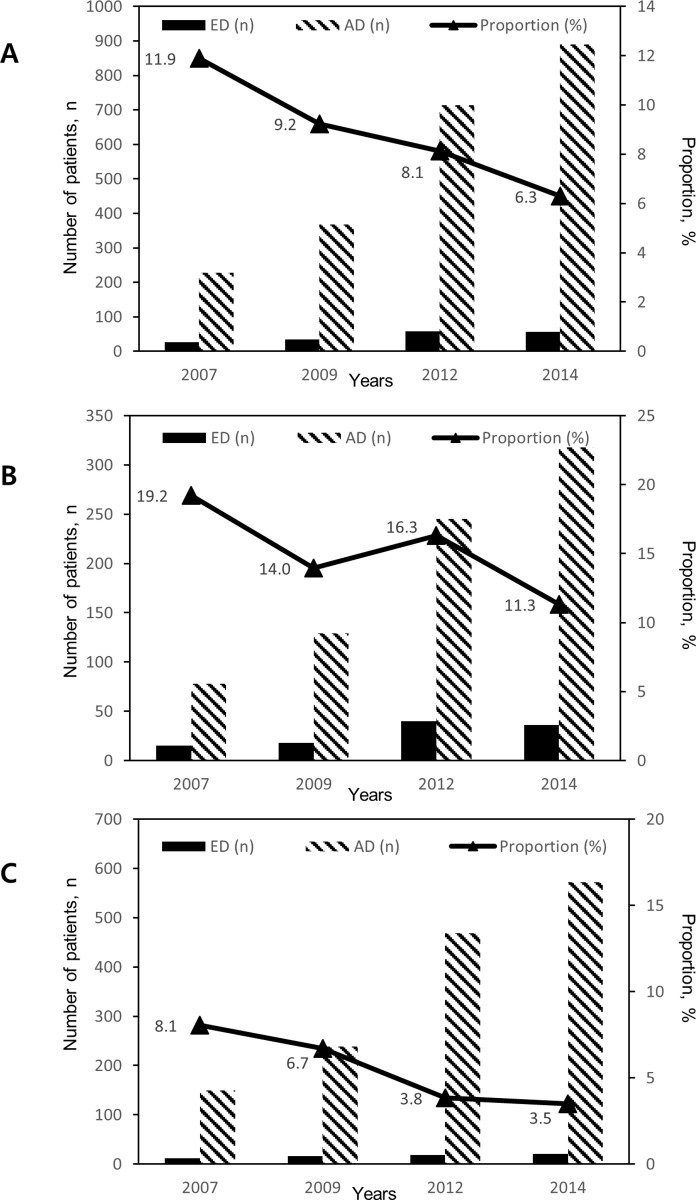
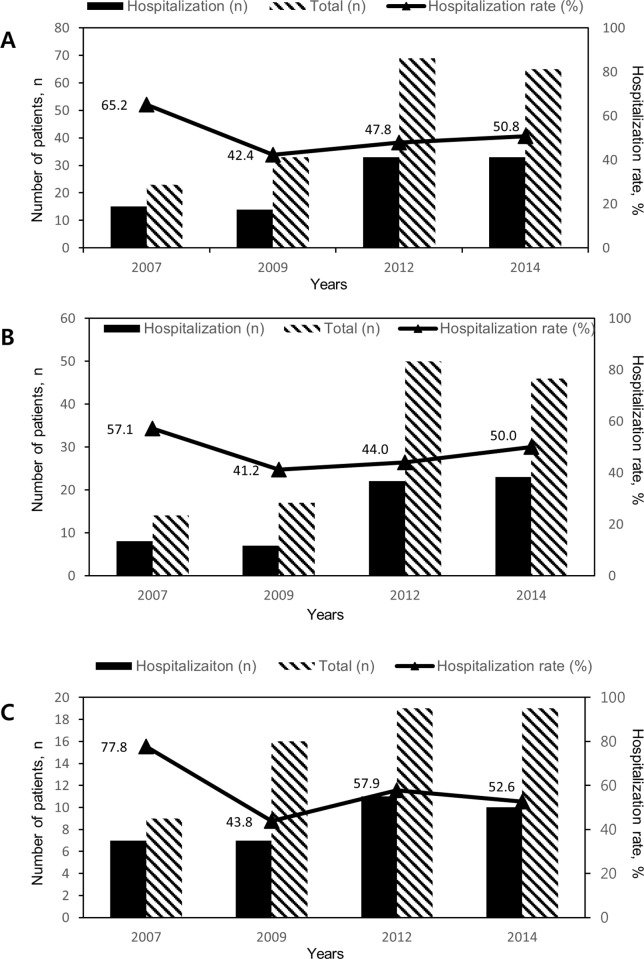
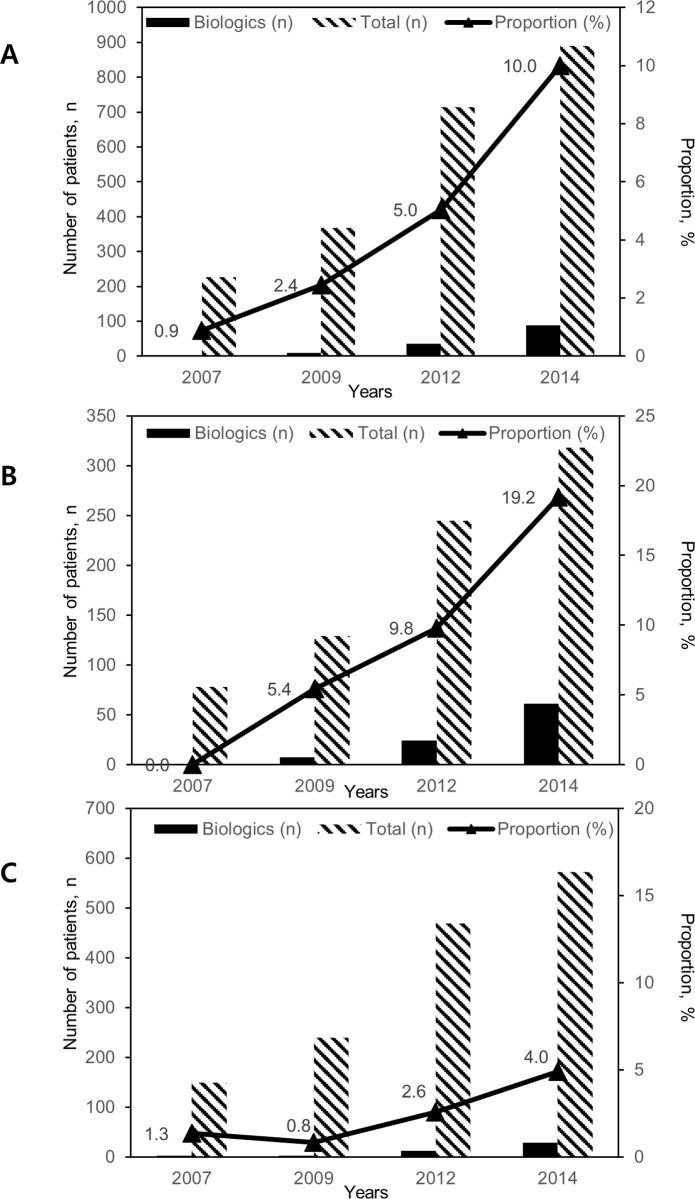
그림 출처: PubMed Central 공개 논문 (PMC6334964)
Comment · 정정
Conflict of interest statement
The authors have declared that no competing interests exist.
그 밖의 정보
- 출판 형태
- Journal Article
- 저널
- PloS one · eISSN 1932-6203
- 전자 출판
- 2019-01-16
- MeSH
- Adult · Colitis, Ulcerative / epidemiology · Crohn Disease / epidemiology · Emergency Service, Hospital / statistics & numerical data / trends · Female · Hospitalization / statistics & numerical data / trends · Humans · Inflammatory Bowel Diseases / epidemiology · Male · Middle Aged · Young Adult
- 참고문헌
- 21편