
Sci Rep. 2023;13(1):13632.
Prevalence, incidence, and outcomes of hepatitis E virus coinfection in patients with chronic hepatitis C.
제1저자 장은선, 최광현 · 교신저자 정숙향
소속 (7)
- Department of Internal Medicine, Seoul National University College of Medicine, Seoul National University Bundang Hospital, Seongnam, Gyeonggi, Republic of Korea.
- Department of Internal Medicine, Soonchunhyang University Bucheon Hospital, Soonchunhyang University College of Medicine, Bucheon, Gyeonggi, Republic of Korea.
- Department of Internal Medicine, Chonbuk National University Hospital, Chonbuk National University College of Medicine, Chonju, Republic of Korea.
- Department of Internal Medicine, Inje University Busan Paik Hospital, Inje University College of Medicine, Busan, Republic of Korea.
- Department of Internal Medicine, Chonnam National University Hwasun Hospital, Jeonnam, Republic of Korea.
- Center for Technology Innovation, Seoul Clinical Laboratories, Yongin, Gyeonggi, Republic of Korea.
- Department of Internal Medicine, Seoul National University College of Medicine, Seoul National University Bundang Hospital, Seongnam, Gyeonggi, Republic of Korea. jsh@snubh.org.
Abstract
This study aimed to elucidate the anti-hepatitis E virus (HEV) immunoglobulin G (IgG) prevalence and incidence of seroconversion and seroreversion as well as its risk factors and to analyze the clinical outcomes of HEV and hepatitis C virus (HCV) coinfected patients compared to those of HCV-monoinfected patients. We prospectively enrolled 502 viremic HCV patients with paired plasma samples (at intervals of ≥ 12 months) from 5 tertiary hospitals. Anti-HEV IgG positivity was tested using the Wantai ELISA kit in all paired samples. Mean age was 58.2 ± 11.5 years old, 48.2% were male, 29.9% of patients had liver cirrhosis, and 9.4% of patients were diagnosed with hepatocellular carcinoma (HCC). The overall prevalence of anti-HEV IgG positivity at enrollment was 33.3%, with a higher prevalence in males and increasing prevalence according to the subject's age. During the 916.4 person-year, the HEV incidence rate was 0.98/100 person-years (9/335, 2.7%). Hepatic decompensation or liver-related mortality was not observed. There were six seroreversion cases among 172 anti-HEV-positive patients (1.22/100 person-years). In conclusion, approximately one-third of the adult Korean chronic HCV patients were anti-HEV IgG positive. The HEV incidence rate was 1 in 100 persons per year, without adverse hepatic outcomes or mortality.
© 2023. Springer Nature Limited.
Figures
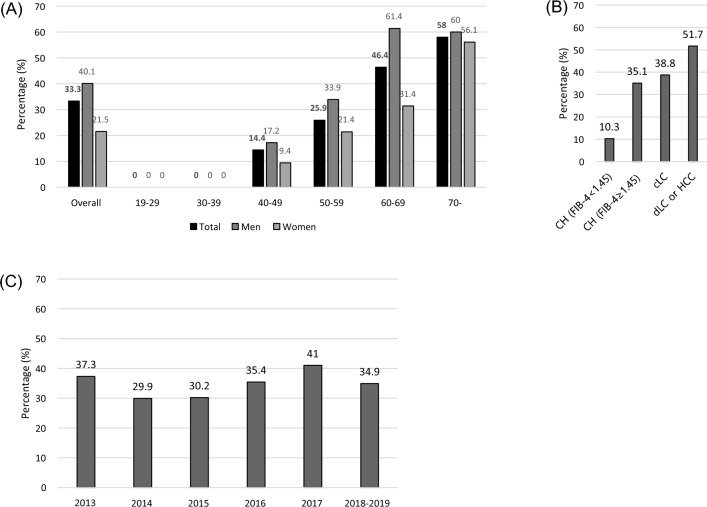
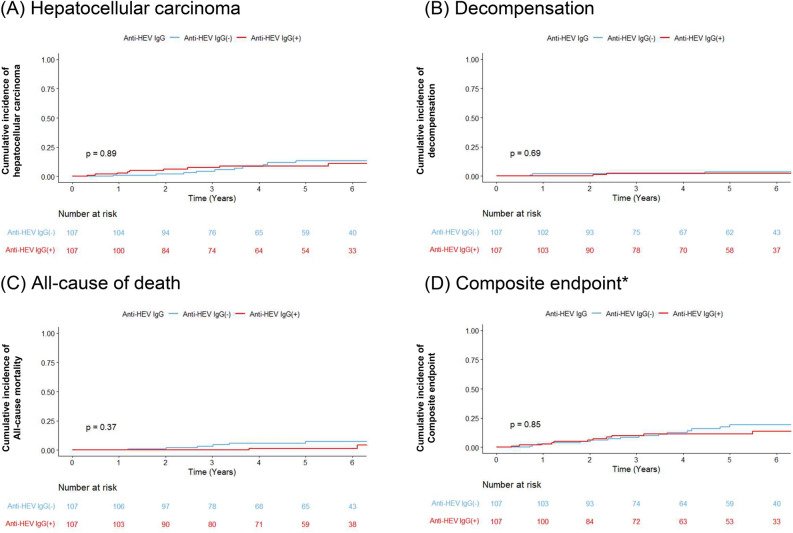
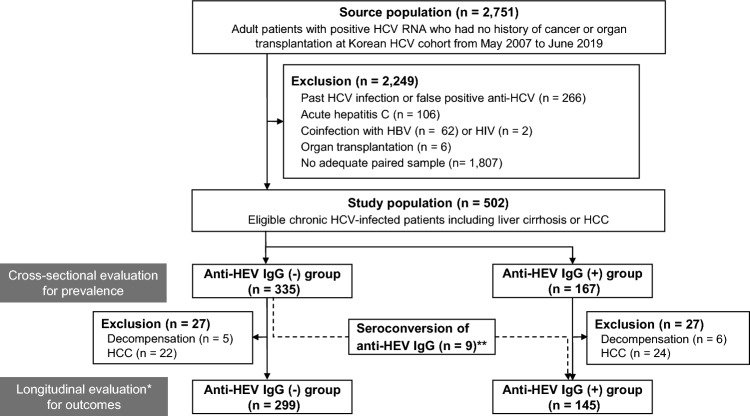
그림 출처: PubMed Central 공개 논문 (PMC10442446)
Conflict of interest statement
The authors declare no competing interests.
그 밖의 정보
- 출판 형태
- Journal Article, Research Support, Non-U.S. Gov't
- 저널
- Scientific reports · eISSN 2045-2322
- 전자 출판
- 2023-08-21
- MeSH
- Adult · Humans · Male · Middle Aged · Aged · Female · Hepatitis C, Chronic* / complications / epidemiology · Incidence · Carcinoma, Hepatocellular* · Coinfection* / epidemiology · Prevalence · Liver Neoplasms* / epidemiology · Hepatitis C* · Hepacivirus · Hepatitis E virus* · Immunoglobulin G
- Substances
- Immunoglobulin G
- 참고문헌
- 35편