
PLoS One. 2018;13(12):e0209104.
Human equilibrative nucleoside transporter 1 (hENT1) expression as a predictive biomarker for gemcitabine chemotherapy in biliary tract cancer.
제1저자 김재환 · 교신저자 김용태
소속 (3)
- Department of Internal Medicine, Seoul National University Bundang Hospital, Seoul National University College of Medicine, Seongnam, Korea.
- Department of Pathology, Seoul National University Hospital, Seoul National University College of Medicine, Seoul, Korea.
- Department of Internal Medicine and Liver Research Institute, Seoul National University Hospital, Seoul National University College of Medicine, Seoul, Korea.
Abstract
Gemcitabine is a principal chemotherapeutic agent for biliary tract cancer (BTC). Expression of human equilibrative nucleoside transporter 1 (hENT1) is regarded as a potential predictive biomarker for a gemcitabine response in some cancers. This study was conducted to investigate the association between hENT1 expression and the effects of gemcitabine on BTC cell lines and on patients with advanced BTC receiving gemcitabine-based chemotherapy. A total of four BTC cell lines, HuCCT1, SNU-478, SNU-1079, and SNU-1196, were tested. mRNA and protein expression levels of hENT1 were measured by quantitative reverse-transcription polymerase chain reaction and western blotting, respectively. Cell viability after gemcitabine treatment was measured in a chemosensitivity assay. For clinical assessment, 40 patients with unresectable or recurrent BTC who were treated with gemcitabine (1000 mg/m2) and cisplatin (25 mg/m2) between June 2012 and May 2014 were enrolled. Among the four cell lines, SNU1196 showed the highest mRNA and protein levels of hENT1. Expression of hENT1 showed a linear correlation with the log value of the half-maximal inhibitory concentration of gemcitabine. During incubation with gemcitabine, pretreatment with hENT1-specific small interfering RNA (siRNA) resulted in higher cell viability than that in samples pretreated with control siRNA. In a clinical evaluation, the median progression-free survival was 24 and 11 weeks among patients with strong and weak intratumoral hENT1 immunohistochemical staining (P = 0.05), and the median overall survival was 52 and 26 weeks (P = 0.15), respectively. In conclusion, this study showed that increased hENT1 expression is associated with a stronger toxic effect of gemcitabine on BTC cell lines. The clinical outcomes in this study suggest that increased intratumoral hENT1 immunohistochemical staining is a possible biomarker predicting better therapeutic effects of gemcitabine on patients with advanced BTC. Further studies are needed to determine the precise role of hENT1 in BTC.
Figures

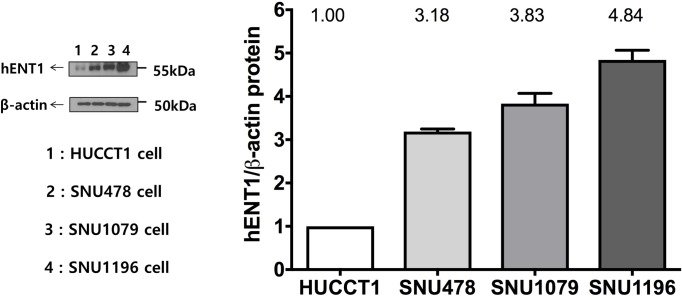
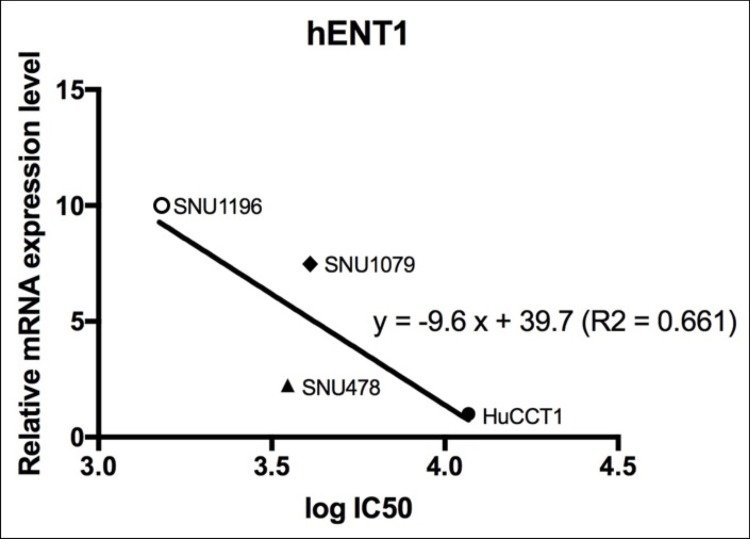
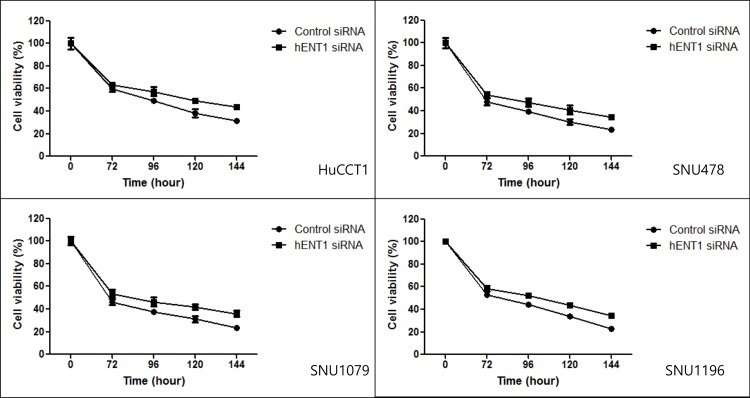
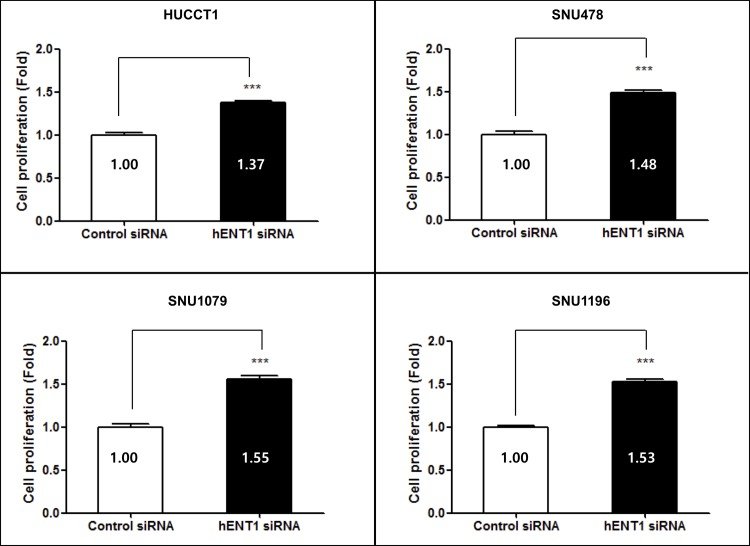
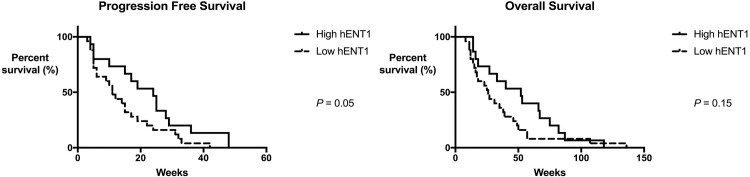
그림 출처: PubMed Central 공개 논문 (PMC6296552)
Conflict of interest statement
The authors have declared that no competing interests exist.
그 밖의 정보
- 출판 형태
- Journal Article, Research Support, Non-U.S. Gov't
- 저널
- PloS one · eISSN 1932-6203
- 전자 출판
- 2018-12-17
- MeSH
- Adult · Aged · Aged, 80 and over · Biliary Tract Neoplasms / diagnosis / drug therapy / genetics / pathology · Biomarkers / metabolism · Cell Line, Tumor · Cell Survival / drug effects · Deoxycytidine / analogs & derivatives / pharmacology / therapeutic use · Equilibrative Nucleoside Transporter 1 / genetics · Female · Gene Expression Regulation, Neoplastic / drug effects · Gene Silencing · Humans · Male · Middle Aged · Prognosis · RNA, Small Interfering / genetics · Gemcitabine
- Substances
- Biomarkers · Equilibrative Nucleoside Transporter 1 · RNA, Small Interfering · Deoxycytidine · Gemcitabine
- 참고문헌
- 22편