
PLoS One. 2017;12(6):e0179094.
Immunological dynamics associated with rapid virological response during the early phase of type I interferon therapy in patients with chronic hepatitis C.
제1저자 이재원 · 교신저자 김원, 조남혁
소속 (5)
- Department of Microbiology and Immunology, Seoul National University College of Medicine, Seoul, Republic of Korea.
- Department of Biomedical Science, Seoul National University College of Medicine, Seoul, Republic of Korea.
- Department of Internal Medicine, Seoul National University College of Medicine, Seoul Metropolitan Government Boramae Medical Center, Seoul, Republic of Korea.
- Cancer Research Institute, Seoul National University College of Medicine, Seoul, Republic of Korea.
- Institute of Endemic Disease, Seoul National University Medical Research Center and Bundang Hospital, Seoul, Republic of Korea.
Abstract
Type I interferons (IFNs) play an important role in antiviral immunity as well as immunopathogenesis of diverse chronic viral infections. However, the precise mechanisms regulating the multifaceted effects of type I IFNs on the immune system and pathological inflammation still remain unclear. In order to assess the immunological dynamics associated with rapid viral clearance in chronic hepatitis C patients during the acute phase of type I IFN therapy, we analyzed multiple parameters of virological and immunological responses in a cohort of 59 Korean hepatitis C patients who received pegylated IFN-α and ribavirin (IFN/RBV). Most of the Korean patients had favorable alleles in the IFN-λ loci for responsiveness to IFN/RBV (i.e., C/C in rs12979860, T/T in rs8099917, and TT/TT in rs368234815). Rapid virological response (RVR) was determined mainly by the hepatitis C virus genotype. Among the cytokines analyzed, higher plasma levels of IL-17A and FGF were observed in non-RVR patients infected with viral genotype 1 and IP-10 was consistently elevated in RVR group infected with genotype 2 during the early phase of antiviral therapy. In addition, these three cytokines were correlated each other, suggesting a functional linkage of the cytokines in antiviral responses during IFN/RBV therapy. A low baseline frequencies of regulatory T cells and γδ T cells, but high level of group 2 innate lymphoid cells, in peripheral bloods were also significantly associated with the RVR group, implicating a potential role of the cellular immunity during the early phase of IFN/RBV therapy. Therefore, the immunological programs established by chronic hepatitis C and rapid disruption of the delicate balance by exogenous type I IFN might be associated with the subsequent virological outcomes in chronic hepatitis C patients.
Figures

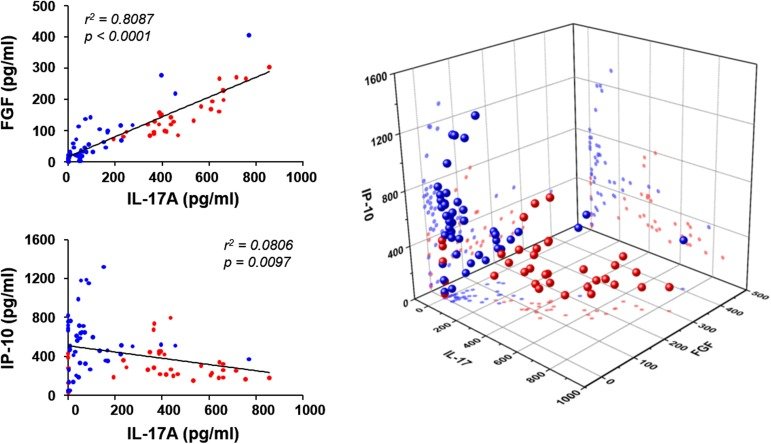
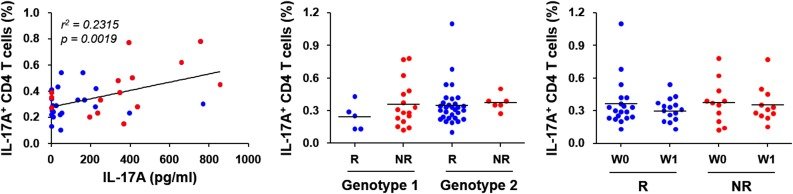
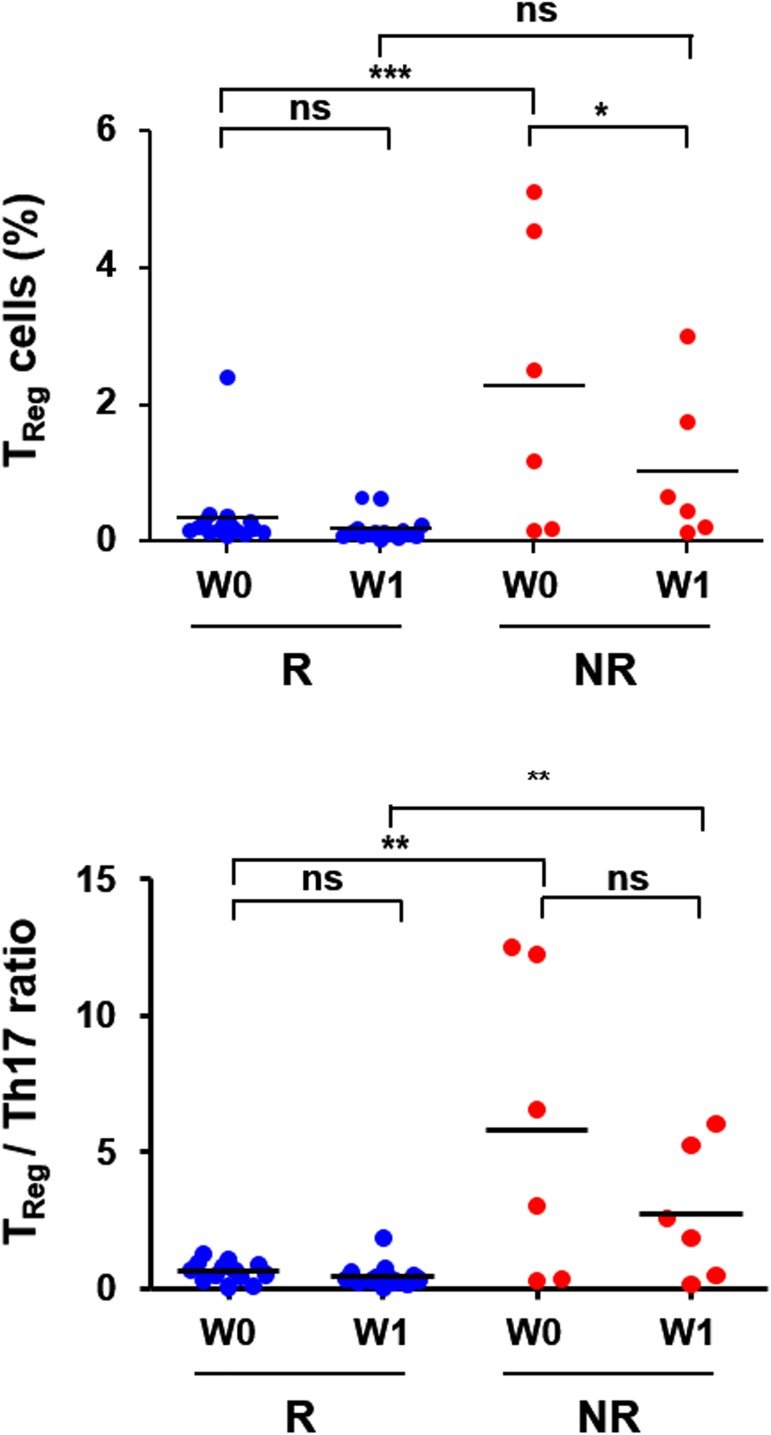
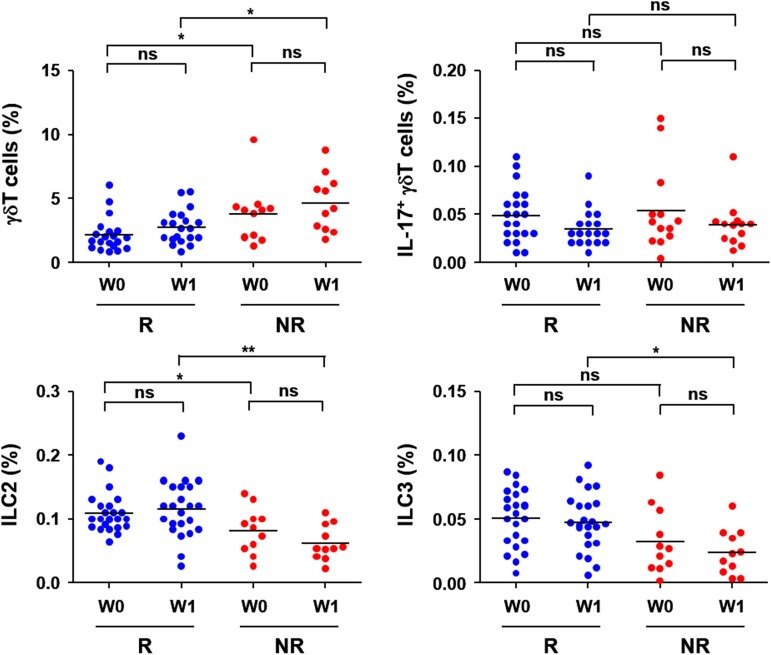
그림 출처: PubMed Central 공개 논문 (PMC5470700)
Conflict of interest statement
Competing Interests:The authors have declared that no competing interests exist.
그 밖의 정보
- 출판 형태
- Journal Article
- 저널
- PloS one · eISSN 1932-6203
- 전자 출판
- 2017-06-14
- MeSH
- Aged · Antiviral Agents / administration & dosage / pharmacology · Drug Therapy, Combination · Female · Gene Expression Regulation / drug effects · Genotype · Hepacivirus / genetics / physiology · Hepatitis C, Chronic / drug therapy / immunology / virology · Humans · Interferon Type I / administration & dosage / pharmacology · Interleukins / genetics · Male · Middle Aged · Prospective Studies · Republic of Korea · Ribavirin / administration & dosage / pharmacology · Treatment Outcome · Viral Load
- Substances
- Antiviral Agents · Interferon Type I · Interleukins · Ribavirin
- 참고문헌
- 50편