Department of Internal Medicine and Liver Research Institute, Seoul National University College of Medicine, Seoul, Korea.
Department of Internal Medicine, Kangwon National University Hospital, Chun-cheon, Korea.
University of Minnesota Hormel Institute, 801 16th Ave NE, Austin, MN, United States of America.
Abstract
BACKGROUND & AIMS Acquisition of anoikis resistance is a prerequisite for metastasis in hepatocellular carcinoma (HCC). However, little is known about how energy metabolism and antioxidant systems are altered in anoikis-resistant (AR) HCC cells. We evaluated anti-tumor effects of a combination treatment of 3-bromopyruvate (3-BP) and buthionine sulfoximine (BSO) in AR HCC cells.
METHODS We compared glycolysis, reactive oxygen species (ROS) production, and chemoresistance among Huh-BAT, HepG2 HCC cells, and the corresponding AR cells. Expression of hexokinase II, gamma-glutamylcysteine synthetase (rGCS), and epithelial-mesenchymal transition (EMT) markers in AR cells was assessed. Anti-tumor effects of a combination treatment of 3-BP and BSO were evaluated in AR cells and an HCC xenograft mouse model.
RESULTS AR HCC cells showed significantly higher chemoresistance, glycolysis and lower ROS production than attached cells. Expression of hexokinase II, rGCS, and EMT markers was higher in AR HCC cells than attached cells. A combination treatment of 3-BP/BSO effectively suppressed proliferation of AR HCC cells through apoptosis by blocking glycolysis and enhancing ROS levels. In xenograft mouse models, tumor growth derived from AR HCC cells was significantly suppressed in the group treated with 3-BP/BSO compared to the group treated with 3-BP or sorafenib.
CONCLUSIONS These results demonstrated that a combination treatment of 3-BP/BSO had a synergistic anti-tumor effect in an AR HCC model. This strategy may be an effective adjuvant therapy for patients with sorafenib-resistant HCC.
Figures
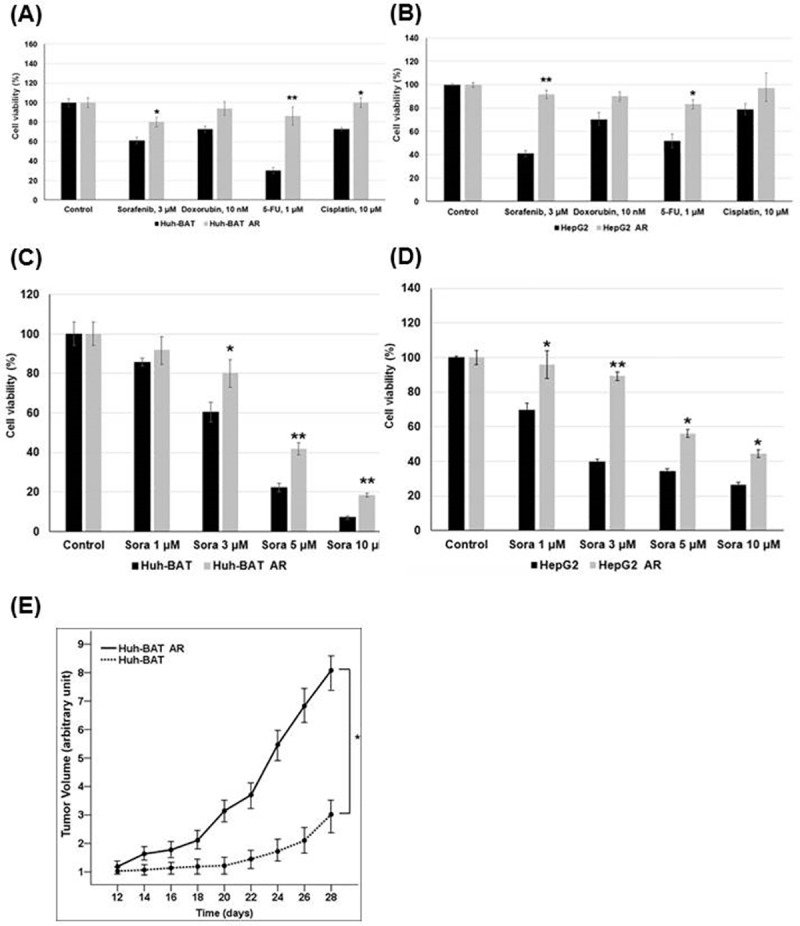
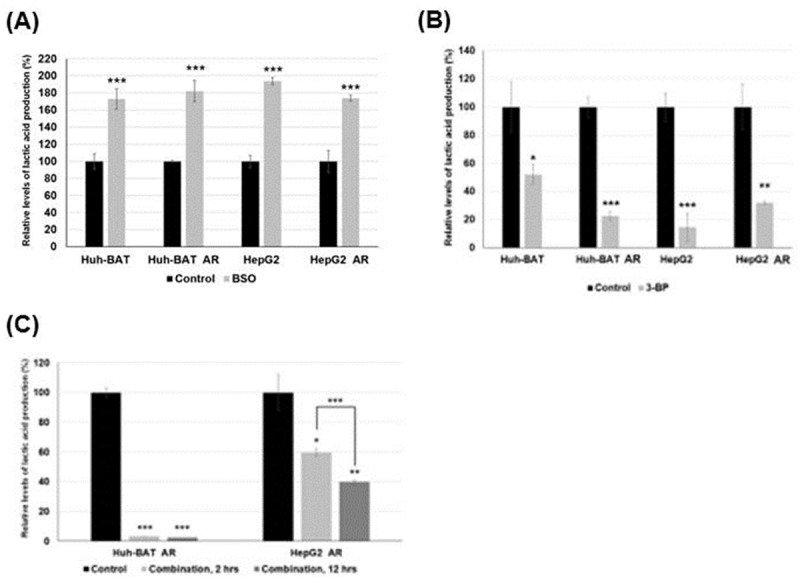
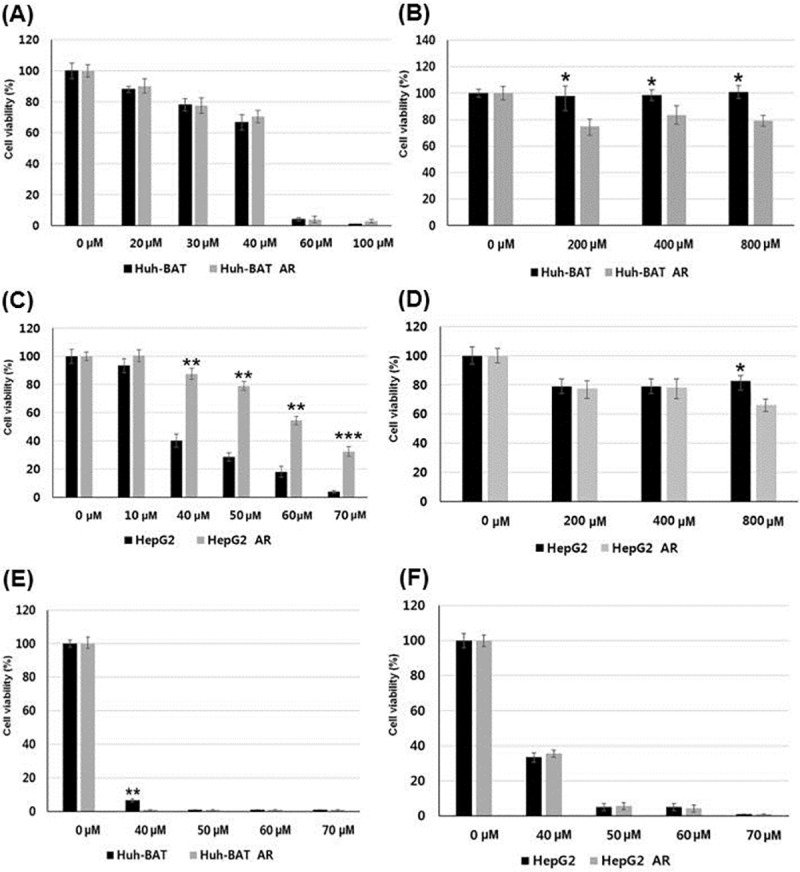
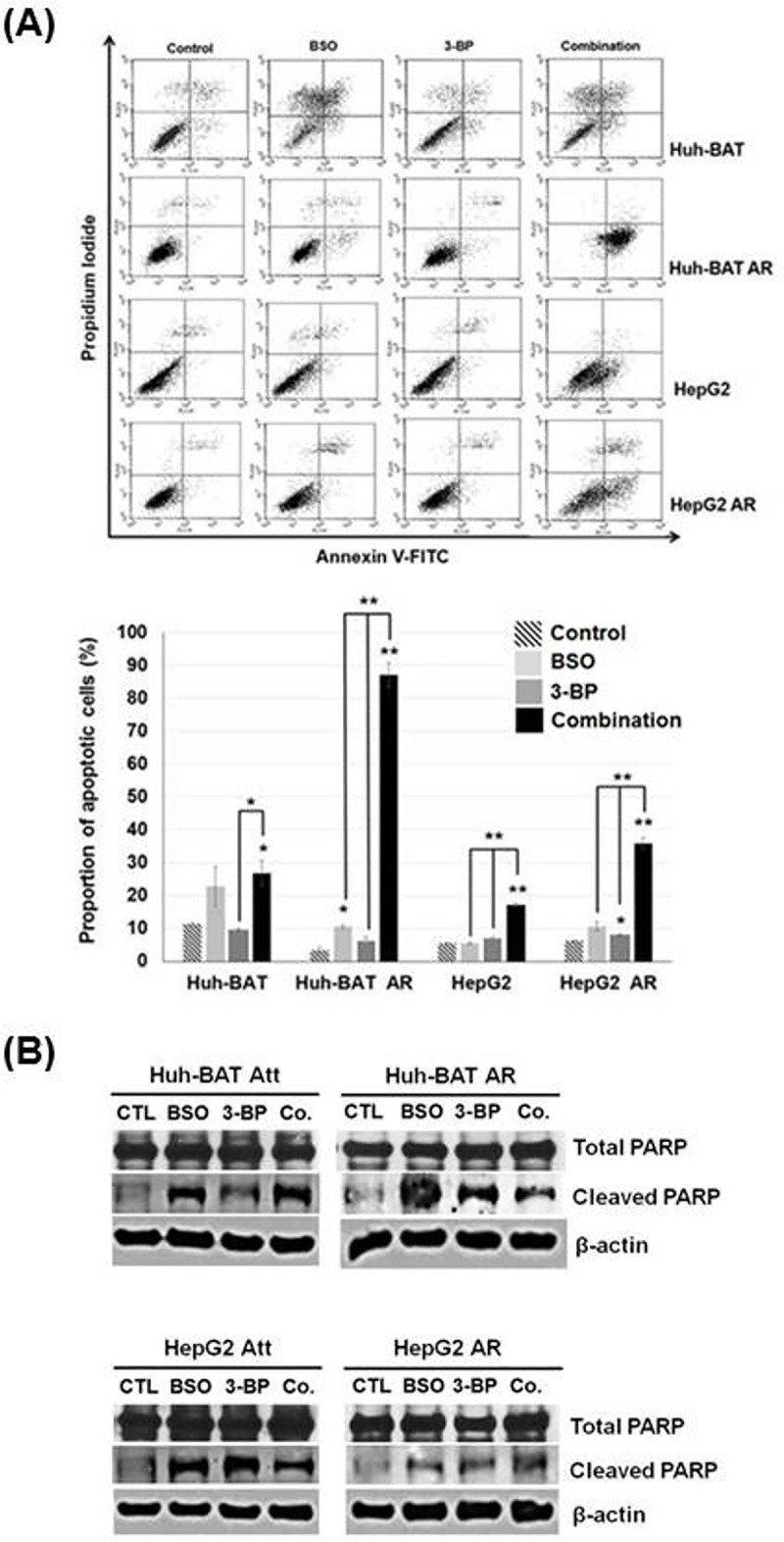
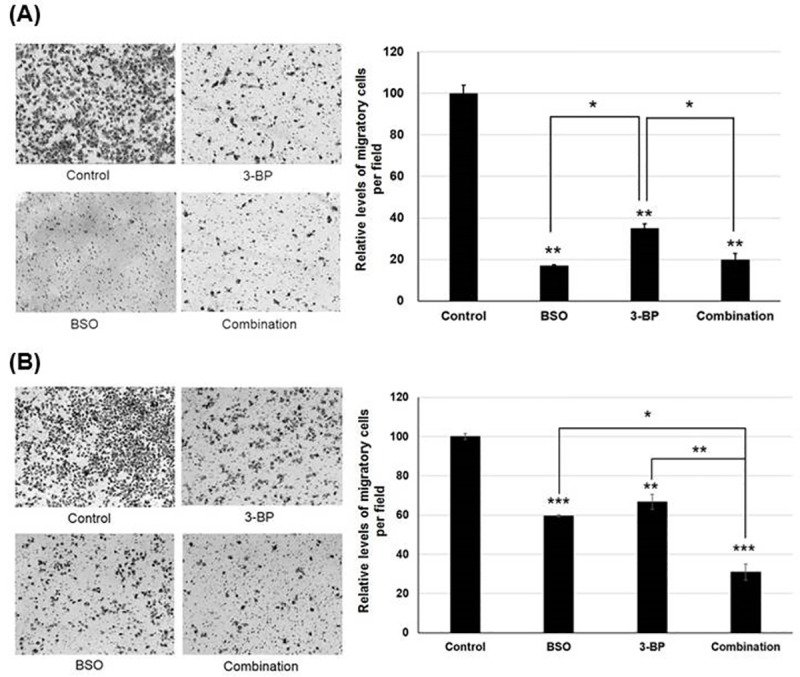
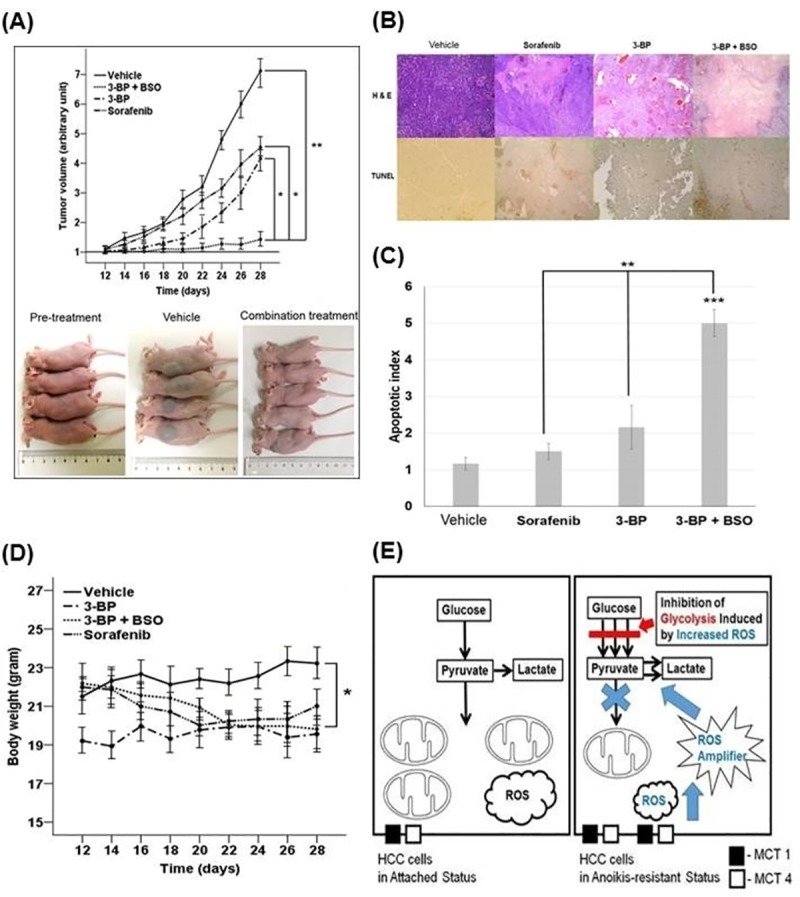
Fig 1 Changes in glycolysis, EMT markers, and ROS production after matrix detachment. (A) AR Huh-BAT cells had higher expression of HK II, p-PDH, rGCS, and MCT-1 compared to Huh-BAT and HepG2 cells at the indicated time points after matrix detachment. (B) AR HepG2 cells had higher expression of HK II, p-PDH, rGCS, and MCT-1 compared to Huh-BAT and HepG2 cells at the indicated time points after matrix detachment. (C) Expression of Snail was potentiated in AR Huh-BAT and AR HepG2 cells compared to Huh-BAT and HepG2 cells, respectively. (D) Lactic acid production in AR Huh-BAT and AR HepG2 cells was significantly increased compared to that in Huh-BAT and HepG2 cells, respectively. (E) Glutathione production in AR Huh-BAT and AR HepG2 cells was significantly increased compared to that in Huh-BAT and HepG2 cells, respectively. (F) Production of reactive oxygen species in AR Huh-BAT and AR HepG2 cells was significantly decreased compared to that in Huh-BAT and HepG2 cells, respectively. *P<0.05; ***P<0.001. Abbreviation: Att, attached; AR, anoikis-resistant; GSH, glutathione; HK II, hexokinase II; h, hours; MCT-1, monocarboxylate transporter-1; p-PDH, phosphorylated pyruvate dehydrogenase; rGCS, gamma-glutamylcysteine synthetase; ROS, reactive oxygen species.Fig 2 Chemoresistance phenotype of the AR HCC cells compared to attached HCC cells. (A) AR Huh-BAT cells had significantly higher viabilities at 3 μM of sorafenib, 1 μM of 5-FU, and 10 μM of cisplatin compared to Huh-BAT cells. (B) AR HepG2 cells had significantly higher viabilities at 3 μM of sorafenib and 1 μM of 5-FU compared to HepG2 cells. (C) AR Huh-BAT cells had significantly higher viabilities at concentrations of 3, 5, and 10 μM of sorafenib compared to Huh-BAT cells. (D) AR HepG2 cells had significantly higher viabilities at concentrations of 1, 3, 5, and 10 μM of sorafenib compared to HepG2 cells. (E) Tumor growth rates of AR Huh-BAT cells were significantly higher than those of Huh-BAT cells in xenograft nude mice. *P<0.05; **P<0.01. Abbreviation: AR, anoikis-resistant; sora, sorafenib; 5-FU, 5-fluorouracil.Fig 3 Changes of ROS and glutathione levels following 3-BP, BSO, or a combination treatment. (A) GSH production was significantly suppressed after BSO or a combination treatment of 3-BP and BSO compared to the control in AR Huh-BAT and AR HepG2 cells. (B) ROS production was significantly increased by 3-BP, BSO, and a combination treatment of 3-BP and BSO compared to the control. (C) Expression of HK II was decreased after 3-BP treatment and increased after BSO treatment. Expression of rGCS was increased after BSO treatment. (D) Following treatment with a combination of 3-BP and BSO, HK II expression was suppressed, and rGCS expression was increased compared to the control. Each assay and western blotting were performed at condition of 3-BP treatment 40 μM, 12 hour; BSO 200 μM, 24 hours; a combination treatment at 3-BP 40 μM, 12 hours after 24 hours pre-exposure of BSO 200 μM. *P<0.05; **P<0.01; ***P<0.001. Abbreviation: AR, anoikis-resistant; BSO, buthionine sulfoximine; CTL, control; GSH, glutathione; HK II, hexokinase II; rGCS, gamma-glutamylcysteine synthetase; ROS, reactive oxygen species; 3-BP, 3-bromopyruvate.Fig 4 Changes of lactic acid levels following 3-BP, BSO, or a combination treatment. (A) Lactic acid production in Huh-BAT, HepG2, and the corresponding AR cells was significantly increased after BSO treatment compared to the control. (B) Lactic acid production in Huh-BAT, HepG2, and the corresponding AR cells was significantly suppressed after 3-BP treatment compared to the control. (C) Lactic acid production was significantly suppressed after a combination treatment of 3-BP and BSO in AR Huh-BAT and AR HepG2 cells; there was a significant difference among baseline, 2, and 12 hours exposure to the combination treatment. Each assay and western blotting was performed at condition of 3-BP treatment 40 μM, 12 hour; BSO 200 μM, 24 hours; a combination treatment at 3-BP 40 μM, 12 hours after 24 hours pre-exposure of BSO 200 μM. *P<0.05; **P<0.01; ***P<0.001. Abbreviation: AR, anoikis-resistant; BSO, buthionine sulfoximine; CTL, control; HK II, hexokinase II; rGCS, gamma-glutamylcysteine synthetase; ROS, reactive oxygen species; 3-BP, 3-bromopyruvate.Fig 5 Cell viabilities of Huh-BAT, HepG2, and the corresponding AR cells after 3-BP, BSO, and a combination treatment. (A) Viabilities of Huh-BAT and AR Huh-BAT cells were decreased after 3-BP treatment. (B) In AR Huh-BAT cells, cell viabilities at each concentration were significantly lower after BSO treatment compared to those of Huh-BAT cells. (C) Viabilities of AR HepG2 cells were significantly higher than those of HepG2 cells after 3-BP treatment. (D) In HepG2 and AR HepG2 cells, cell viabilities were not effectively suppressed after BSO treatment. (E) Viabilities of Huh-BAT and AR Huh-BAT cells were effectively suppressed after a combination treatment of 3-BP and BSO. (F) Viabilities of HepG2 and AR HepG2 cells were effectively suppressed after a combination treatment of 3-BP and BSO. Abbreviation: AR, anoikis-resistant; BSO, buthionine sulfoximine; 3-BP, 3-bromopyruvate.Fig 6 Apoptosis of Huh-BAT, HepG2, and the corresponding AR cells after 3-BP, BSO, and a combination treatment. (A) Apoptosis rates of Huh-BAT, HepG2, and the corresponding AR cells receiving the indicated treatments were evaluated by annexin V-FITC staining. The upper panel depicts the proportion of apoptotic cells, and the lower panel shows the quantitative results. (B) PARP expression in Huh-BAT, HepG2, and the corresponding AR cells receiving the indicated treatments was analyzed. At a combination treatment, 3-BP (40 μM) was treated for 48 hours at 24 hours after BSO treatment (200 μM) in the cells. *P<0.05; **P<0.01; ***P<0.001. Abbreviation: AR, anoikis-resistant; Att, attached; BSO, buthionine sulfoximine; Co., control; PARP, poly ADP-ribose polymerase; 3-BP, 3-bromopyruvate.Fig 7 Suppression of HCC invasion by 3-BP, BSO, and a combination treatment. (A) Invasion capability of AR Huh-BAT cells significantly suppressed by BSO (200 μM), 3-BP (20 μM) and a combination by invasion assay using Boyden chambers (quantified at right panels). (B) Invasion capability of AR HepG2 cells significantly suppressed by BSO (200 μM), 3-BP (20 μM) and a combination by invasion assay using Boyden chambers (quantified at right panels). The concentrations of 3-BP (20 μM) and BSO (200 μM) which did not kill cancer cells were used in this assay. 3-BP and BSO was treated for 72 hours. In a combination treatment in this assay, 3-BP (20 μM) was treated for 72 hours with 24-hour pre-treatment of BSO (200 μM). *P<0.05; **P<0.01; ***P<0.001. Abbreviation: AR, anoikis-resistant; BSO, buthionine sulfoximine; 3-BP, 3-bromopyruvate.Fig 8In vivo anti-tumor effects of 3-BP, sorafenib, and a combination treatment in xenograft nude mice bearing AR Huh-BAT cells. (A) Tumor growth rates in the combination treatment group were significantly lower than those in the control, sorafenib, or 3-BP treatment group (upper panel). Gross images of tumors before treatment, tumors from the control group, and tumors from the combination treatment group are shown (lower panel). (B) In vivo demonstration of the apoptosis-inducing efficacy in the control, 3-BP, sorafenib, and combination treatment group was shown: H & E and TUNEL staining of tumor tissues in the control, sorafenib, 3-BP, and combination-treated mice (×40 magnification). (C) TUNEL-positive cell percentages (apoptotic index) were determined in six different high power (×400 magnification) fields. (D) There was a significant difference in body weight between the control group and the combination treatment group (P<0.05). (E) After matrix detachment, anoikis-resistant cancer cells decrease intracellular ROS levels through inducing enzymes involved in the glycolysis and antioxidant systems for their survival. The Warburg effect can be modulated by increased intracellular ROS levels. Increased ROS levels induce HK II expression and make cancer cells sensitive to 3-BP treatment, and thereby promote cell death via ROS-mediated apoptosis (the black box indicates monocarboxylate transporter-1, and the white box indicates monocarboxylate transporter-4). *P<0.05; **P<0.01; ***P<0.001. Abbreviation: AR, anoikis-resistant; BSO, buthionine sulfoximine; 3-BP, 3-bromopyruvate.
그림 출처: PubMed Central 공개 논문 (PMC5376082)
Conflict of interest statement
Competing Interests:The authors have declared that no competing interests exist.
그 밖의 정보
출판 형태
Journal Article
저널
PloS one · eISSN 1932-6203
전자 출판
2017-03-31
MeSH
Anoikis / drug effects · Antineoplastic Agents / pharmacology / therapeutic use · Buthionine Sulfoximine / pharmacology / therapeutic use · Carcinoma, Hepatocellular / drug therapy · Epithelial-Mesenchymal Transition / drug effects · Hep G2 Cells · Humans · Liver Neoplasms / drug therapy · Niacinamide / analogs & derivatives / pharmacology / therapeutic use · Phenylurea Compounds / pharmacology / therapeutic use · Pyruvates / pharmacology / therapeutic use · Reactive Oxygen Species / metabolism · Sorafenib