
PLoS One. 2017;12(2):e0172434.
Elevated bilirubin levels are associated with a better renal prognosis and ameliorate kidney fibrosis.
제1저자 박세훈 · 교신저자 이정표
소속 (4)
- Department of Biomedical Sciences, Seoul National University College of Medicine, Seoul, Korea.
- Department of Internal Medicine, Seoul National University Seoul Metropolitan Government Boramae Medical Center, Seoul, Korea.
- Department of Internal Medicine, Chung-Ang University Hospital, Seoul, Korea.
- Kidney Research Institute, Seoul National University College of Medicine, Seoul, Korea.
Abstract
BACKGROUND Bilirubin has been reported to protect against kidney injury. However, further studies highlighting the beneficial effects of bilirubin on renal fibrosis and chronic renal function decline are necessary.
METHODS We assessed a prospective cohort with a reference range of total bilirubin levels. The primary outcome was a 30% reduction in the estimated glomerular filtration rate (eGFR) from baseline, and the secondary outcome was a doubling of the serum creatinine levels, halving of the eGFR and the initiation of dialysis. In addition, experiments with tubular epithelial cells and C57BL/6 mice were performed to investigate the protective effects of bilirubin on kidney fibrosis.
RESULTS As a result, 1,080 patients were included in the study cohort. The study group with relative hyperbilirubinemia (total bilirubin 0.8-1.2 mg/dL) showed a better prognosis in terms of the primary outcome (adjusted hazard ratio (HR) 0.33, 95% confidence interval (CI) 0.19-0.59, P < 0.001) and the secondary outcome (adjusted HR 0.20, 95% CI 0.05 to 0.71, P = 0.01) than that of the control group. Moreover, the bilirubin-treated mice showed less fibrosis in the unilateral ureteral obstruction (UUO) model (P < 0.05). In addition, bilirubin treatment decreased fibronectin expression in tubular epithelial cells in a dose-dependent manner (P < 0.05).
CONCLUSIONS Mildly elevated serum bilirubin levels were associated with better renal prognosis, and bilirubin treatment induced a beneficial effect on renal fibrosis. Therefore, bilirubin could be a potential therapeutic target to delay fibrosis-related kidney disease progression.
Figures

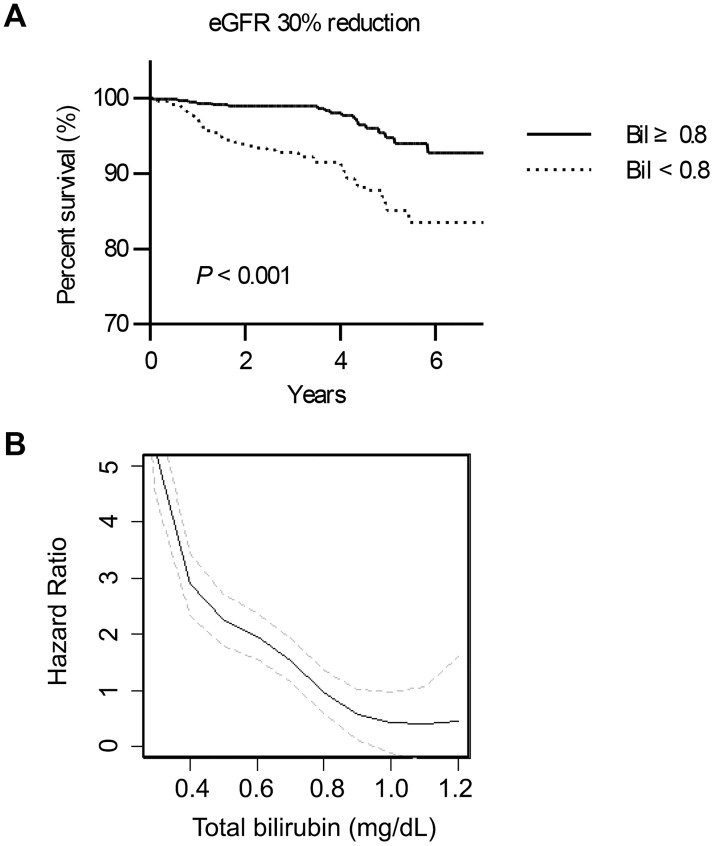
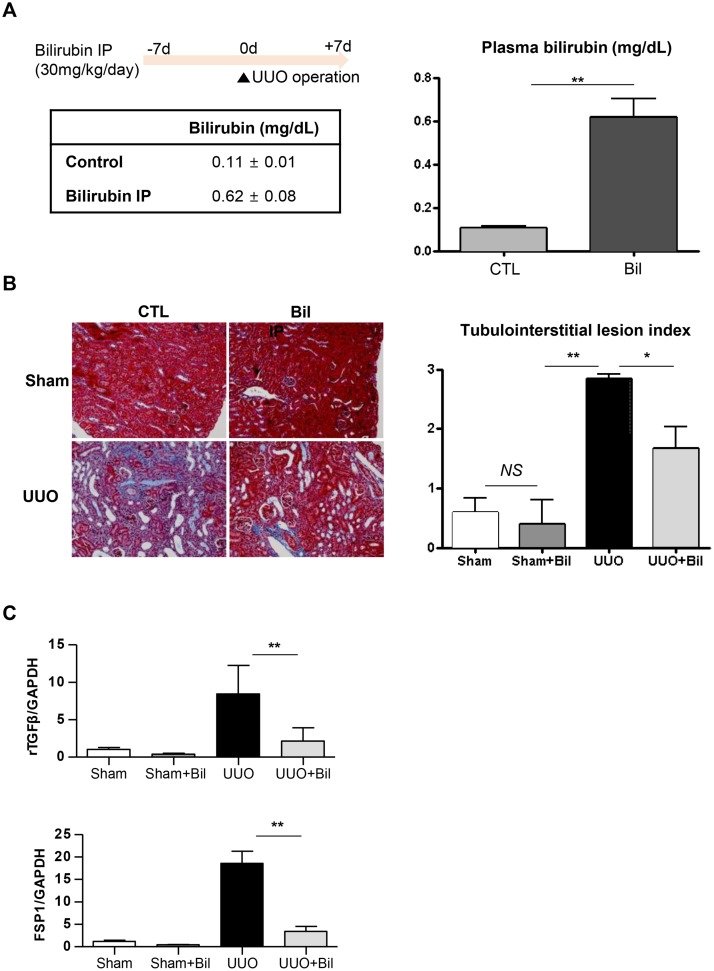
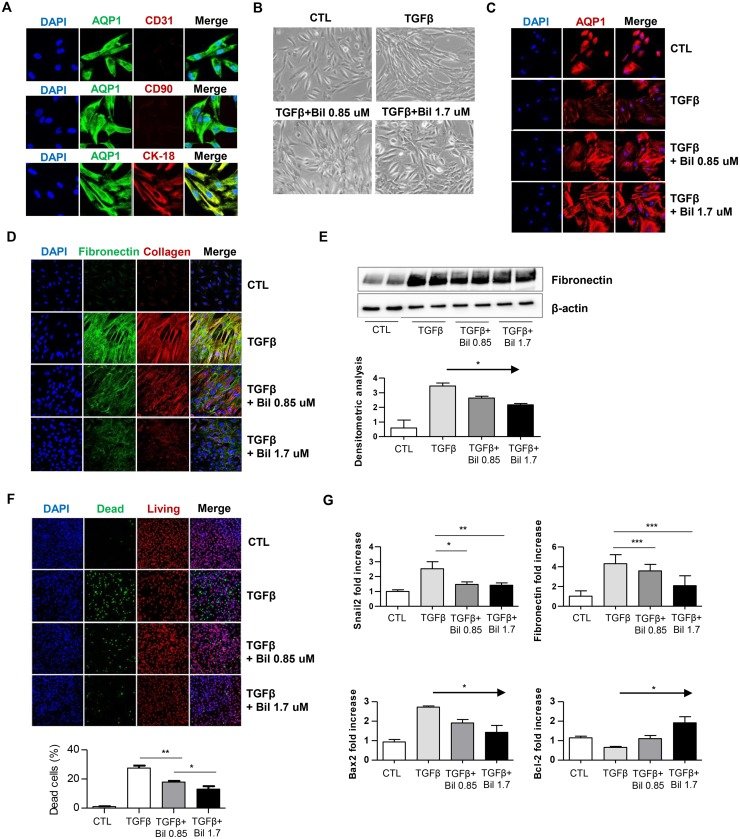
그림 출처: PubMed Central 공개 논문 (PMC5321406)
Conflict of interest statement
Competing Interests:The authors have declared that no competing interests exist.
그 밖의 정보
- 출판 형태
- Journal Article
- 저널
- PloS one · eISSN 1932-6203
- 전자 출판
- 2017-02-22
- MeSH
- Aged · Animals · Apoptosis / drug effects · Bilirubin / blood / pharmacology · Creatinine / blood · Disease Models, Animal · Disease Progression · Female · Fibrosis / blood / pathology / physiopathology · Glomerular Filtration Rate / physiology · Humans · Kidney / drug effects / pathology / physiopathology · Kidney Diseases / blood / pathology / physiopathology · Kidney Function Tests · Male · Mice · Mice, Inbred C57BL · Middle Aged · Prognosis · Prospective Studies · Renal Insufficiency, Chronic / blood / pathology / physiopathology · Ureteral Obstruction / blood / pathology / physiopathology
- Substances
- Creatinine · Bilirubin
- 참고문헌
- 32편