
Clin Transl Allergy. 2022;12(1):e12098.
Reducing severe cutaneous adverse and type B adverse drug reactions using pre-stored human leukocyte antigen genotypes.
제1저자 이계화 · 교신저자 강혜련
소속 (9)
- Department of Information Medicine Asan Medical Center Seoul South Korea.
- Drug Safety Center Seoul National University Hospital Seoul South Korea.
- Institute of Convergence Medicine Ewha Womans University Mokdong Hospital Seoul South Korea.
- Department of Digital Health Samsung Advanced Institute for Health Science and Technology Sungkyunkwan University Seoul South Korea.
- Seoul National University Biomedical Informatics and Systems Biomedical Informatics Research Center Division of Biomedical Informatics Seoul National University College of Medicine Seoul South Korea.
- Department of Molecular Medicine and Biopharmaceutical Sciences Graduate School of Convergence Science and Technology and College of Medicine Medical Research Center Seoul National University Seoul South Korea.
- Department of Immunology and Rheumatology Nepean Hospital Sydney New South Wales Australia.
- Faculty of Medicine and Health The University of Sydney Sydney New South Wales Australia.
- Institute of Allergy and Clinical Immunology Seoul National University Medical Research Center Seoul National University College of Medicine Seoul South Korea.
Abstract
BACKGROUND Several type B adverse drug reactions (ADRs), especially severe cutaneous adverse reactions (SCARs), are associated with particular human leukocyte antigen (HLA) genotypes. However, pre-stored HLA information obtained from other clinical workups has not been used to prevent ADRs. We aimed to simulate the preemptive use of pre-stored HLA information in electronic medical records to evaluate whether this information can prevent ADRs.
METHODS We analyzed the incidence and the risk of ADRs for selected HLA alleles (HLA-B*57:01, HLA-B*58:01, HLA-A*31:01, HLA-B*15:02, HLA-B*15:11, HLA-B*13:01, HLA-B*59:01, and HLA-A*32:01) and seven drugs (abacavir, allopurinol, carbamazepine, oxcarbazepine, dapsone, methazolamide, and vancomycin) using pre-stored HLA information of transplant patients based on the Pharmacogenomics Knowledge Base guidelines and experts' consensus.
RESULTS Among 11,988 HLA-tested transplant patients, 4092 (34.1%) had high-risk HLA alleles, 4583 (38.2%) were prescribed risk drugs, and 580 (4.8%) experienced type B ADRs. Patients with HLA-B*58:01 had a significantly higher incidence of type B ADR and SCARs associated with allopurinol use than that of patients without HLA-B*58:01 (17.2% vs. 11.9%, odds ratio [OR] 1.53 [95% confidence interval {CI} 1.09-2.13], p = 0.001, 2.3% versus 0.3%, OR 7.13 [95% CI 2.19-22.69], p < 0.001). Higher risks of type B ADR and SCARs were observed in patients taking carbamazepine or oxcarbazepine if they had one of HLA-A*31:01, HLA-B*15:02, or HLA-B*15:11 alleles. Vancomycin and dapsone use in HLA-A*32:01 and HLA-B*13:01 carriers, respectively, showed trends toward increased risk of type B ADRs.
CONCLUSION Utilization of pre-stored HLA data can prevent type B ADRs including SCARs by screening high-risk patients.
© 2022 The Authors. Clinical and Translational Allergy published by John Wiley & Sons Ltd on behalf of European Academy of Allergy and Clinical Immunology.
Keywords
adverse drug reactionhuman leukocyte antigenhypersensitivitypharmacogenomicspreemptive genotyping
Figures
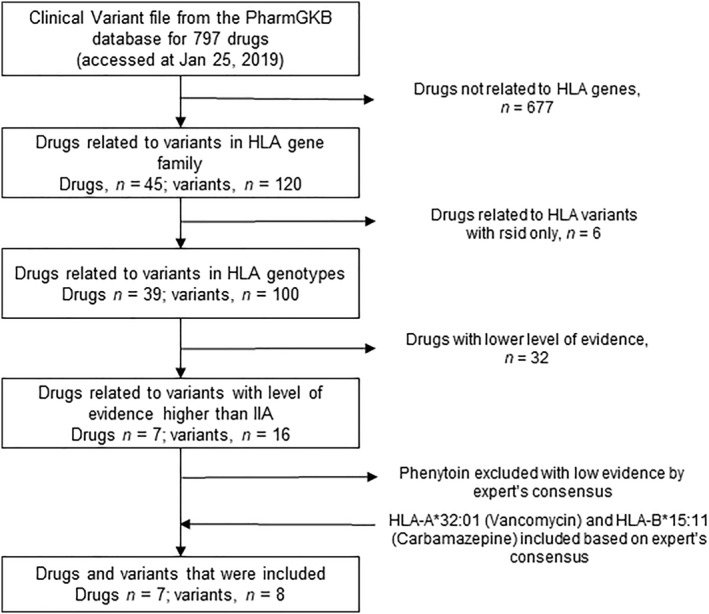
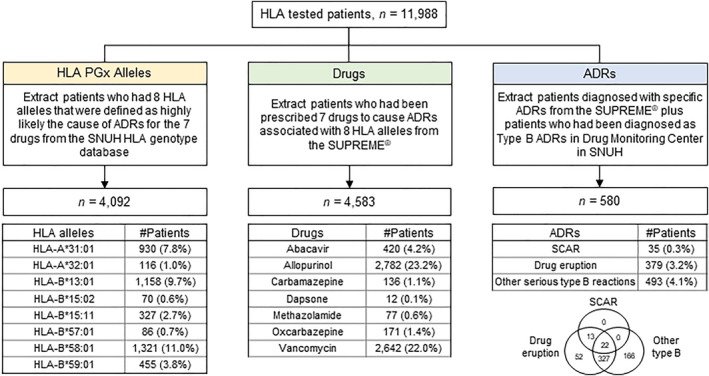
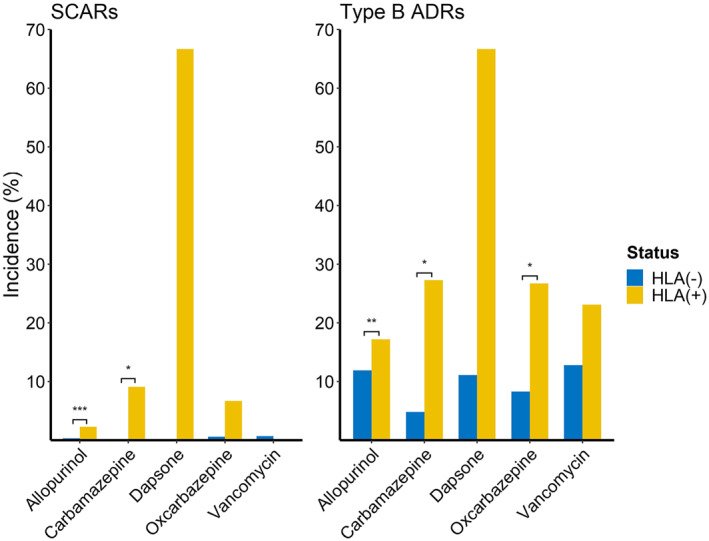
그림 출처: PubMed Central 공개 논문 (PMC8760506)
Conflict of interest statement
The authors have declared no conflicts of interest.
그 밖의 정보
- 출판 형태
- Journal Article
- 저널
- Clinical and translational allergy · ISSN 2045-7022
- 전자 출판
- 2022-01-14
- 참고문헌
- 47편