
PLoS One. 2013;8(2):e52779.
Paraoxonase 1 gene polymorphism does not affect clopidogrel response variability but is associated with clinical outcome after PCI.
제1저자 박경우 · 교신저자 김효수
소속 (1)
- Department of Internal Medicine and Cardiovascular Center, Seoul National University Hospital, Seoul, Korea.
Abstract
BACKGROUND Paraoxonase (PON) is a high-density-lipoprotein (HDL) associated enzyme with antioxidative and anti-atherogenic property. Its function is associated with coronary artery disease and its activity genetically controlled. We evaluated whether genetic variation of PON-1 is associated with clinical outcome in a large cohort of Korean patients with drug-eluting stents implantation.
METHODS A total of 1676 patients with drug-eluting stent implantation were enrolled in the prospective CROSS-VERIFY cohort from June 2006 to June 2010. We genotyped the PON1-Q192R gene, measured clopidogrel on-treatment platelet reactivity (OPR), and analyzed lipid profiles. The primary endpoint was the composite of cardiac death, myocardial infarction, and stent thrombosis at 12 months.
RESULTS PON-1 genotyping data were available in 1336 patients. Since the Q-allele is associated with decreased PON-activity, we analyzed the outcome between patients with QQ/QR (815 patients, 61%) and those with RR-genotype (521 patients, 39%). After adjustment for common cardiac risk factors, the QQ/QR-genotype was an independent predictor of the primary thrombotic endpoint with an 11-fold increased risk (HR 11.6, 95% CI: 1.55-87.0), but not repeat revascularization (HR 1.12, 95% CI: 0.78-1.61). The QQ/QR-genotype was not associated with OPR (QQ/QR: 231±86 PRU vs. RR 236±82 PRU, p = 0.342) but higher small-dense LDL levels (1.20±0.12 mg/dL vs. 0.76±0.15 mg/dL, p = 0.027). The increased risk of thrombotic outcomes was more profound in acute coronary syndrome (ACS) patients compared with non-ACS patients.
CONCLUSION PON1 Q-allele is an independent predictor of worse cardiovascular outcome independent of platelet function and is associated with significantly higher levels of small dense LDL-C.
Figures
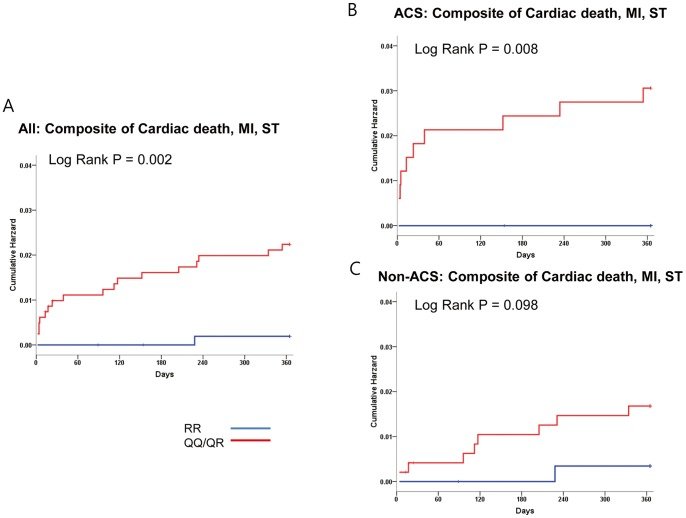
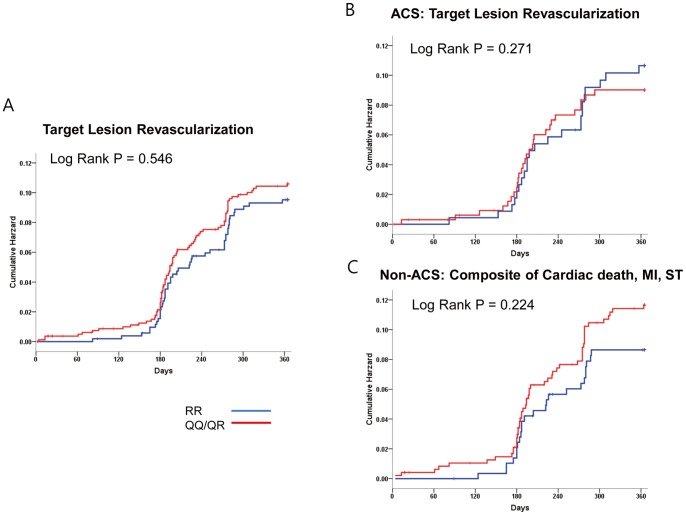
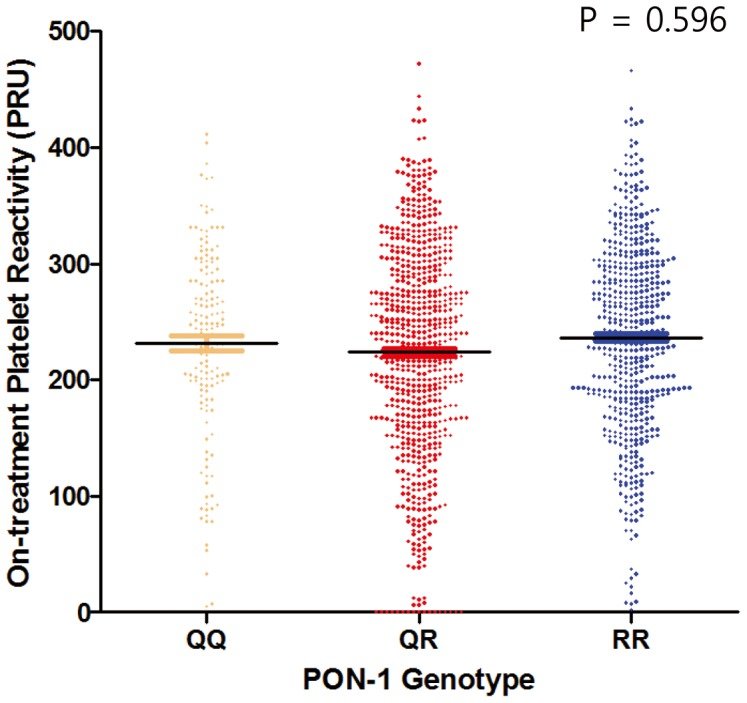
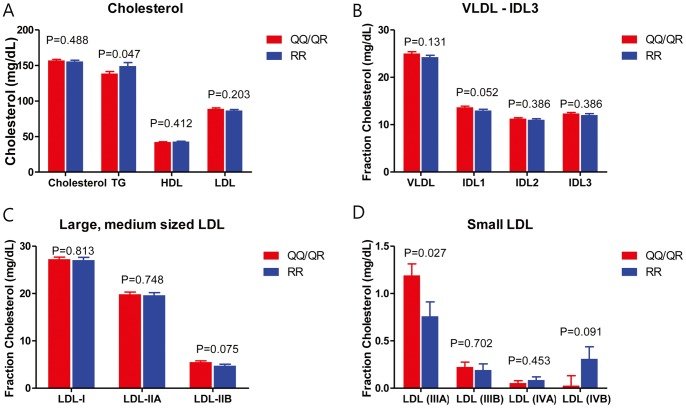
그림 출처: PubMed Central 공개 논문 (PMC3572125)
Conflict of interest statement
Competing Interests:The authors have declared that no competing interests exist.
그 밖의 정보
- 출판 형태
- Journal Article, Research Support, N.I.H., Extramural, Research Support, Non-U.S. Gov't
- 저널
- PloS one · eISSN 1932-6203
- 전자 출판
- 2013-02-13
- MeSH
- Aged · Aged, 80 and over · Aryldialkylphosphatase / genetics · Clopidogrel · Coronary Artery Disease / drug therapy / genetics / surgery · Female · Genotype · Humans · Male · Middle Aged · Percutaneous Coronary Intervention* · Pharmacogenetics · Platelet Aggregation Inhibitors / therapeutic use · Polymorphism, Genetic · Prospective Studies · Risk Factors · Stents · Ticlopidine / analogs & derivatives / therapeutic use
- Substances
- Platelet Aggregation Inhibitors · Clopidogrel · Aryldialkylphosphatase · Ticlopidine
- 연구비
- PHS HHS A062260 · PHS HHS A102065
- 참고문헌
- 30편