
Front Oncol. 2022;12:989984.
A multicenter, open-label study for efficacy and safety evaluation of anagrelide in patients with treatment-naïve, high-risk essential thrombocythemia as a primary treatment.
제1저자 변자민, 김호영 · 교신저자 신동엽, 윤성수
소속 (13)
- Department of Internal Medicine, Seoul National University Hospital, Seoul, South Korea.
- Department of Internal Medicine, Hallym University Medical Center, Anyang, South Korea.
- Department of Internal Medicine, Kyung Hee University at Gangdong, Seoul, South Korea.
- Division of Haematology-Oncology, Department of Internal Medicine, School of Medicine, Medical Research Institute, Pusan National University Hospital, Busan, South Korea.
- Cancer Research Institute, Seoul National University Hospital, Seoul, South Korea.
- Division of Hematology, Department of Internal Medicine, Gachon University Gil Medical Center, Incheon, South Korea.
- Department of Internal Medicine, Jeju National University Hospital, Jeju National University School of Medicine, Jeju, South Korea.
- Division of Hemato-Oncology, Department of internal medicine, Korea University School of Medicine, Seoul, South Korea.
- Department of Internal Medicine, Inje University College of Medicine, Sanggye Paik Hospital, Seoul, South Korea.
- Department of Internal Medicine, Ewha Womans University Mokdong Hospital, Ewha Womans University College of Medicine, Seoul, South Korea.
- Department of Internal Medicine, Keimyung University Dongsan Hospital, Keimyung University School of Medicine, Daegu, South Korea.
- Department of Internal Medicine, Kyungpook National University Hospital, School of Medicine, Kyungpook National University, Daegu, South Korea.
- Department of Internal Medicine, Daegu Catholic University School of Medicine, Daegu, South Korea.
Abstract
As the discussion of first-line anagrelide treatment is ongoing, we aimed to prospectively examine the efficacy and safety of anagrelide in cytoreduction therapy-naïve high risk essential thrombocythemia (ET) patients in Korea. Seventy patients from 12 centers were treated with anagrelide monotherapy for up to 8 weeks, followed up until 24 months. At week 8, 50.0% of the patients were able to achieve platelet < 600 x 109/L, and by 12 months, 55/70 (78.6%) patients stayed on anagrelide, and 40.0% patients showed platelet normalization. 14 patients required additional hydroxyurea (HU) for cytoreduction. The median daily dose of needed HU was 500mg (range 250mg - 1500mg). The efficacy was independent of the somatic mutation status. There were 4 thromboembolic events and 7 bleeding events during the follow-up period. The most common adverse events associated with anagrelide use were headache, followed by palpitation/chest discomfort, edema and generalized weakness/fatigue. 7 patients wished to discontinue anagrelide treatment due to adverse events (3 due to headache; 2 due to edema; 1 due to palpitation and 1 due to skin eruption). All in all, first-line anagrelide treatment showed a favorable response with tolerable safety profiles regardless of somatic mutation status.
Copyright © 2022 Byun, Kim, Nam, Shin, Song, Park, Han, Park, Yuh, Mun, Do, Sohn, Bae, Shin and Yoon.
Keywords
Anagrelideessential thrombocythemiahigh riskmyeloproliferative neoplasmsphase IV clinical trial
Figures
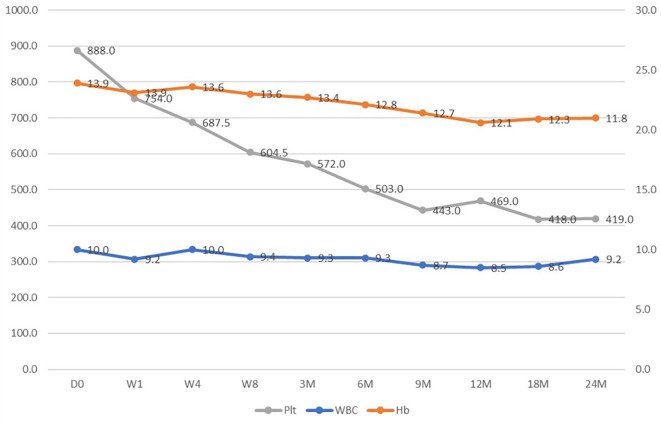
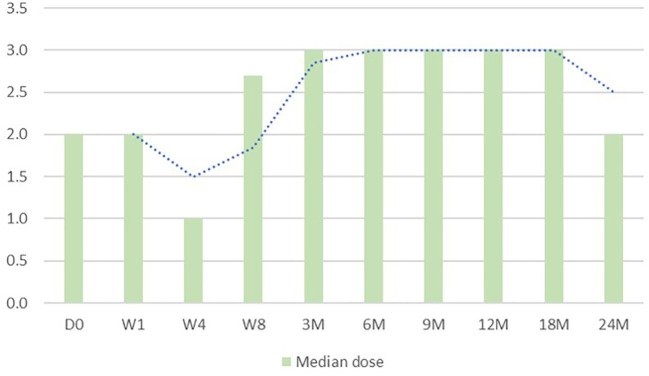
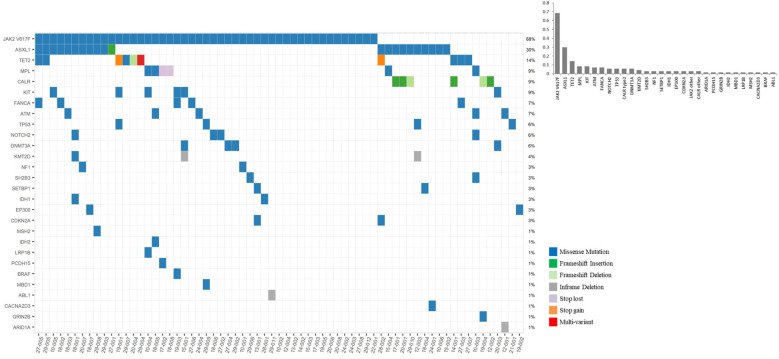
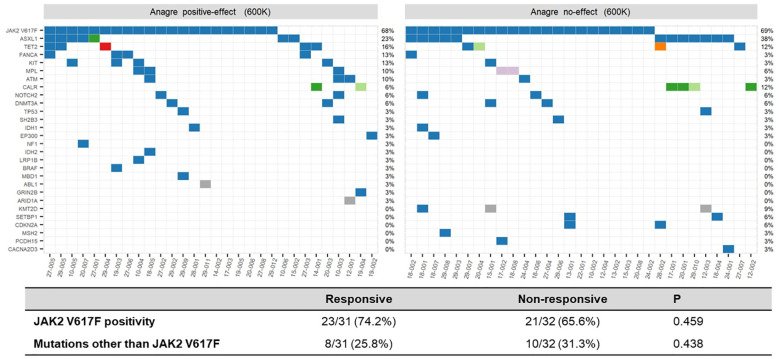
그림 출처: PubMed Central 공개 논문 (PMC9727180)
Conflict of interest statement
The authors declare that the research was conducted in the absence of any commercial or financial relationships that could be construed as a potential conflict of interest.
그 밖의 정보
- 출판 형태
- Journal Article
- 저널
- Frontiers in oncology · ISSN 2234-943X
- 전자 출판
- 2022-11-23
- 참고문헌
- 27편