
EBioMedicine. 2025;112:105560.
Artificial intelligence-enhanced comprehensive assessment of the aortic valve stenosis continuum in echocardiography.
제1저자 박지석, 김지연 · 교신저자 전재익, 윤연이
소속 (7)
- Cardiovascular Center and Division of Cardiology, Department of Internal Medicine, Seoul National University Bundang Hospital, Seongnam, Gyeonggi, Republic of Korea; Department of Internal Medicine, Seoul National University College of Medicine, Seoul, Republic of Korea.
- CONNECT-AI Research Center, Yonsei University College of Medicine, Seoul, Republic of Korea; Department of Internal Medicine, Graduate School of Medical Science, Brain Korea 21 Project, Yonsei University College of Medicine, Seoul, Republic of Korea.
- Ontact Health Inc., Seoul, Republic of Korea. Electronic address: jaeik.jeon@ontacthealth.com.
- Cardiovascular Center and Division of Cardiology, Department of Internal Medicine, Seoul National University Bundang Hospital, Seongnam, Gyeonggi, Republic of Korea; Department of Internal Medicine, Seoul National University College of Medicine, Seoul, Republic of Korea; Ontact Health Inc., Seoul, Republic of Korea. Electronic address: yeonyeeyoon@snubh.org.
- Ontact Health Inc., Seoul, Republic of Korea.
- CONNECT-AI Research Center, Yonsei University College of Medicine, Seoul, Republic of Korea; Ontact Health Inc., Seoul, Republic of Korea.
- CONNECT-AI Research Center, Yonsei University College of Medicine, Seoul, Republic of Korea; Ontact Health Inc., Seoul, Republic of Korea; Division of Cardiology, Severance Cardiovascular Hospital, Yonsei University College of Medicine, Yonsei University Health System, Seoul, Republic of Korea.
Abstract
BACKGROUND Transthoracic echocardiography (TTE) is the primary modality for diagnosing aortic stenosis (AS), yet it requires skilled operators and can be resource-intensive. We developed and validated an artificial intelligence (AI)-based system for evaluating AS that is effective in both resource-limited and advanced settings.
METHODS We created a dual-pathway AI system for AS evaluation using a nationwide echocardiographic dataset (developmental dataset, n = 8427): 1) a deep learning (DL)-based AS continuum assessment algorithm using limited 2D TTE videos, and 2) automating conventional AS evaluation. We performed internal (internal test dataset [ITDS], n = 841) and external validation (distinct hospital dataset [DHDS], n = 1696; temporally distinct dataset [TDDS], n = 772) for diagnostic value across various stages of AS and prognostic value for composite endpoints (cardiovascular death, heart failure, and aortic valve replacement).
FINDINGS The DL index for the AS continuum (DLi-ASc, range 0-100) increased with worsening AS severity and demonstrated excellent discrimination for any AS (AUC 0.91-0.99), significant AS (0.95-0.98), and severe AS (0.97-0.99). DLi-ASc was independent predictor for composite endpoint (adjusted hazard ratios 2.19, 1.64, and 1.61 per 10-point increase in ITDS, DHDS, and TDDS, respectively). Automatic measurement of conventional AS parameters demonstrated excellent correlation with manual measurement, resulting in high accuracy for AS staging (98.2% for ITDS, 82.1% for DHDS, and 96.8% for TDDS) and comparable prognostic value to manually-derived parameters.
INTERPRETATION The AI-based system provides accurate and prognostically valuable AS assessment, suitable for various clinical settings. Further validation studies are planned to confirm its effectiveness across diverse environments.
FUNDING This work was supported by a grant from the Institute of Information & Communications Technology Planning & Evaluation (IITP) funded by the Korea government (Ministry of Science and ICT; MSIT, Republic of Korea) (No. 2022000972, Development of a Flexible Mobile Healthcare Software Platform Using 5G MEC); and the Medical AI Clinic Program through the National IT Industry Promotion Agency (NIPA) funded by the MSIT, Republic of Korea (Grant No.: H0904-24-1002).
Copyright © 2025 The Authors. Published by Elsevier B.V. All rights reserved.
Keywords
Aortic stenosisArtificial intelligenceDiagnostic accuracyEchocardiographyPrognostic value
Figures
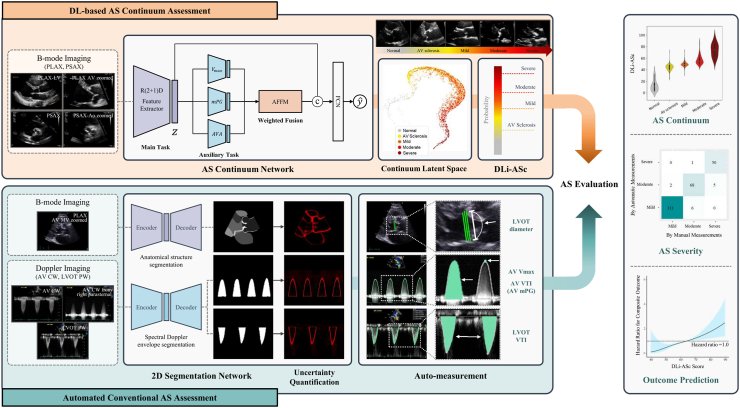
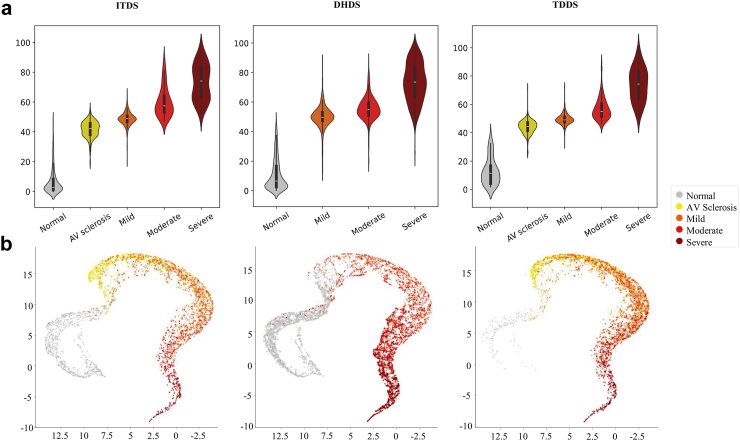
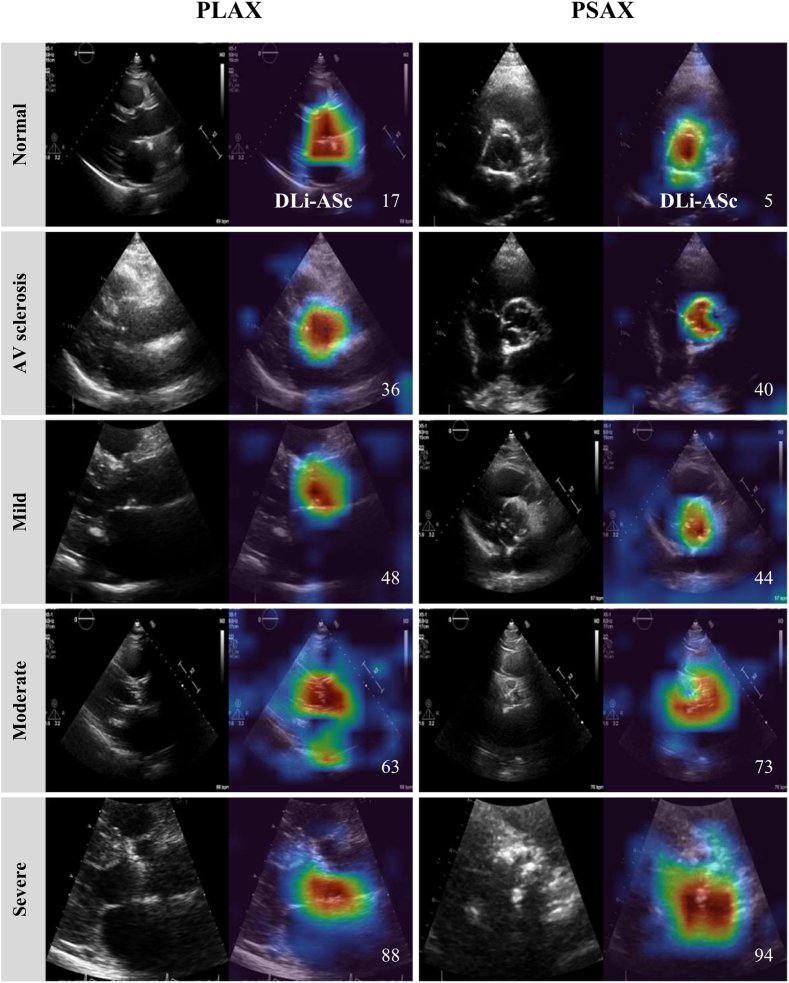
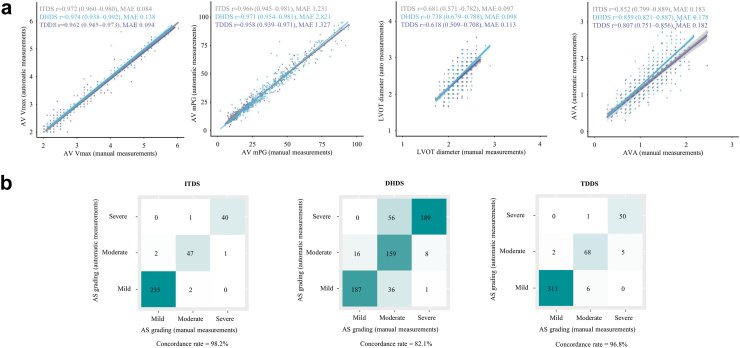
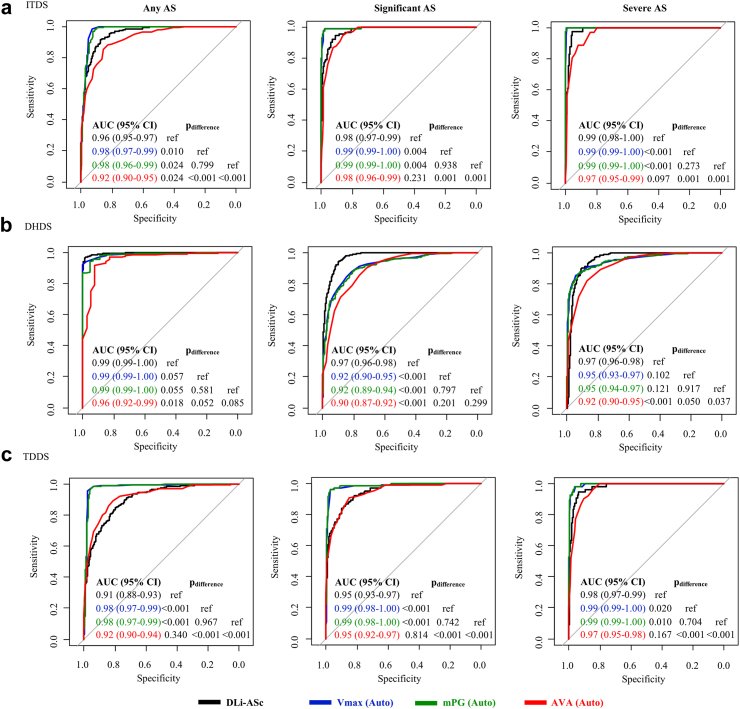
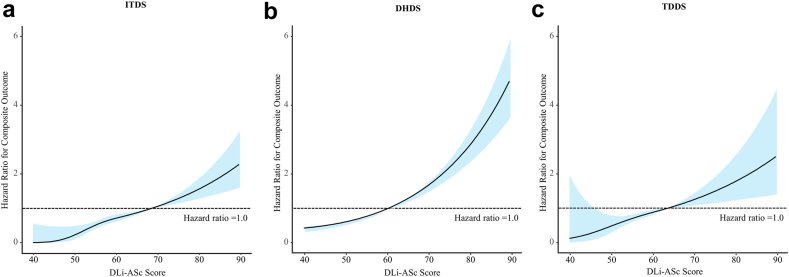
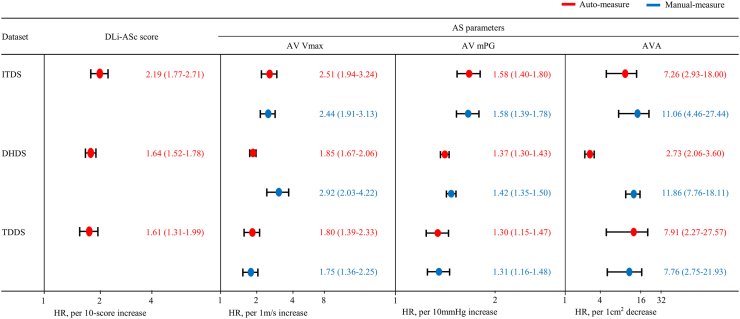
그림 출처: PubMed Central 공개 논문 (PMC11794175)
Conflict of interest statement
Declaration of interests Y.E.Y, J.J., Y.J., Y.H., and S.A.L. are currently affiliated with Ontact Health, Inc. J.J., J.K., and S.A.L are co-inventors on a patent related to this work filed by Ontact Health (Method For Providing Information On Severity Of Aortic Stenosis And Device Using The Same). H.J.C. holds stock in Ontact Health, Inc. The other authors have no conflicts of interest to declare.
그 밖의 정보
- 출판 형태
- Journal Article
- 저널
- EBioMedicine · eISSN 2352-3964
- 전자 출판
- 2025-01-21
- MeSH
- Humans · Aortic Valve Stenosis* / diagnostic imaging / diagnosis / mortality · Echocardiography* / methods · Artificial Intelligence* · Male · Female · Aged · Prognosis · Deep Learning · Aged, 80 and over · Severity of Illness Index · ROC Curve · Algorithms · Middle Aged
- 참고문헌
- 23편