
Int J Surg. 2024;110(6):3571-3579.
Silent gallbladder stone in kidney transplantation recipients: should it be treated? A retrospective cohort study.
제1저자 이명환 · 교신저자 백우현, 이하정
소속 (3)
- Division of Gastroenterology.
- Division of Nephrology, Department of Internal Medicine, Seoul National University Hospital.
- Department of Surgery, Seoul National University Hospital, Seoul National University College of Medicine, Seoul, Korea.
Abstract
BACKGROUND Treatment and follow-up strategies for silent gallbladder stones in patients before kidney transplantation (KT) remain unknown. Therefore, the authors aimed to elucidate the role of pre-KT cholecystectomy in preventing biliary and surgical complications.
MATERIALS AND METHODS This study retrospectively analyzed 2295 KT recipients and 3443 patients waiting for KT at a single tertiary center from January 2005 to July 2022. The primary outcomes were the incidences of biliary and postcholecystectomy complications in KT recipients. Firth's logistic regression model was used to assess the risk factors for biliary complications.
RESULTS Overall, 543 patients awaiting KT and 230 KT recipients were found to have biliary stones. Among the KT recipients, 16 (7%) underwent cholecystectomy before KT, while others chose to observe their biliary stones. Pre-KT cholecystectomy patients did not experience any biliary complications, and 20 (9.3%) patients who chose to observe their stones experienced complications. Those who underwent cholecystectomy before KT developed fewer postcholecystectomy complications (6.3%) compared with those who underwent cholecystectomy after KT (38.8%, P =0.042), including reduced occurrences of fatal postoperative complications based on the Clavien-Dindo classification. Multiple stones [odds ratio (OR), 3.09; 95% CI: 1.07-8.90; P =0.036), thickening of the gallbladder wall (OR, 5.39; 95% CI: 1.65-17.63; P =0.005), and gallstones >1 cm in size (OR 5.12, 95% CI: 1.92-13.69, P =0.001) were independent risk factors for biliary complications. Among patients awaiting KT, 23 (4.2%) underwent cholecystectomy during the follow-up, resulting in one postcholecystectomy complication.
CONCLUSION Gallstone-related biliary complications following KT and subsequent cholecystectomy was associated with more serious complications and worse treatment outcomes. Therefore, when KT candidates had risk factor for biliary complications, pre-emptive cholecystectomy for asymptomatic cholecystolithiasis could be considered to reduce further surgical risk.
Copyright © 2024 The Author(s). Published by Wolters Kluwer Health, Inc.
Figures

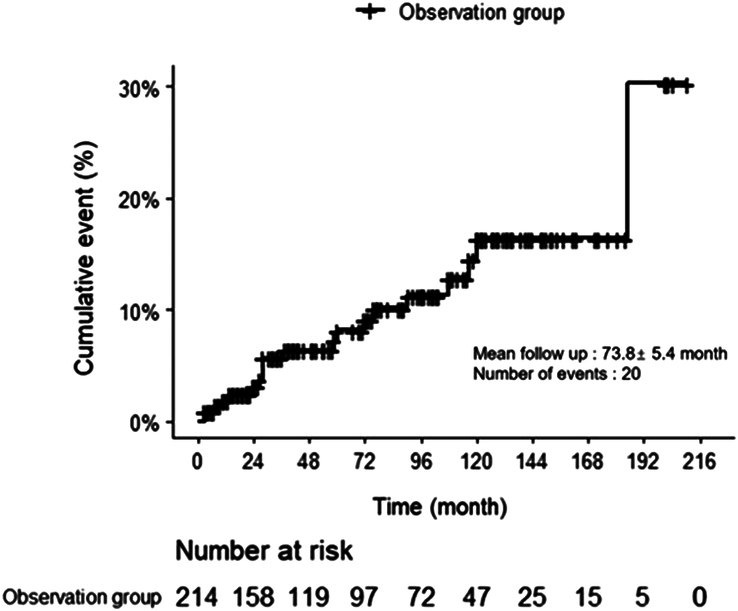

그림 출처: PubMed Central 공개 논문 (PMC11175749)
Comment · 정정
Conflict of interest statement
The authors of this manuscript have no conflicts of interest to disclose as described by the International Journal of Surgery.
그 밖의 정보
- 출판 형태
- Journal Article
- 저널
- International journal of surgery (London, England) · eISSN 1743-9159
- 전자 출판
- 2024-06-01
- MeSH
- Humans · Male · Retrospective Studies · Female · Middle Aged · Kidney Transplantation* / adverse effects · Cholecystectomy* / adverse effects · Gallstones* / surgery · Adult · Postoperative Complications* / etiology / epidemiology · Risk Factors
- 데이터
- ClinicalTrials.gov: NCT05945511
- 참고문헌
- 35편