
PLoS One. 2016;11(8):e0160822.
Modified AS1411 Aptamer Suppresses Hepatocellular Carcinoma by Up-Regulating Galectin-14.
제1저자 조유리, 이윤빈 · 교신저자 이정훈, 윤정환
소속 (5)
- Department of Internal Medicine and Liver Research Institute, Seoul National University College of Medicine, Seoul, Republic of Korea.
- Department of Internal Medicine, CHA Gangnam Medical Center, CHA University, Seoul, Republic of Korea.
- Department of Internal Medicine, CHA Bundang Medical Center, CHA University, Seongnam, Republic of Korea.
- Department of Internal Medicine, Seoul Metropolitan Government Seoul National 26 University Boramae Medical Center, Seoul, Republic of Korea.
- Aptamer Initiative, POSTECH Biotech Center, Pohang University of Science and Technology, Pohang, Republic of Korea.
Abstract
Aptamers are small synthetic oligonucleotides that bind to target proteins with high specificity and affinity. AS1411 is an aptamer that binds to nucleolin, which is overexpressed in the cytoplasm and occurs on the surface of cancer cells. We investigated the therapeutic potential of aptamers in hepatocellular carcinoma (HCC) by evaluating anti-tumor effects and confirming the affinity and specificity of AS1411- and modified AS1411-aptamers in HCC cells. Cell growth was assessed using the MTS assay, and cell death signaling was explored by immunoblot analysis. Fluorescence-activated cell sorting was performed to evaluate the affinity and specificity of AS1411-aptamers in SNU-761 HCC cells. We investigated the in vivo effects of the AS1411-aptamer using BALB/c nude mice in a subcutaneous xenograft model with SNU-761 cells. Treatment with a modified AS1411-aptamer significantly decreased in vitro (under normoxic [P = 0.035] and hypoxic [P = 0.018] conditions) and in vivo (under normoxic conditions, P = 0.041) HCC cell proliferation compared to control aptamers. AS1411- and control aptamers failed to control HCC cell proliferation. However, AS1411- and the modified AS1411-aptamer did not induce caspase activation. Decrease in cell growth by AS1411 or modified AS1411 was not prevented by caspase or necrosis inhibitors. In a microarray, AS1411 significantly enhanced galectin-14 expression. Suppression of HCC cell proliferation by the modified AS1411-aptamer was attenuated by galectin-14 siRNA transfection. Modified AS1411-aptamer suppressed HCC cell growth in vitro and in vivo by up-regulating galectin-14 expressions. Modified AS1411-aptamers may have therapeutic potential as a novel targeted therapy for HCC.
Figures

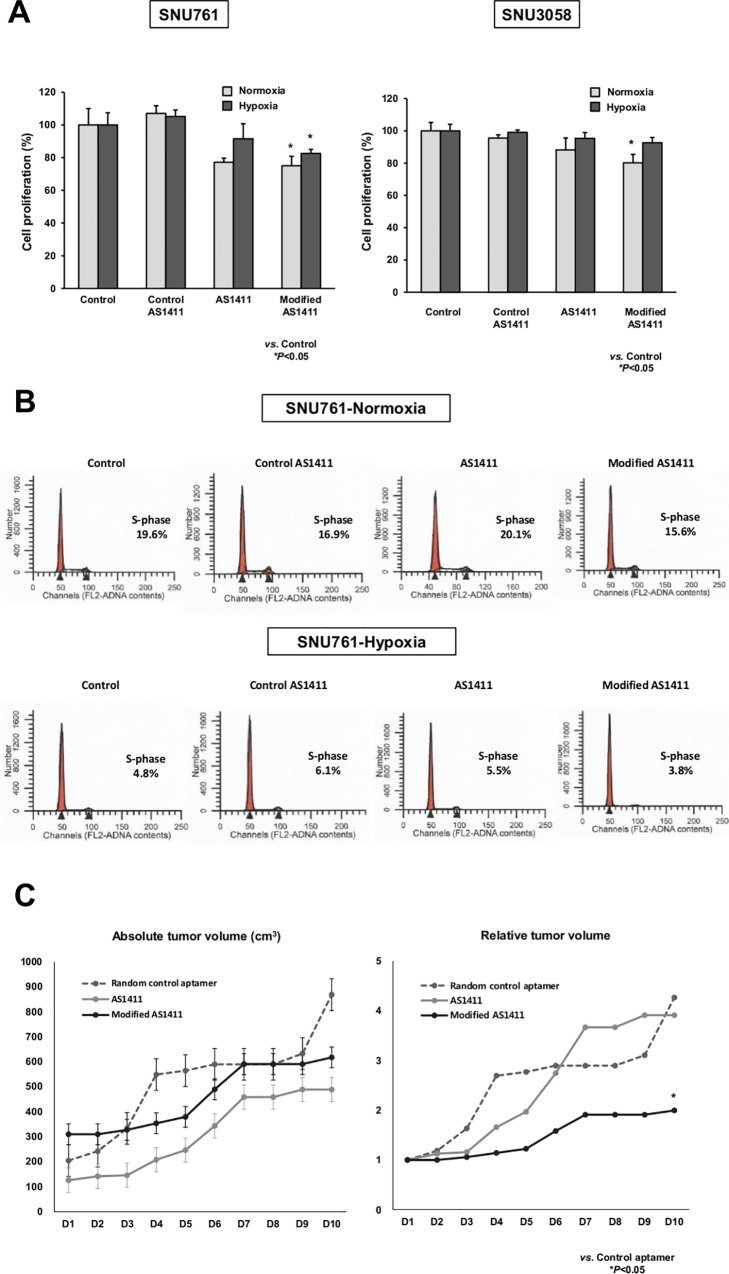
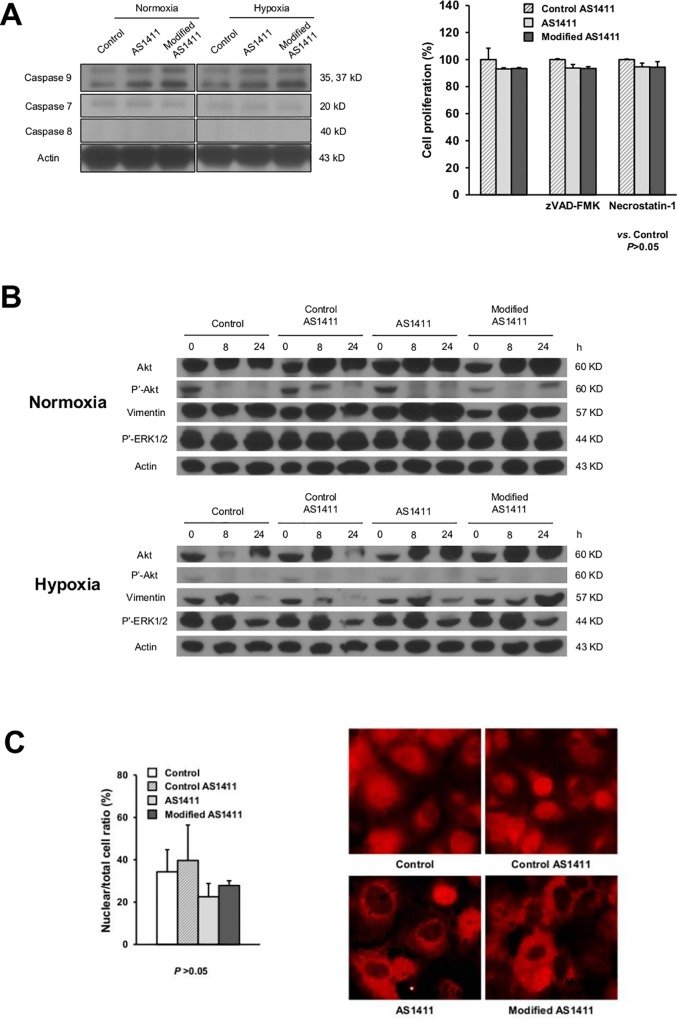
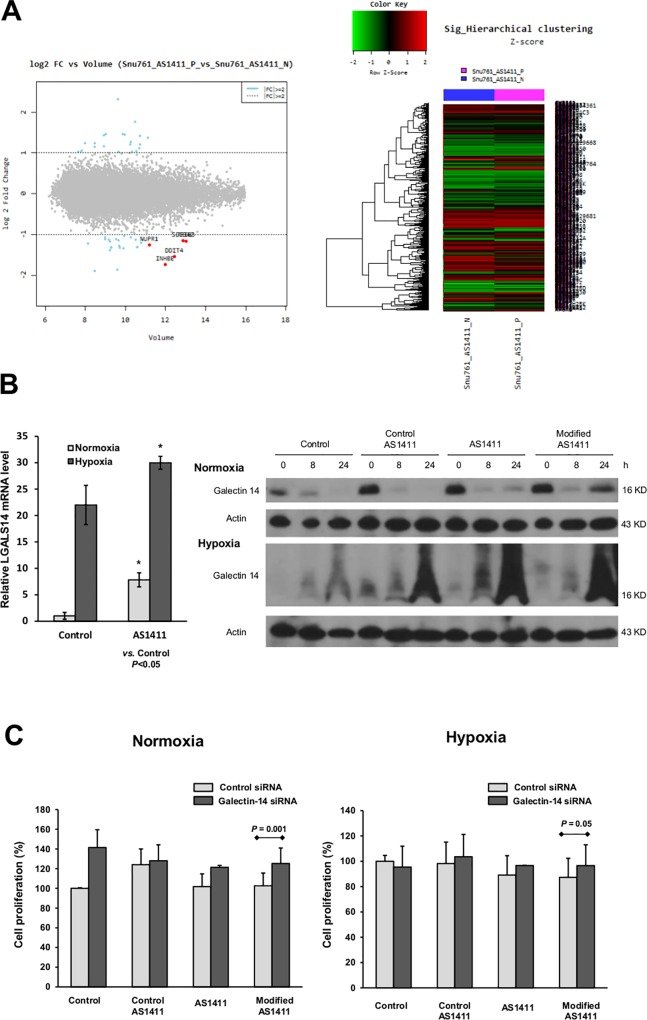
그림 출처: PubMed Central 공개 논문 (PMC4975508)
Conflict of interest statement
Competing Interests:The authors have declared that no competing interests exist.
그 밖의 정보
- 출판 형태
- Journal Article
- 저널
- PloS one · eISSN 1932-6203
- 전자 출판
- 2016-08-05
- MeSH
- Animals · Apoptosis / drug effects · Aptamers, Nucleotide · Blotting, Western · Carcinoma, Hepatocellular / drug therapy / genetics / metabolism / pathology · Cell Cycle / drug effects · Cell Proliferation / drug effects · Female · Flow Cytometry · Galectins / genetics / metabolism · Gene Expression Regulation, Neoplastic / drug effects · Humans · Liver Neoplasms / drug therapy / genetics / metabolism / pathology · Mice · Mice, Inbred BALB C · Mice, Nude · Oligodeoxyribonucleotides / pharmacology · Phosphoproteins / genetics / metabolism · RNA, Messenger / genetics · RNA-Binding Proteins / genetics / metabolism · Real-Time Polymerase Chain Reaction · Reverse Transcriptase Polymerase Chain Reaction · Tumor Cells, Cultured · Xenograft Model Antitumor Assays · Nucleolin
- Substances
- Aptamers, Nucleotide · Galectins · Oligodeoxyribonucleotides · Phosphoproteins · RNA, Messenger · RNA-Binding Proteins · Nucleolin · AGRO 100
- 참고문헌
- 26편