
Sci Rep. 2021;11(1):296.
Prospective evaluation of metabolic intratumoral heterogeneity in patients with advanced gastric cancer receiving palliative chemotherapy.
제1저자 유신혜, 강서영 · 교신저자 오도연
소속 (6)
- Department of Internal Medicine, Seoul National University Hospital, 101 Daehak-ro, Jongno-gu, Seoul, 03080, South Korea.
- Department of Nuclear Medicine, Seoul National University Hospital, Seoul, South Korea.
- Department of Molecular Medicine and Biopharmaceutical Science, Graduate School of Convergence Science and Technology, Seoul National University, Seoul, South Korea.
- Cancer Research Institute, Seoul National University College of Medicine, Seoul, South Korea.
- Department of Internal Medicine, Seoul National University Hospital, 101 Daehak-ro, Jongno-gu, Seoul, 03080, South Korea. ohdoyoun@snu.ac.kr.
- Cancer Research Institute, Seoul National University College of Medicine, Seoul, South Korea. ohdoyoun@snu.ac.kr.
Abstract
Although metabolic intratumoral heterogeneity (ITH) gives important value on treatment responses and prognoses, its association with treatment outcomes have not been reported in gastric cancer (GC). We aimed to evaluate temporal changes in metabolic ITH and the associations with treatment responses, progression-free survival (PFS), and overall survival (OS) in advanced GC patients. Eighty-five patients with unresectable, locally advanced, or metastatic GC were prospectively enrolled before the first-line palliative chemotherapy and underwent [18F]FDG PET at baseline (TP1) and the first response follow-up evaluation (TP2). Standardized uptake values (SUVs), volumetric parameters, and textural features were evaluated in primary gastric tumor at TP1 and TP2. Of 85 patients, 44 had partial response, 33 had stable disease, and 8 progressed. From TP1 to TP2, metabolic ITH was significantly reduced (P < 0.01), and the degree of the decrease was greater in responders than in non-responders (P < 0.01). Using multiple Cox regression analyses, a low SUVmax at TP2, a high kurtosis at TP2 and larger decreases in the coefficient of variance were associated with better PFS. A low SUVmax at TP2, larger decreases in the metabolic tumor volume and larger decreased in the energy were associated with better OS. Age older than 60 years and responders also showed better OS. An early reduction in metabolic ITH is useful to predict treatment outcomes in advanced GC patients.
Figures
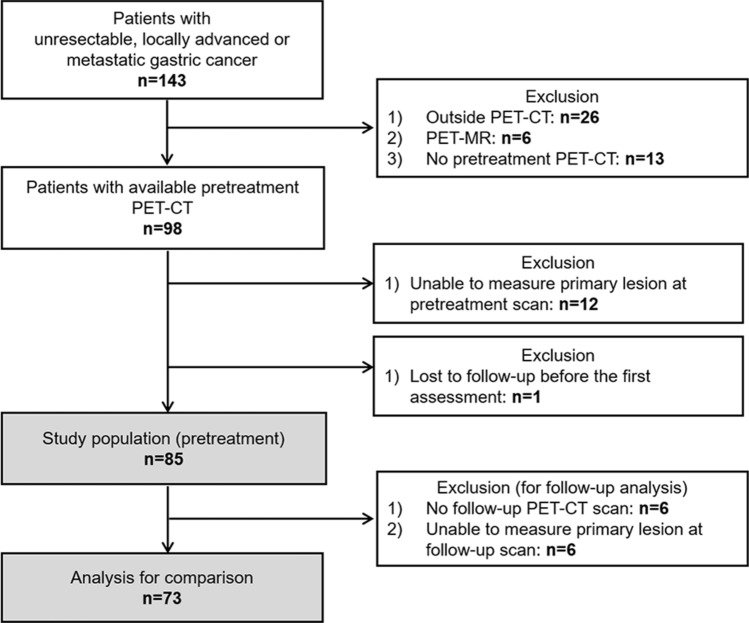
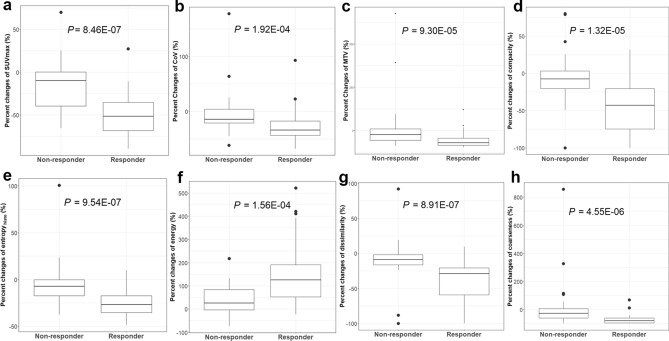
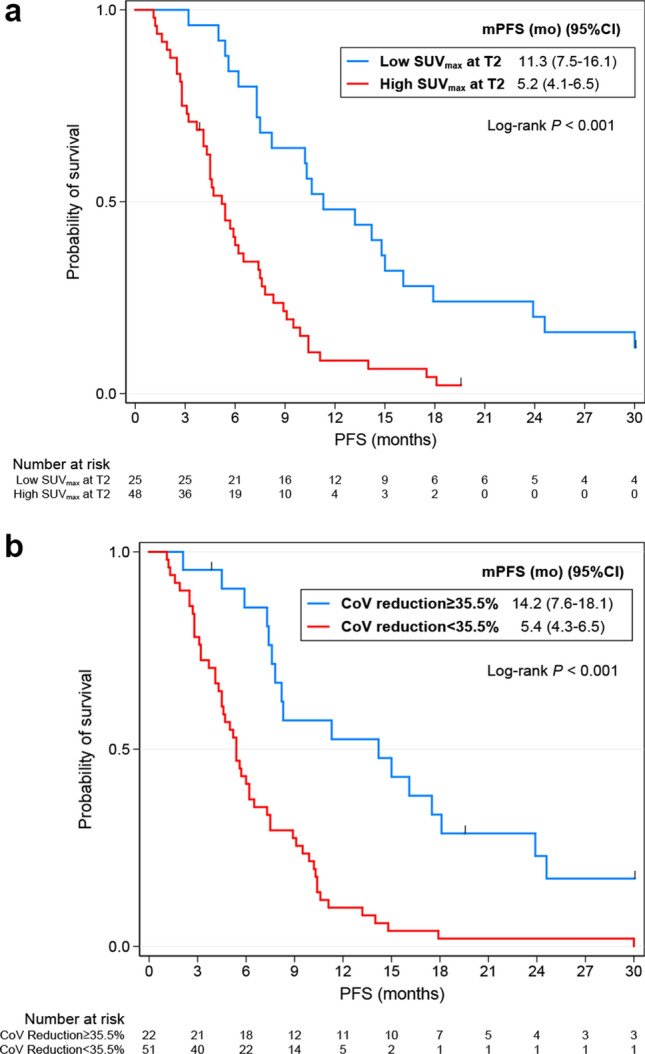
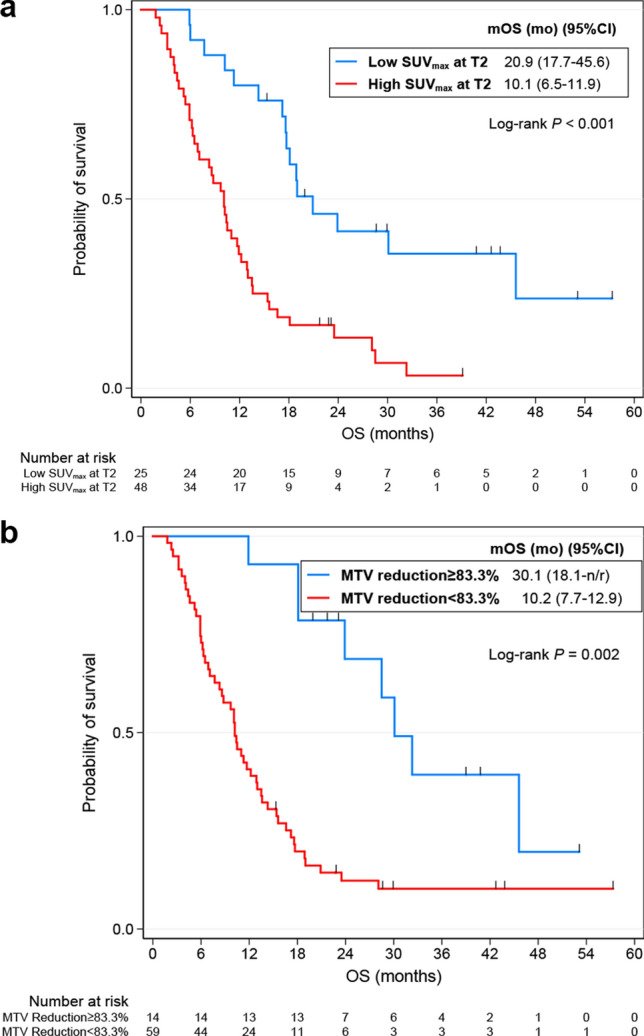
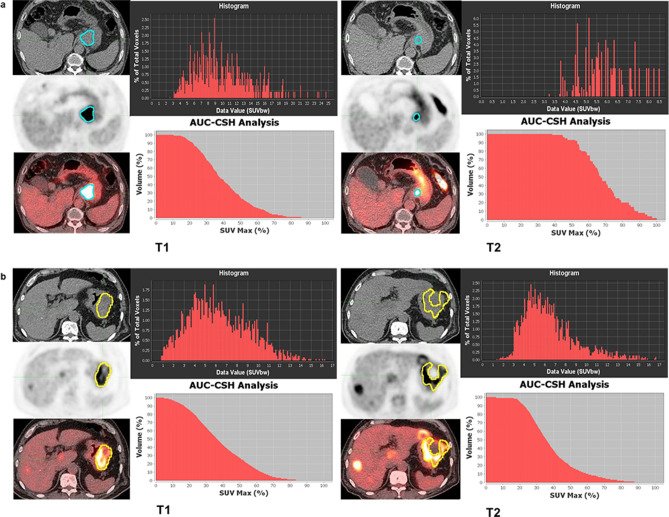
그림 출처: PubMed Central 공개 논문 (PMC7804009)
Conflict of interest statement
The authors declare no competing interests.
그 밖의 정보
- 출판 형태
- Journal Article, Research Support, Non-U.S. Gov't
- 저널
- Scientific reports · eISSN 2045-2322
- 전자 출판
- 2021-01-12
- MeSH
- Adult · Aged · Aged, 80 and over · Drug Therapy · Female · Fluorodeoxyglucose F18 / pharmacokinetics · Humans · Kaplan-Meier Estimate · Male · Middle Aged · Palliative Care* · Positron Emission Tomography Computed Tomography · Prospective Studies · Radiopharmaceuticals / pharmacokinetics · Stomach Neoplasms / diagnostic imaging / drug therapy / metabolism / pathology · Treatment Outcome · Tumor Burden / drug effects / physiology · Tumor Microenvironment / drug effects / physiology
- Substances
- Radiopharmaceuticals · Fluorodeoxyglucose F18
- 참고문헌
- 35편