
Sci Rep. 2021;11(1):6966.
Ten-year trends of hypertension treatment and control rate in Korea.
제1저자 김광일 · 교신저자 김철호
소속 (5)
- Department of Internal Medicine, Seoul National University College of Medicine, Seoul, Republic of Korea.
- Department of Internal Medicine, Seoul National University Bundang Hospital, Gumi-ro 173-82, Bundang-gu, Seongnam, Kyeongi, 463-707, Republic of Korea.
- Medical Research Collaborating Center, Seoul National University Bundang Hospital, Seongnam, Republic of Korea.
- Department of Internal Medicine, Seoul National University College of Medicine, Seoul, Republic of Korea. cheolkim@snu.ac.kr.
- Department of Internal Medicine, Seoul National University Bundang Hospital, Gumi-ro 173-82, Bundang-gu, Seongnam, Kyeongi, 463-707, Republic of Korea. cheolkim@snu.ac.kr.
Abstract
We analyzed the Korean National Health and Nutrition Examination Survey (KNHANES) database to determine the trends of hypertension treatment and control rate in Korea over the past 10 years. In addition, we tried to investigate the effect of chronic medical conditions on hypertension management. We investigated the hypertension prevalence, awareness, treatment, and control rate from 2008 to 2017. KNHANES, which uses a stratified multistage sampling design, is a cross-sectional, nationally representative survey conducted by the Korean government. A total of 59,282 adults (≥ 20 years) were included, which was representative of the total population of around 40 million Koreans per year. The mean age was 50.7 ± 16.4 years and 42.6% were male. The prevalence of hypertension, hypercholesterolemia, diabetes mellitus, and obesity significantly increased over the 10 years. During this period, the hypertension treatment and control rate significantly improved. Hypertension treatment rate was significantly lower in the younger age group compared to the older age group, but the control rate among the treated patients was not significantly different between age groups. The treatment and control rates of hypertension were higher in patients with multimorbidity, which implies that it has a favorable effect on the treatment and control of hypertension. Hypertension treatment and control rate have improved over the past 10 years. The higher treatment and control rate in patients with multimorbidity suggest that the more aggressive surveillance might be associated with the improvement of hypertension treatment and control rate in Korea.
Figures
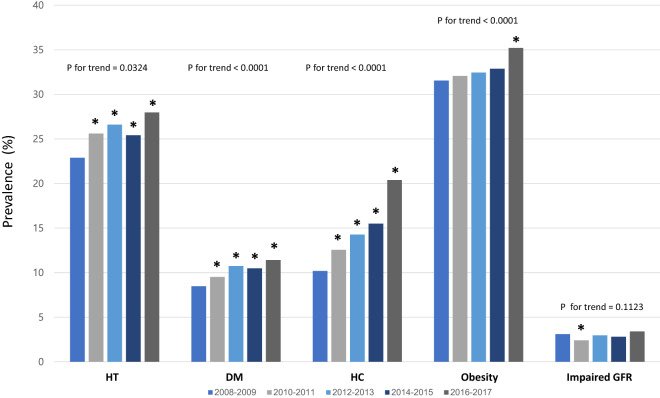
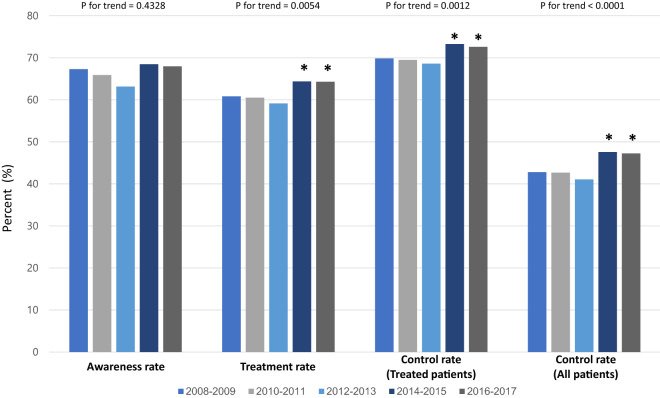
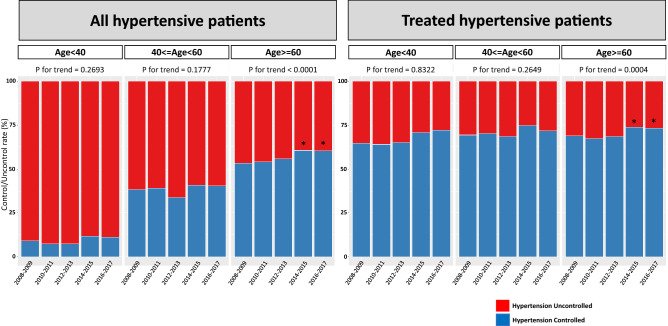
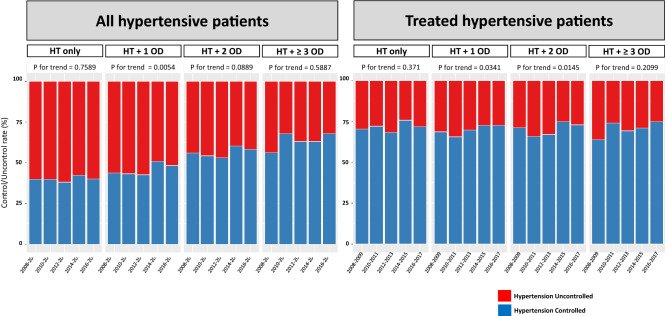
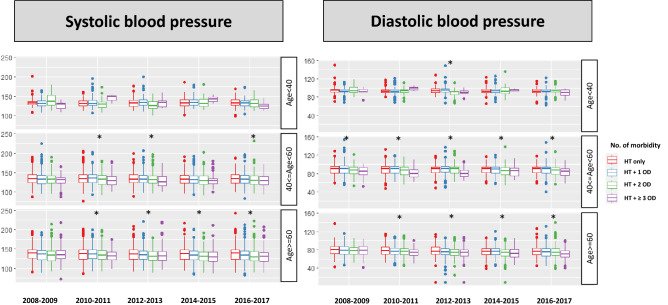
그림 출처: PubMed Central 공개 논문 (PMC7997987)
Conflict of interest statement
The authors declare no competing interests.
그 밖의 정보
- 출판 형태
- Journal Article, Research Support, Non-U.S. Gov't
- 저널
- Scientific reports · eISSN 2045-2322
- 전자 출판
- 2021-03-26
- MeSH
- Blood Pressure / physiology · Chronic Disease / epidemiology · Cross-Sectional Studies · Diabetes Mellitus / epidemiology · Female · Health Surveys · Humans · Hypercholesterolemia / epidemiology · Hypertension / epidemiology / therapy · Male · Middle Aged · Nutrition Surveys · Obesity / epidemiology · Republic of Korea / epidemiology
- 참고문헌
- 22편