
Sci Rep. 2021;11(1):21206.
In-depth proteomic profiling captures subtype-specific features of craniopharyngiomas.
제1저자 김정희, 김혜윤 · 교신저자 한도현, 김용휘
소속 (8)
- Department of Internal Medicine, Seoul National University Hospital, Seoul, Republic of Korea.
- Pituitary Center, Seoul National University Hospital, Seoul, Republic of Korea.
- Proteomics Core Facility, Biomedical Research Institute, Seoul National University Hospital, 101 Daehak-ro, Jongno-gu, Seoul, 03080, Republic of Korea.
- Department of Pathology, Seoul National University Hospital, Seoul, Republic of Korea.
- Proteomics Core Facility, Biomedical Research Institute, Seoul National University Hospital, 101 Daehak-ro, Jongno-gu, Seoul, 03080, Republic of Korea. hdh03@snu.ac.kr.
- Transdisciplinary Department of Medicine & Advanced Technology, Seoul National University Hospital, Seoul, Republic of Korea. hdh03@snu.ac.kr.
- Pituitary Center, Seoul National University Hospital, Seoul, Republic of Korea. kimyh96@snu.ac.kr.
- Department of Neurosurgery, Seoul National University Hospital, 101 Daehak-ro, Jongno-gu, Seoul, 03080, Republic of Korea. kimyh96@snu.ac.kr.
Abstract
Craniopharyngiomas are rare epithelial tumors derived from pituitary gland embryonic tissue. This epithelial tumor can be categorized as an adamantinomatous craniopharyngioma (ACP) or papillary craniopharyngioma (PCP) subtype with histopathological and genetic differences. Genomic and transcriptomic profiles of craniopharyngiomas have been investigated; however, the proteomic profile has yet to be elucidated and added to these profiles. Recent improvements in high-throughput quantitative proteomic approaches have introduced new opportunities for a better understanding of these diseases and the efficient discovery of biomarkers. We aimed to confirm subtype-associated proteomic changes between ACP and PCP specimens. We performed a system-level proteomic study using an integrated approach that combines mass spectrometry-based quantitative proteomic, statistical, and bioinformatics analyses. The bioinformatics analysis showed that differentially expressed proteins between ACP and PCP were significantly involved in mitochondrial organization, fatty acid metabolic processes, exocytosis, the inflammatory response, the cell cycle, RNA splicing, cell migration, and neuron development. Furthermore, using network analysis, we identified hub proteins that were positively correlated with ACP and PCP phenotypes. Our findings improve our understanding of the pathogenesis of craniopharyngiomas and provide novel insights that may ultimately translate to the development of craniopharyngioma subtype-specific therapeutics.
© 2021. The Author(s).
Figures
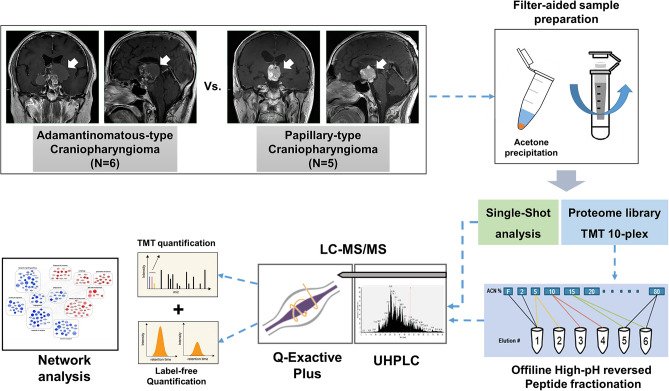
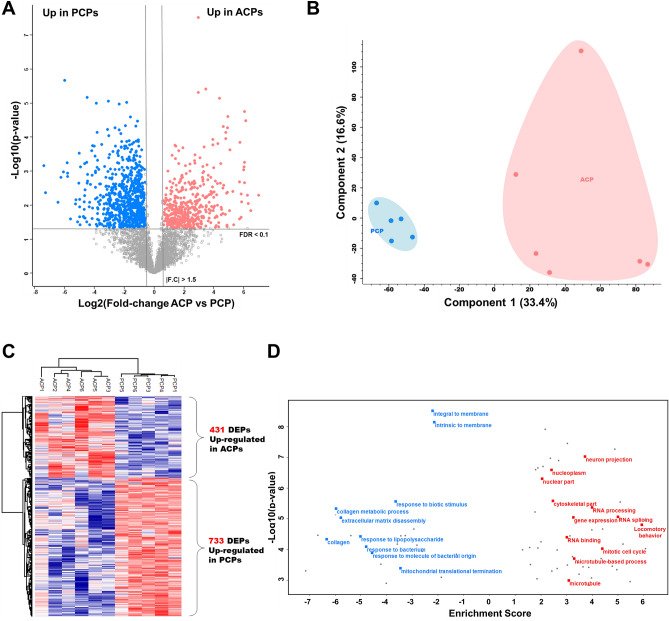
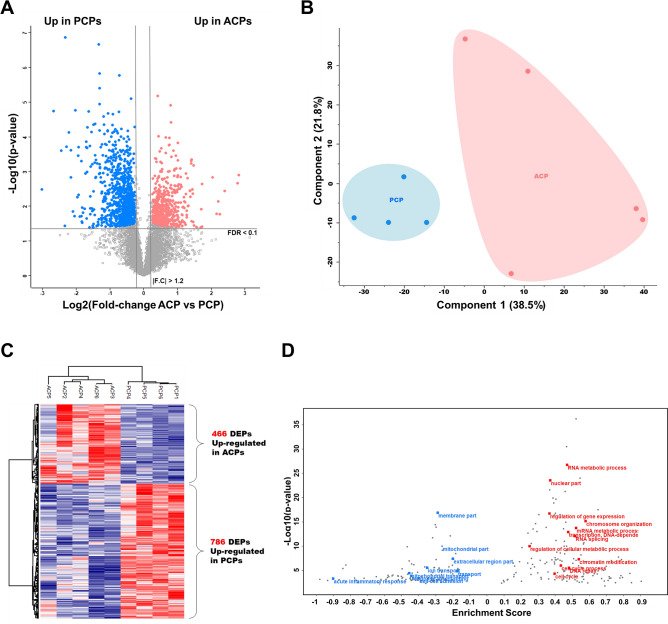
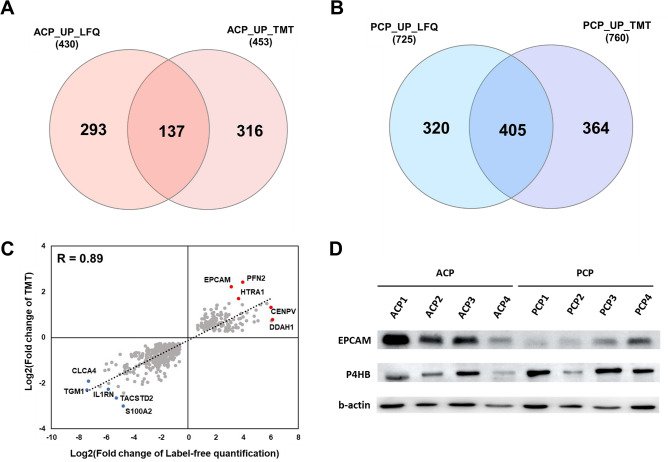
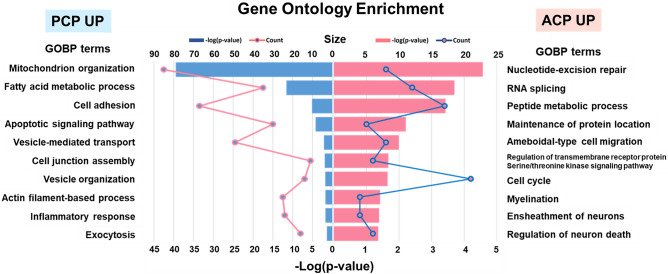
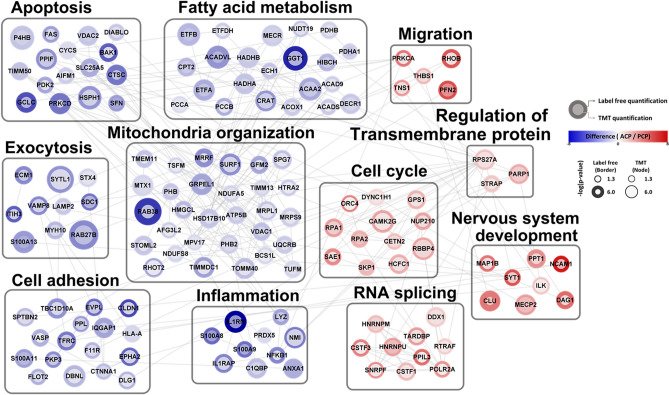
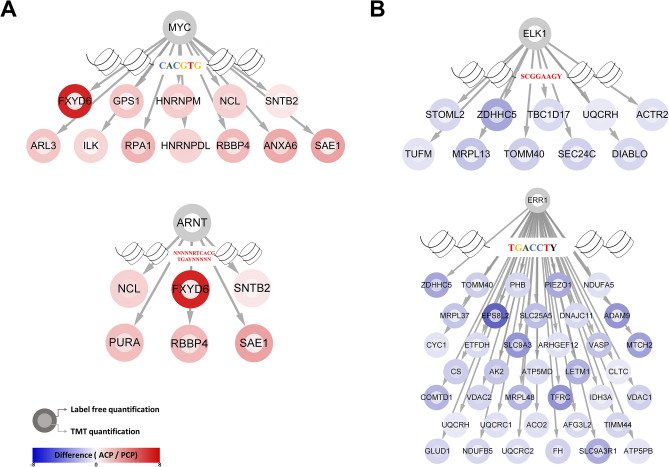
그림 출처: PubMed Central 공개 논문 (PMC8551227)
Conflict of interest statement
The authors declare no competing interests.
그 밖의 정보
- 출판 형태
- Journal Article, Research Support, Non-U.S. Gov't
- 저널
- Scientific reports · eISSN 2045-2322
- 전자 출판
- 2021-10-27
- MeSH
- Adult · Aged · Biomarkers, Tumor / genetics / metabolism · Craniopharyngioma / classification / metabolism / pathology · Female · Gene Regulatory Networks · Humans · Male · Metabolic Networks and Pathways · Middle Aged · Pituitary Neoplasms / classification / metabolism / pathology · Proteome / genetics / metabolism
- Substances
- Biomarkers, Tumor · Proteome
- 참고문헌
- 63편