
Br J Cancer. 2009;100(5):732-8.
Biomarker analysis in stage III-IV (M0) gastric cancer patients who received curative surgery followed by adjuvant 5-fluorouracil and cisplatin chemotherapy: epidermal growth factor receptor (EGFR) associated with favourable survival.
제1저자 김진수 · 교신저자 김태유
소속 (1)
- Department of Internal Medicine, Seoul National University Hospital, Republic of Korea.
Abstract
The aim of this study was to analyse the impact of epidermal growth factor receptor (EGFR), thymidylate synthase (TS), dihydropyrimidine dehydrogenase (DPD), thymidine phosphorylase (TP), aurora kinase (ARK) A/B, and excision repair cross-complementing gene 1 (ERCC1) on the efficacy of adjuvant chemotherapy with 5-fluorouracil and cisplatin (FP) after curative gastric resection. Normal and cancer tissue were separately obtained from gastrectomy samples of 153 patients with AJCC stage III-IV (M0) who subsequently treated with adjuvant FP chemotherapy. TS, DPD, TP, ERCC1, and ARK proteins were measured by immunohistochemistry (IHC). EGFR expression was investigated using a standardized IHC with the EGFR PharmDx assay. Amplification of EGFR gene was analysed using fluorescent in situ hybridisation (FISH). In multivariate analysis, stage, ratio of positive to removed lymph nodes, and EGFR expression were significant prognostic factors for overall survival. Patients with higher EGFR expression had better overall survival than those with lower expression (relative risk: 0.475 (95% confidence interval, 0.282-0.791, P=0.005). Low EGFR expression might be a predictive marker for relapse in curative resected stage III-IV (M0) gastric cancer patients who received adjuvant FP chemotherapy.
Figures
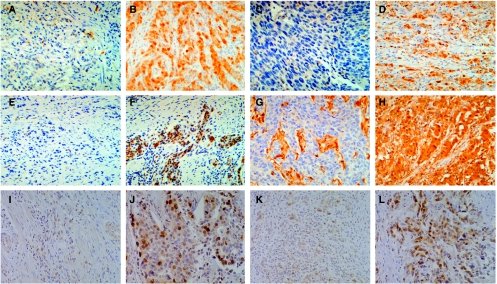
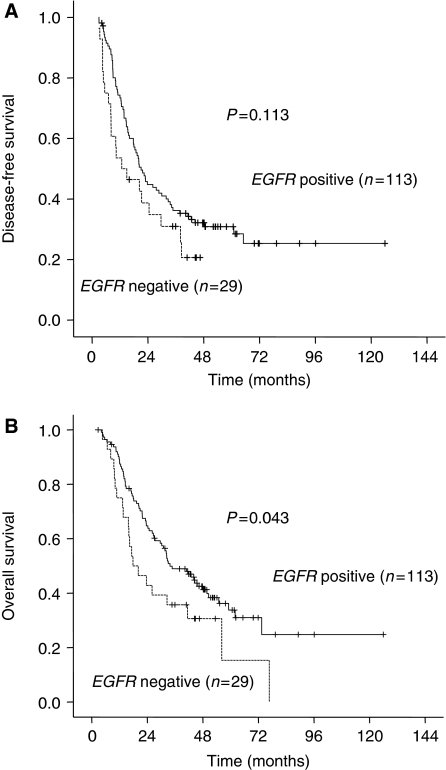
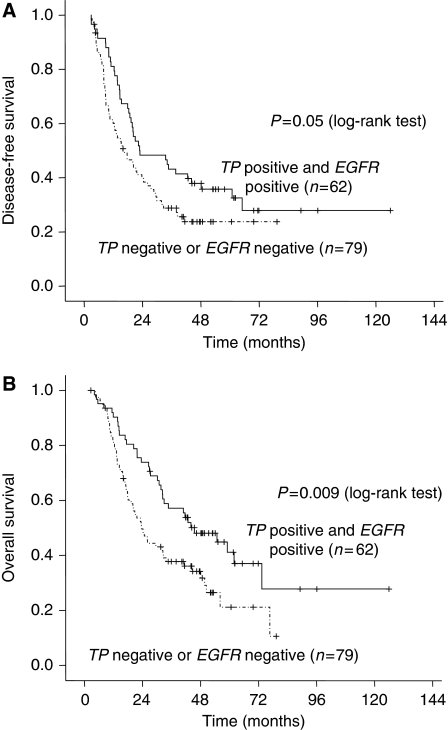
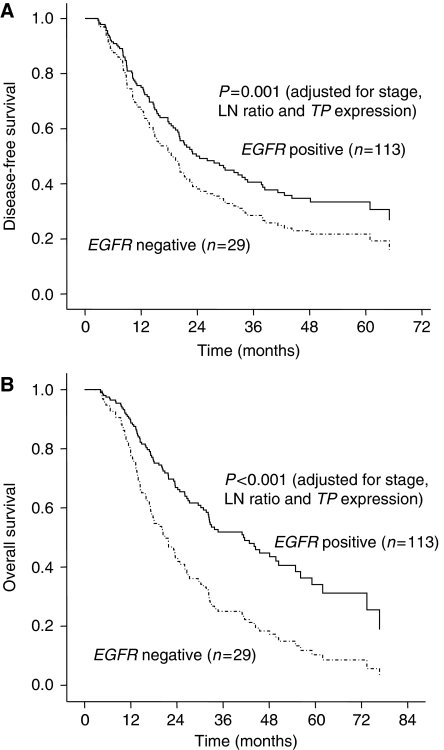
그림 출처: PubMed Central 공개 논문 (PMC2653762)
그 밖의 정보
- 출판 형태
- Evaluation Study, Journal Article, Research Support, Non-U.S. Gov't
- 저널
- British journal of cancer · eISSN 1532-1827
- MeSH
- Adenocarcinoma / genetics / mortality / pathology / therapy · Adolescent · Adult · Aged · Antineoplastic Combined Chemotherapy Protocols / therapeutic use · Biomarkers, Tumor / analysis / genetics · Chemotherapy, Adjuvant · Cisplatin / administration & dosage · ErbB Receptors / genetics · Female · Fluorouracil / administration & dosage · Gastrectomy* · Gene Expression Regulation, Neoplastic · Humans · Male · Middle Aged · Neoplasm Staging · Stomach Neoplasms / genetics / mortality / pathology / therapy · Survival Analysis · Treatment Outcome · Young Adult
- Substances
- Biomarkers, Tumor · ErbB Receptors · Cisplatin · Fluorouracil
- 참고문헌
- 36편