
PLoS One. 2015;10(8):e0136085.
Glycemic Control and Mortality in Diabetic Patients Undergoing Dialysis Focusing on the Effects of Age and Dialysis Type: A Prospective Cohort Study in Korea.
제1저자 박지인 · 교신저자 이하정
소속 (7)
- Department of Internal Medicine, Kangwon National University College of Medicine, Chuncheon, Korea; Clinical Research Center of End Stage Renal Disease in Korea, Daegu, Korea.
- Clinical Research Center of End Stage Renal Disease in Korea, Daegu, Korea; Department of Internal Medicine, Seoul National University College of Medicine, Seoul, Korea.
- Clinical Research Center of End Stage Renal Disease in Korea, Daegu, Korea; Department of Internal Medicine, Kyungpook National University School of Medicine, Daegu, Korea.
- Clinical Research Center of End Stage Renal Disease in Korea, Daegu, Korea; Department of Internal Medicine, Yonsei University College of Medicine, Seoul, Korea.
- Clinical Research Center of End Stage Renal Disease in Korea, Daegu, Korea; Department of Internal Medicine, The Catholic University of Korea College of Medicine, Seoul, Korea.
- Clinical Research Center of End Stage Renal Disease in Korea, Daegu, Korea; Department of Internal Medicine, Chonnam National University Medical School, Gwangju, Korea.
- Clinical Research Center of End Stage Renal Disease in Korea, Daegu, Korea; Department of Internal Medicine, Seoul National University Boramae Medical Center, Seoul, Korea.
Abstract
BACKGROUND Active glycemic control has been proven to delay the onset and slow the progression of diabetic retinopathy, nephropathy, and neuropathy in diabetic patients, but the optimal level is obscure in end-stage renal disease. In this study, we evaluated the effect of hemoglobin A1c (HbA1c) on mortality of diabetic patients on dialysis, focusing on age and dialysis type.
METHODS Of 3,302 patients enrolled in the prospective cohort for end-stage renal disease in Korea between August 2008 and October 2013, 1,239 diabetic patients who had been diagnosed with diabetes or having HbA1c≥6.5% at the time of enrollment were analyzed. Age was categorized as <55, 55-64 and ≥65 years old. Age, sex, modified Charlson comorbidity index, hemoglobin, primary renal disease, body mass index, and dialysis duration were adjusted.
RESULTS A total of 873 patients received hemodialysis (HD) and 366 underwent peritoneal dialysis (PD). During the mean follow-up of 19.1 months, 141 patients died. Patients with poor glucose control (HbA1c≥8%) showed worse survival than patients with HbA1c<8% (hazard ratio [HR], 2.2; 95% confidence interval [CI], 1.48-3.29; P<0.001). Subgroup analysis divided by age revealed that HbA1c≥8% was a predictor of mortality in age <55 (HR, 4.3; 95% CI, 1.78-10.41; P = 0.001) and age 55-64 groups (HR, 3.3; 95% CI, 1.56-7.05; P = 0.002), but not in age ≥65 group. Combining dialysis type and age, poor glucose control negatively affected survival only in age < 55 group among HD patients, but it was significant in age < 55 and age 55-64 groups in PD patients. Deaths from infection were more prevalent in the PD group, and poor glucose control tended to correlate with more deaths from infection in PD patients (P = 0.050).
CONCLUSIONS In this study, the effect of glycemic control differed according to age and dialysis type in diabetic patients. Thus, the target of glycemic control should be customized; further observational studies may strengthen the clinical relevance.
Figures
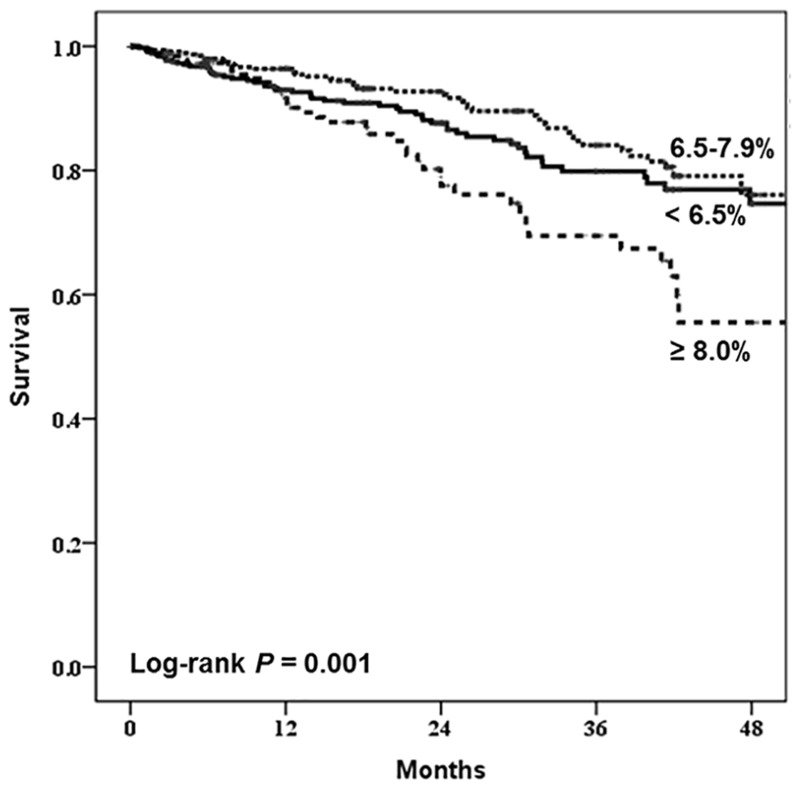
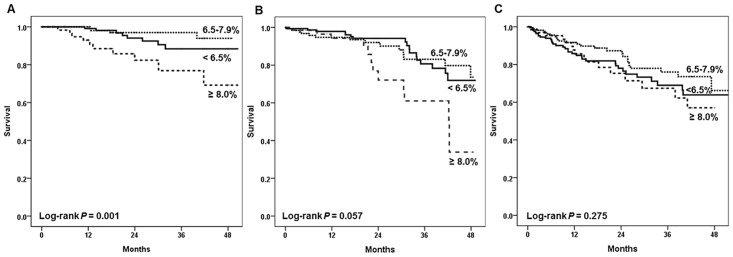
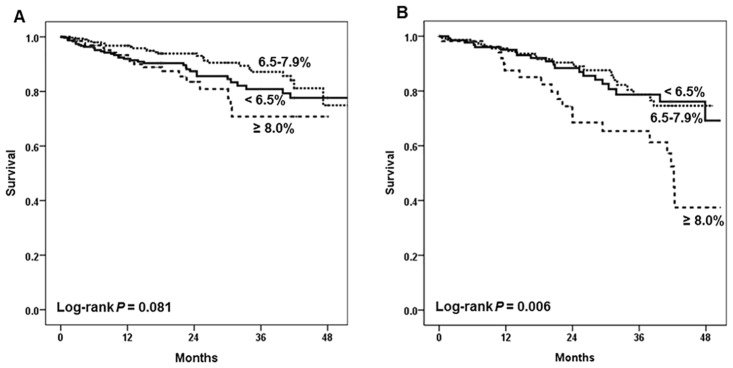
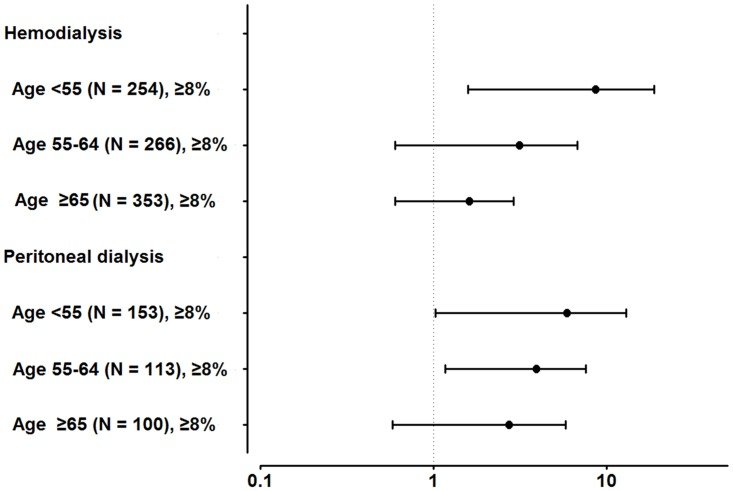
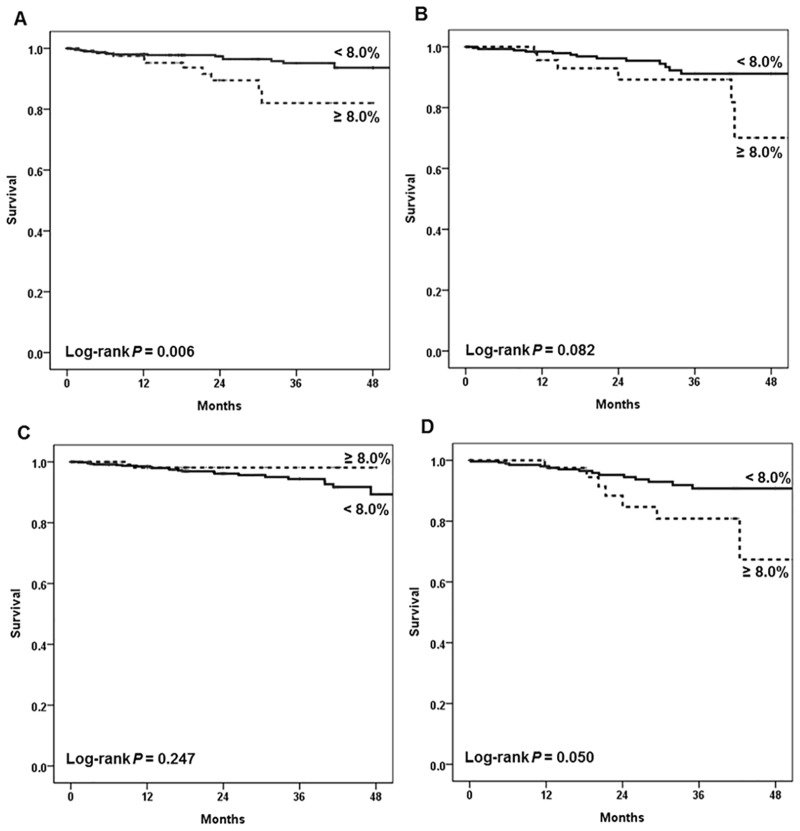
그림 출처: PubMed Central 공개 논문 (PMC4540490)
Conflict of interest statement
Competing Interests:The authors have declared that no competing interests exist.
그 밖의 정보
- 출판 형태
- Journal Article, Research Support, Non-U.S. Gov't
- 저널
- PloS one · eISSN 1932-6203
- 전자 출판
- 2015-08-18
- MeSH
- Adolescent · Adult · Age Factors · Aged · Blood Glucose / analysis · Diabetes Mellitus, Type 2 / complications · Female · Glycated Hemoglobin / analysis · Humans · Hyperglycemia / etiology / mortality · Hypoglycemia / etiology / mortality · Kidney Failure, Chronic / etiology / mortality / therapy · Male · Middle Aged · Peritoneal Dialysis / mortality · Prospective Studies · Quality of Life · Renal Dialysis / mortality · Republic of Korea · Survival Rate · Young Adult
- Substances
- Blood Glucose · Glycated Hemoglobin
- 참고문헌
- 30편