
Sci Rep. 2020;10(1):11159.
Innovation of EUS-guided transmural gallbladder drainage using a novel self-expanding metal stent.
제1저자 허건, 최진호 · 교신저자 이상협
소속 (4)
- Division of Gastroenterology, Department of Internal Medicine, Liver Research Institute, Seoul National University Hospital, Seoul National University College of Medicine, 101 Daehak-ro, Jongno-gu, Seoul, 110-744, Korea.
- Division of Gastroenterology, Department of Internal Medicine, Liver Research Institute, Seoul National University Hospital, Seoul National University College of Medicine, 101 Daehak-ro, Jongno-gu, Seoul, 110-744, Korea. gidoctor@snuh.org.
- Department of Internal Medicine, Inha University School of Medicine, Incheon, Korea.
- S&G Biotech Inc., Yongin, Korea.
Abstract
Endoscopic ultrasonography (EUS)-guided transmural drainage has been accepted as a modality of choice in peripancreatic fluid collection and acute cholecystitis. Each type of stent, including double-pigtail plastic stents, tubular self-expandable metal stents (SEMS), and lumen-apposing metal stents, for these procedure has its own advantages and disadvantages. To overcome their disadvantages, this animal study evaluated the feasibility of a newly designed twisted fully covered SEMS with spiral coiled ends. We performed the EUS-guided cholecystogastrostomy with a newly developed metal stent in eight mini pigs with surgically induced gallbladder distension. This novel stent is a twisted fully covered SEMS with spiral coiled ends, a diameter of 8 mm, and a length of 6 cm. The stent has been maintained for four to seven weeks after EUS-guided cholecystogastrostomy. The primary outcome was the technical success rate, and the secondary outcomes were adverse events, stent dysfunction, stent removability, and fistula formation. The stent was placed successfully between the gallbladder and the stomach in all cases without any adverse event. We observed neither stent migration nor dysfunction during the study period, and all the stents were removed easily as scheduled. We confirmed successful cholecysto-gastric fistula formation at endoscopic and histologic level in all cases. EUS-guided transmural drainage and fistula formation using a new twisted fully covered metal stent with spiral coiled ends was technically feasible without any adverse event in this animal study. Further clinical studies are needed to evaluate its efficacy and safety in real practice.
Figures
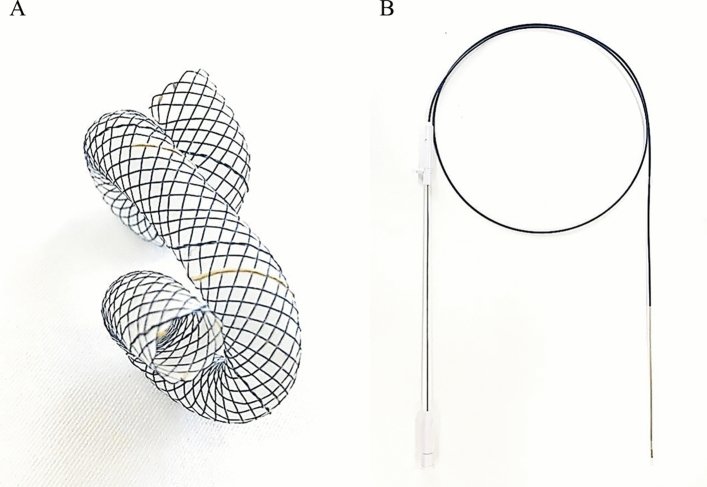
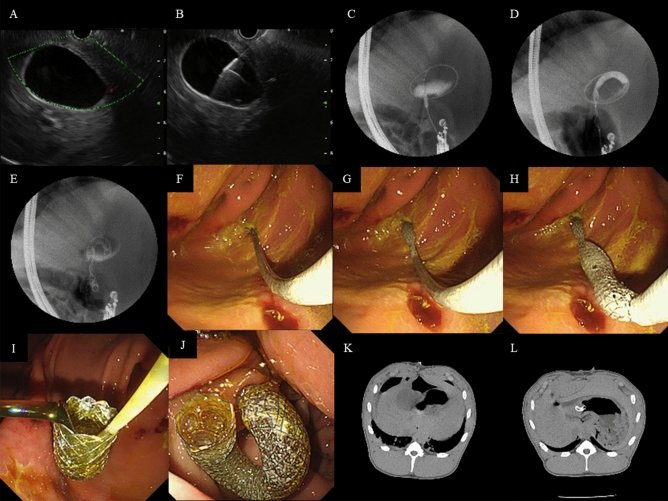
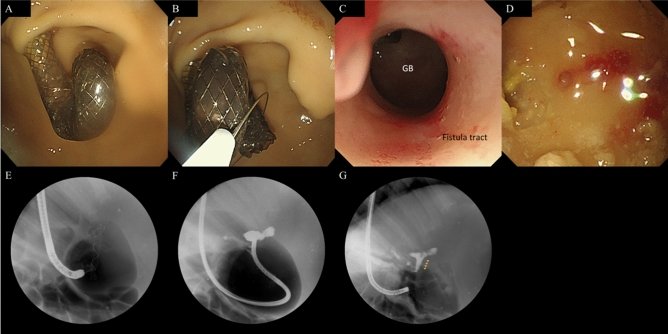
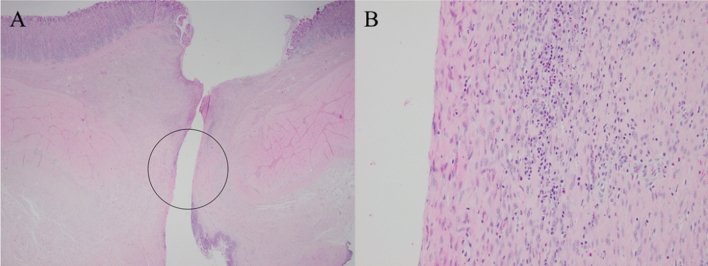
그림 출처: PubMed Central 공개 논문 (PMC7341883)
Conflict of interest statement
Dr. Sang Hyub Lee is the inventor of the Tornado stent. Gyeong Hwan Kim is full-time employee of S&G Biotech Inc. Sung Gwon Kang is CEO of S&G Biotech Inc. Other authors declare no financial relationships with a commercial entity producing health-care related products and/or services relevant to this article.
그 밖의 정보
- 출판 형태
- Journal Article, Research Support, Non-U.S. Gov't
- 저널
- Scientific reports · eISSN 2045-2322
- 전자 출판
- 2020-07-07
- MeSH
- Animals · Disease Models, Animal · Drainage / instrumentation / methods · Endosonography / methods · Gallbladder / diagnostic imaging / surgery · Gallbladder Diseases / surgery · Male · Prosthesis Implantation / instrumentation / methods · Self Expandable Metallic Stents* · Swine · Swine, Miniature · Ultrasonography, Interventional / methods
- 참고문헌
- 27편