
Sci Rep. 2020;10(1):18260.
Prognostic impact of malignant diseases in idiopathic pulmonary fibrosis.
제1저자 이홍열 · 교신저자 최선미
소속 (2)
- Division of Pulmonary and Critical Care Medicine, Department of Internal Medicine, Seoul National University Hospital, 101 Daehak-ro, Jongno-gu, Seoul, 03080, Republic of Korea.
- Division of Pulmonary and Critical Care Medicine, Department of Internal Medicine, Seoul National University Hospital, 101 Daehak-ro, Jongno-gu, Seoul, 03080, Republic of Korea. sunmich81@gmail.com.
Abstract
No studies on idiopathic pulmonary fibrosis (IPF) have investigated the prognostic impact of extrapulmonary cancers in patients with IPF. We aimed to determine the prognostic impact of malignancies in patients with IPF. We retrospectively reviewed the medical records of patients diagnosed with IPF between 2001 and 2015. Patients were divided into three groups: IPF without cancer (n = 440), IPF with lung cancer (n = 69), and IPF with extrapulmonary cancer (n = 70). Of the 579 patients with IPF, 139 (24%) had cancer; the three most common types were lung (11.9%), gastric (2.4%), and colorectal (1.9%). Survival was significantly worse in patients with lung cancer than in those without cancer (hazard ratio [HR] = 1.83, 95% confidence interval [CI], 1.35-2.48) or those with extrapulmonary cancer (HR = 1.70, 95% CI, 1.14-2.54). The rate of hospitalisation for cancer-related complications was significantly higher in IPF patients with lung cancer than in those with extrapulmonary cancer. The annual rates of decline in percent predicted forced vital capacity and diffusion capacity for carbon monoxide did not differ among the groups. Physicians should pay attention to the development and progression of cancer and its prognostic impact in patients with IPF.
Figures
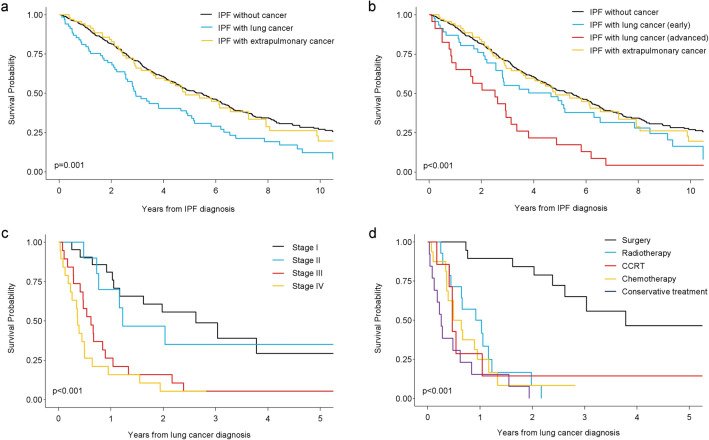
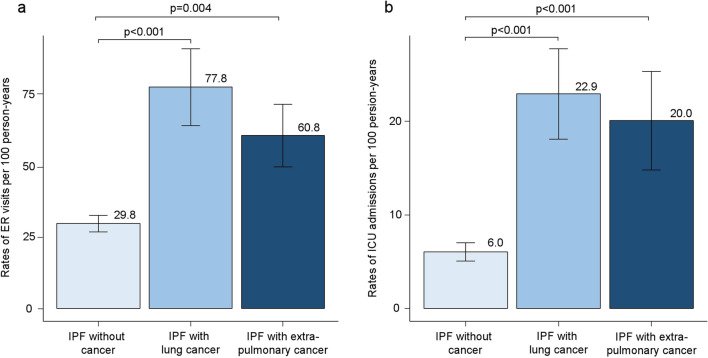
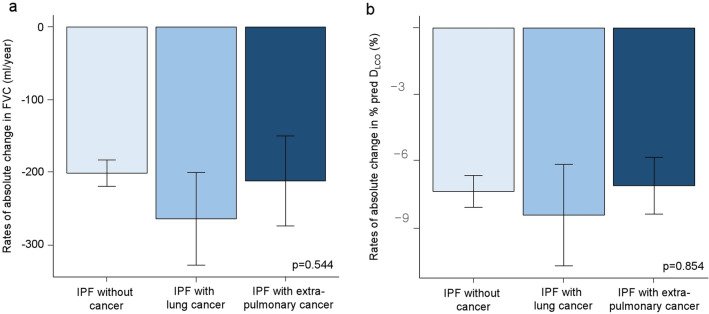
그림 출처: PubMed Central 공개 논문 (PMC7588444)
Conflict of interest statement
The authors declare no competing interests.
그 밖의 정보
- 출판 형태
- Journal Article
- 저널
- Scientific reports · eISSN 2045-2322
- 전자 출판
- 2020-10-26
- MeSH
- Aged · Databases, Factual · Disease Progression · Female · Humans · Idiopathic Pulmonary Fibrosis / complications / pathology · Lung Neoplasms / etiology / pathology · Male · Middle Aged · Neoplasms / etiology / pathology · Prognosis · Retrospective Studies · Risk Factors · Survival Rate · Tomography, X-Ray Computed / methods
- 참고문헌
- 27편