
Sci Rep. 2018;8(1):4466.
Combination of sodium-glucose cotransporter 2 inhibitor and dipeptidyl peptidase-4 inhibitor in type 2 diabetes: a systematic review with meta-analysis.
제1저자 민세희, 윤정화 · 교신저자 한서경, 조영민
소속 (4)
- Division of Endocrinology and Metabolism, Department of Internal Medicine, Seoul National University College of Medicine, Seoul, South Korea.
- Interdisciplinary Program in Medical Informatics, Seoul National University College of Medicine, Seoul, South Korea.
- Department of Medicine, Seoul National University College of Medicine, Seoul, South Korea. hahns@snu.ac.kr.
- Division of Endocrinology and Metabolism, Department of Internal Medicine, Seoul National University College of Medicine, Seoul, South Korea. ymchomd@snu.ac.kr.
Abstract
Sodium glucose cotransporter 2 (SGLT2) inhibitors and dipeptidyl peptidase-4 (DPP4) inhibitors have complementary mode of action. For the meta-analysis comparing the efficacy and safety between SGLT2 inhibitor plus DPP4 inhibitor (SGLT2i/DPP4i) and placebo plus DPP4 inhibitor (PCB/DPP4i) in patients with type 2 diabetes mellitus (T2DM), we selected randomized controlled trials from electronic databases by predefined criteria. The primary outcome of interest was the change in glycated hemoglobin A1c (HbA1c) from baseline. Of 605 potentially relevant studies, 7 eligible RCTs comprising 2,082 patients were included.SGLT2i/DPP4i showed a greater reduction in HbA1c (weighted mean difference -0.6%, 95% CI -0.7 to -0.5%), fasting plasma glucose, 2 h postprandial plasma glucose, and body weight compared to PCB/DPP4i. The risk of hypoglycemia increased in SGLT2i/DPP4i compared to that in PCB/DPP4i only when insulin or sulfonylureas were included as a background therapy. The risk of urinary tract infection was not increased in SGLT2i/DPP4i; however, the risk of genital infection increased upon adding SGLT2 inhibitors to pre-existing DPP4 inhibitors. In conclusion, compared to PCB/DPP4i, SGLT2i/DPP4i achieved better glycemic control and greater weight reduction without increasing the risk of hypoglycemia and urinary tract infection in patients with inadequately controlled T2DM.
Figures
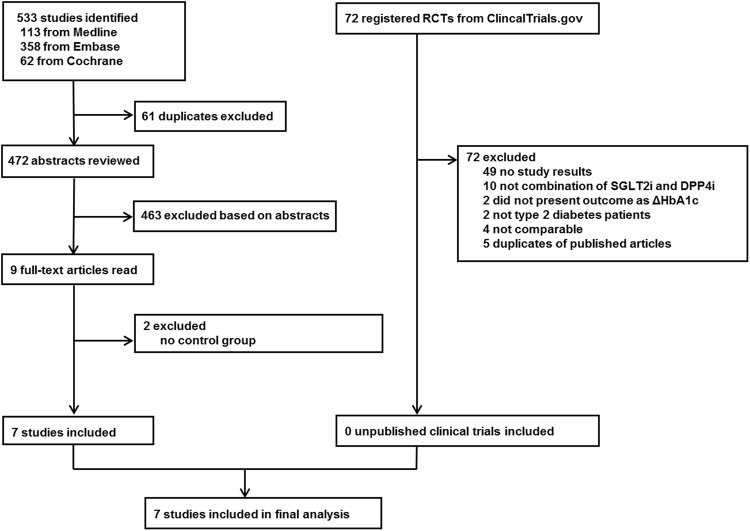
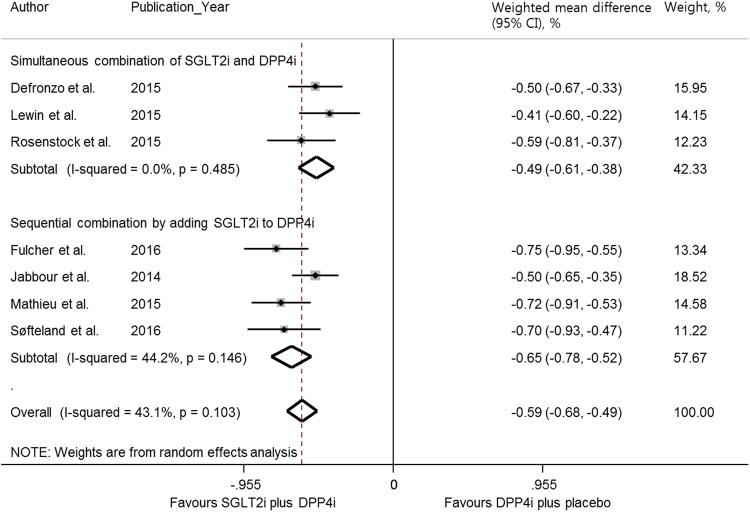
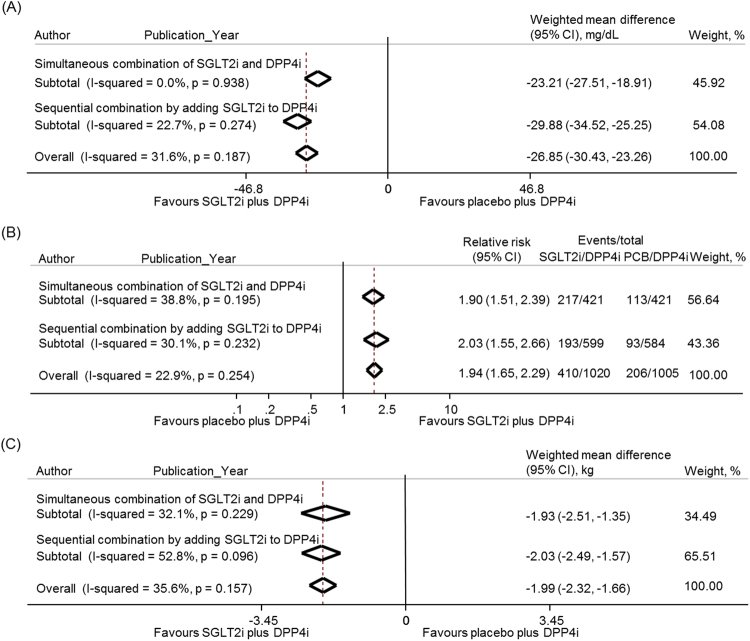
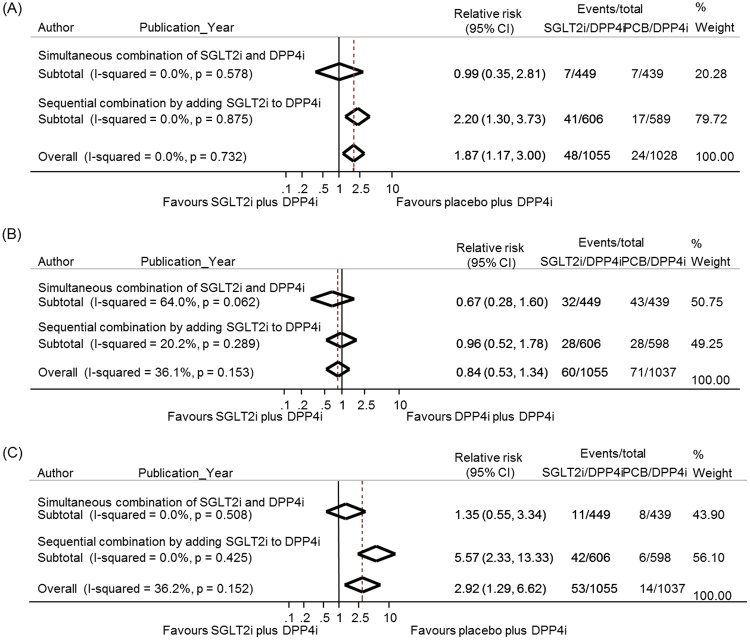
그림 출처: PubMed Central 공개 논문 (PMC5849757)
Conflict of interest statement
Y.M.C. received research grants from AstraZeneca and LG Chemical. No other potential conflicts of interest relevant to this study were reported.
그 밖의 정보
- 출판 형태
- Comparative Study, Journal Article, Meta-Analysis, Research Support, Non-U.S. Gov't, Systematic Review
- 저널
- Scientific reports · eISSN 2045-2322
- 전자 출판
- 2018-03-13
- MeSH
- Blood Glucose / metabolism · Body Weight / drug effects · Diabetes Mellitus, Type 2 / drug therapy / metabolism · Dipeptidyl-Peptidase IV Inhibitors / pharmacology / therapeutic use · Drug Therapy, Combination · Female · Glycated Hemoglobin / metabolism · Humans · Hypoglycemic Agents / pharmacology / therapeutic use · Male · Middle Aged · Randomized Controlled Trials as Topic · Sodium-Glucose Transporter 2 Inhibitors / pharmacology / therapeutic use · Treatment Outcome
- Substances
- Blood Glucose · Dipeptidyl-Peptidase IV Inhibitors · Glycated Hemoglobin · Hypoglycemic Agents · Sodium-Glucose Transporter 2 Inhibitors · hemoglobin A1c protein, human
- 참고문헌
- 28편