
J Oncol. 2019;2019:5437390.
Prognosis of Small Cell Lung Cancer with Idiopathic Pulmonary Fibrosis: Assessment according to GAP Stage.
제1저자 송명진 · 교신저자 이상훈, 이춘택
소속 (2)
- Division of Pulmonology, Department of Internal Medicine, Institute of Chest Diseases, Severance Hospital, Yonsei University College of Medicine, Seoul, Republic of Korea.
- Division of Pulmonary and Critical Care Medicine, Department of Internal Medicine, Seoul National University Bundang Hospital, 82 Gumi-ro, 173 Beon-gil, Bundang-gu, Seongnam-si, Gyeonggi-do, 463-707, Republic of Korea.
Abstract
INTRODUCTION Idiopathic pulmonary fibrosis (IPF) is an independent risk factor for lung cancer development, and small cell lung cancer (SCLC) comprises 15-20% of lung cancers with IPF. The objective of this study was to investigate survival outcomes and treatment-related complications according to GAP (gender, age, and physiology) stage in patients having SCLC with IPF (SCLC-IPF).
MATERIALS AND METHODS Retrospectively collected data of SCLC-IPF patients from two tertiary care university hospitals in South Korea were reviewed. A total of 59 SCLC-IPF patients were identified and categorized according to GAP stage, which was proposed by Ley et al. in 2012 to predict the prognosis of IPF. Survival outcomes and treatment-related complications were compared between the two groups.
RESULTS In a total of 59 patients, the median age was 71 years and 58 (98.3%) were male. In a comparison of the median overall survival (OS) according to GAP stage, median OS of the advanced GAP stage group was significantly shorter than median OS of GAP stage I group (7.1 months vs. 16.1 months; p = 0.002). Treatment-related complications occurred more frequently in the advanced GAP stage group; advanced GAP stage was the only predictor that exhibited a significant association with the incidence of acute exacerbation of IPF.
CONCLUSIONS Inferior survival outcome and higher incidence of treatment-related pulmonary toxicities were noted in the advanced GAP stage group. Furthermore, advanced GAP stage was the only predictor of treatment-related acute exacerbation of IPF. Physicians should thus consider GAP stage, which reflects the severity of IPF, during treatment of SCLC-IPF.
Figures
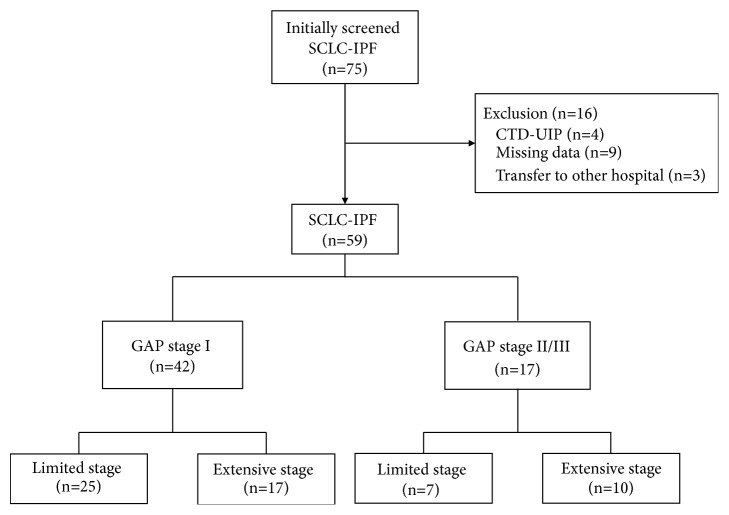
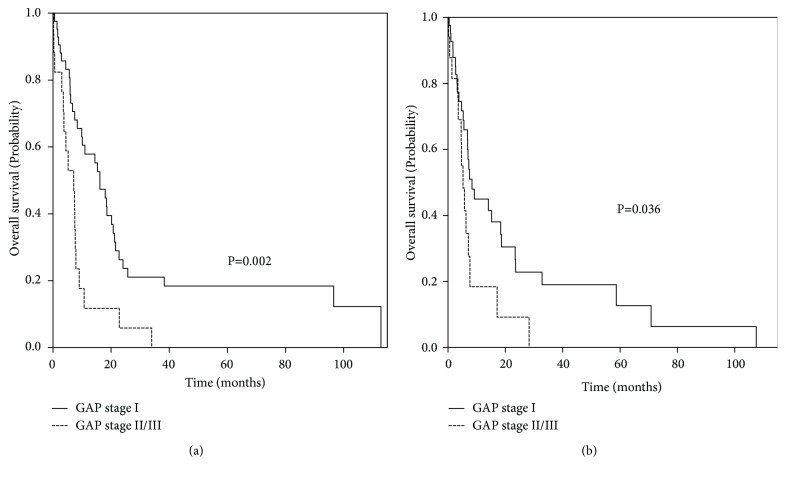

그림 출처: PubMed Central 공개 논문 (PMC6521435)
그 밖의 정보
- 출판 형태
- Journal Article
- 저널
- Journal of oncology · ISSN 1687-8450
- 전자 출판
- 2019-05-02
- 참고문헌
- 33편