
Int J Infect Dis. 2018;72:8-10.
Replicative virus shedding in the respiratory tract of patients with Middle East respiratory syndrome coronavirus infection.
제1저자 박완범,Poon LLM · 교신저자 오명돈,Peiris M
소속 (6)
- Department of Internal Medicine, Seoul National University College of Medicine, Seoul, South Korea; Laboratory of Infection and Immunity, Seoul National University Hospital Biomedical Research Institute, Seoul, South Korea.
- School of Public Health, The University of Hong Kong, Pokfulam, Hong Kong, China.
- Laboratory of Infection and Immunity, Seoul National University Hospital Biomedical Research Institute, Seoul, South Korea.
- Department of Internal Medicine, Seoul National University College of Medicine, Seoul, South Korea.
- School of Public Health, The University of Hong Kong, Pokfulam, Hong Kong, China. Electronic address: malik@hku.hk.
- Department of Internal Medicine, Seoul National University College of Medicine, Seoul, South Korea; Laboratory of Infection and Immunity, Seoul National University Hospital Biomedical Research Institute, Seoul, South Korea. Electronic address: mdohmd@snu.ac.kr.
Abstract
BACKGROUND Information on the duration of replicative Middle East respiratory syndrome coronavirus (MERS-CoV) shedding is important for infection control. The detection of MERS-CoV sub-genomic mRNAs indicates that the virus is replicative. This study examined the duration for detecting MERS-CoV sub-genomic mRNA compared with genomic RNA in diverse respiratory specimens.
METHODS Upper and lower respiratory samples were obtained from 17 MERS-CoV-infected patients. MERS-CoV sub-genomic mRNA was detected by reverse transcription PCR (RT-PCR) and MERS-CoV genomic RNA by real-time RT-PCR.
RESULTS In sputum and transtracheal aspirate, sub-genomic mRNA was detected for up to 4 weeks after symptoms developed, which correlated with the detection of genomic RNA. In oropharyngeal and nasopharyngeal swab specimens, the detection of sub-genomic mRNA and genomic RNA did not correlate.
CONCLUSIONS These findings suggest that MERS-CoV does not replicate well in the upper respiratory tract.
Copyright © 2018 The Authors. Published by Elsevier Ltd.. All rights reserved.
Keywords
Coronavirus infectionsMessengerRNARespiratory system
Figures
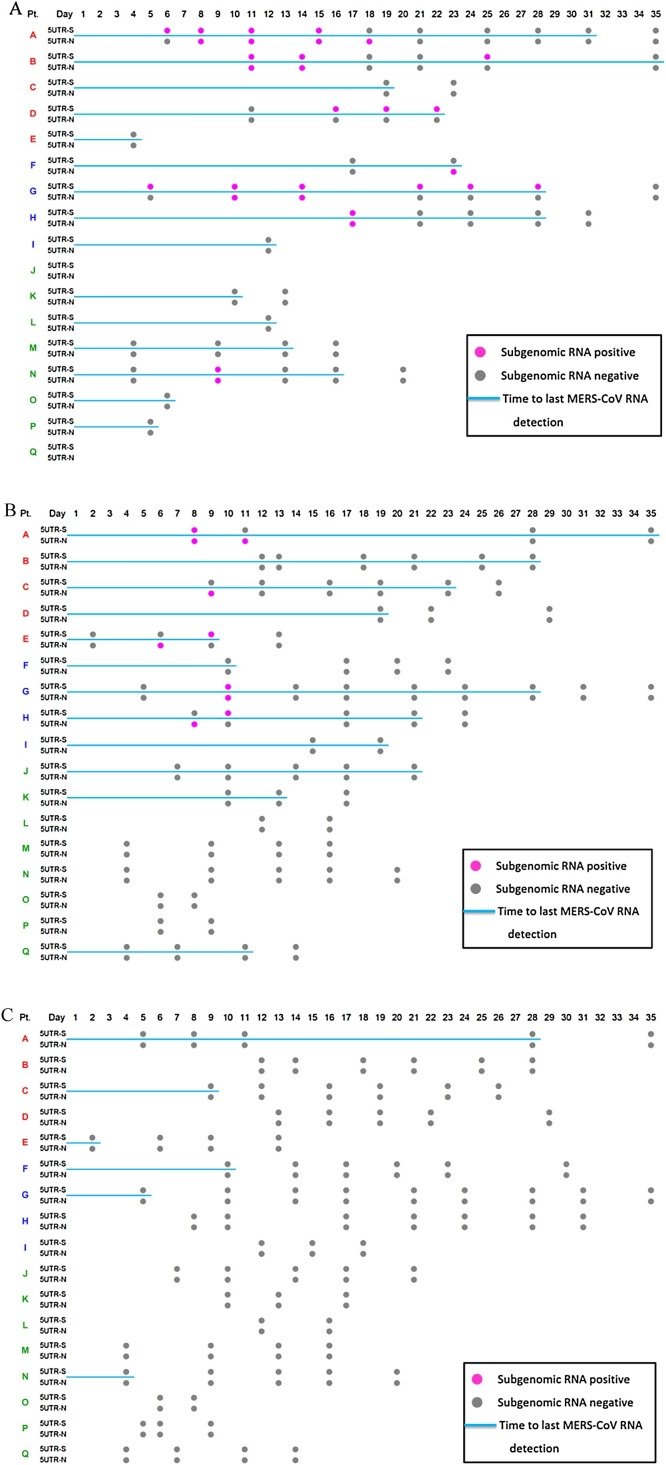
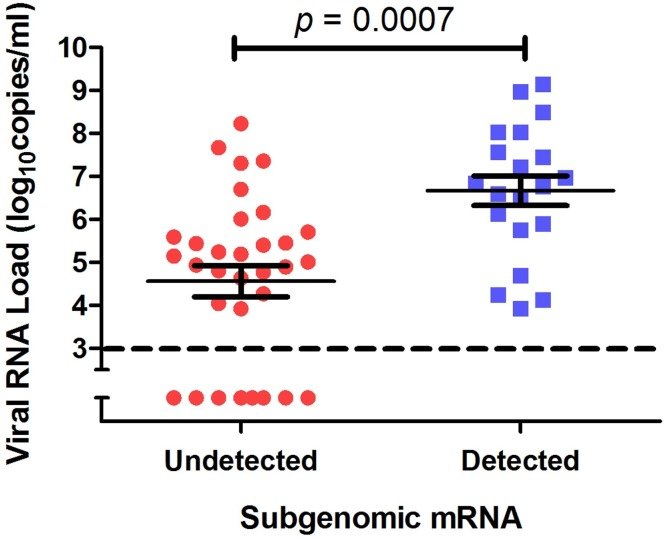
그림 출처: PubMed Central 공개 논문 (PMC7110884)
그 밖의 정보
- 출판 형태
- Journal Article
- 저널
- International journal of infectious diseases : IJID : official publication of the International Society for Infectious Diseases · eISSN 1878-3511
- 전자 출판
- 2018-05-09
- MeSH
- Coronavirus Infections / physiopathology / virology · Humans · Middle East Respiratory Syndrome Coronavirus / isolation & purification · Real-Time Polymerase Chain Reaction · Respiratory System / physiopathology / virology · Reverse Transcription · Sputum / virology · Virus Replication* · Virus Shedding*
- 참고문헌
- 8편