
Lancet Reg Health West Pac. 2026;69:101844.
Age- and sex-specific attributable impact of modifiable risk factors on atherosclerotic cardiovascular disease in Korea: a nationwide population-based cohort study.
제1저자 이희선, 강응재 · 교신저자 최수연
소속 (6)
- Department of Internal Medicine, Seoul National University College of Medicine, Seoul, Republic of Korea.
- Division of Cardiology, Seoul National University Hospital Healthcare System Gangnam Center, Seoul, Republic of Korea.
- Integrated Major in Innovative Medical Science, Seoul National University Graduate School, Seoul, Republic of Korea.
- Department of Preventive Medicine, Seoul National University College of Medicine, Seoul, Republic of Korea.
- Cancer Research Institute, Seoul National University, Seoul, Republic of Korea.
- Biomedical Research Institute, Seoul National University Hospital, Seoul, Republic of Korea.
Abstract
BACKGROUND While modifiable risk factors are central to the development of atherosclerotic cardiovascular disease (ASCVD), their relative contributions differ by age, sex, region, and period. However, contemporary evidence on these patterns in the large-scale Korean population remains scarce. We aimed to quantify the age- and sex-specific burden of major modifiable risk factors for ASCVD in a large nationwide cohort.
METHODS This retrospective cohort study included 6,249,852 Korean adults without prior ASCVD who underwent the National Health Screening between 2009 and 2010. The primary outcome was incident ASCVD, defined as cardiovascular death, myocardial infarction, or ischemic stroke. Participants were followed for these outcomes through linkage to the Korean National Health Insurance Service claims database and Statistics Korea mortality data. Population-attributable fractions (PAFs) for risk factors-body mass index, systolic blood pressure (SBP), smoking, diabetes, and non-HDL-cholesterol-were estimated from multivariable-adjusted Cox proportional hazards models and stratified by age and sex.
FINDINGS In this cohort (mean age 46.9 ± 13.7 years; 52.2% men), 279,093 ASCVD events occurred (incidence rate, 3.58/1000 person-years) during a median follow-up of 13.0 years. The five risk factors collectively explained 46.2% of the ASCVD burden, with the greatest contribution from SBP, followed by smoking, non-HDL-cholesterol, diabetes, and obesity. PAFs were higher in men (52.8%) than women (30.4%), and highest in men aged <50 years (71.5%), where SBP (48.6%) and smoking (29.4%) predominated. In women, SBP remained the leading contributor with less variation by age, whereas diabetes and atherogenic lipids contributed more prominently at older ages.
INTERPRETATION These findings reveal distinct age- and sex-specific patterns in the burden of modifiable risk factors in contemporary Koreans. Tailored prevention strategies that reflect national epidemiological profiles and demographic risk patterns are needed to effectively reduce the ASCVD burden.
FUNDING None.
© 2026 The Author(s).
Keywords
Atherosclerotic cardiovascular diseasesModifiable risk factorsPopulation-attributable fractionPrimary prevention
Figures
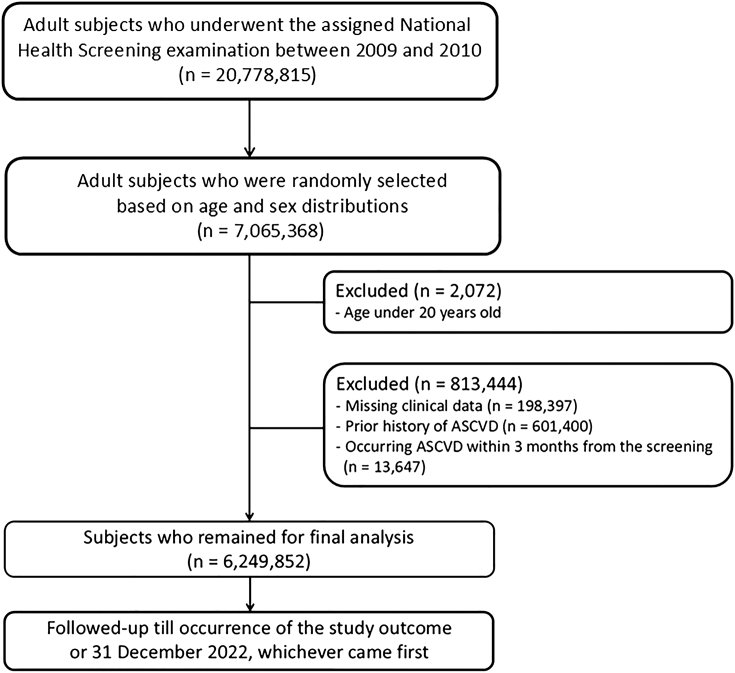
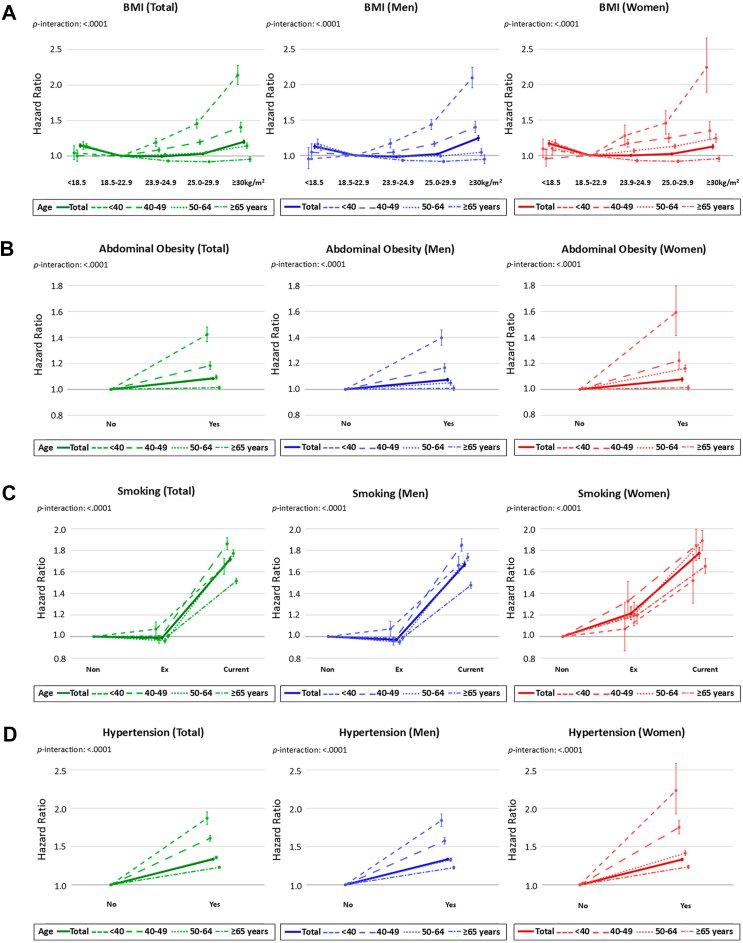
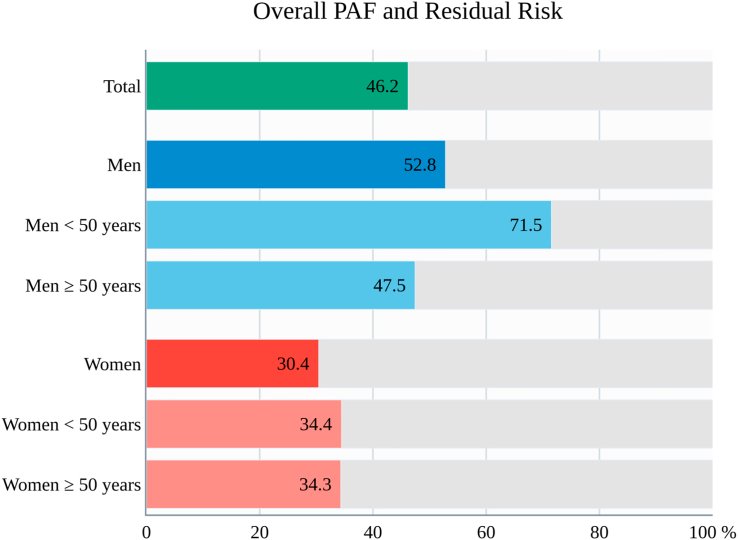
그림 출처: PubMed Central 공개 논문 (PMC13085072)
Conflict of interest statement
The authors have declared no conflict of interest.
그 밖의 정보
- 출판 형태
- Journal Article
- 저널
- The Lancet regional health. Western Pacific · eISSN 2666-6065
- 전자 출판
- 2026-04-03
- 참고문헌
- 39편