Department of Internal Medicine, Seoul National University College of Medicine, Seoul, Korea.
School of Biological Sciences, Seoul National University, Seoul, Korea.
School of Interdisciplinary Bioscience and Bioengineering, Pohang University of Science and Technology, Pohang, Korea.
Lee Gil Ya Cancer and Diabetes Institute, Gachon University, Incheon, Korea.
Division of Endocrinology, Diabetes and Metabolism, Department of Medicine, Beth Israel Deaconess Medical Center and Harvard Medical School, Boston, MA Department of Molecular Medicine and Biopharmaceutical Sciences, Graduate School of Convergence Science and Technology, College of Medicine, Seoul National University, Seoul, Korea.
Department of Internal Medicine, Seoul National University College of Medicine, Seoul, Korea kspark@snu.ac.kr suschung@snu.ac.kr.
Department of Internal Medicine, Seoul National University College of Medicine, Seoul, Korea Department of Molecular Medicine and Biopharmaceutical Sciences, Graduate School of Convergence Science and Technology, College of Medicine, Seoul National University, Seoul, Korea kspark@snu.ac.kr suschung@snu.ac.kr.
Abstract
Small ubiquitin-like modifier (SUMO)-specific proteases (SENPs) that reverse protein modification by SUMO are involved in the control of numerous cellular processes, including transcription, cell division, and cancer development. However, the physiological function of SENPs in energy metabolism remains unclear. Here, we investigated the role of SENP2 in fatty acid metabolism in C2C12 myotubes and in vivo. In C2C12 myotubes, treatment with saturated fatty acids, like palmitate, led to nuclear factor-κB-mediated increase in the expression of SENP2. This increase promoted the recruitment of peroxisome proliferator-activated receptor (PPAR)δ and PPARγ, through desumoylation of PPARs, to the promoters of the genes involved in fatty acid oxidation (FAO), such as carnitine-palmitoyl transferase-1 (CPT1b) and long-chain acyl-CoA synthetase 1 (ACSL1). In addition, SENP2 overexpression substantially increased FAO in C2C12 myotubes. Consistent with the cell culture system, muscle-specific SENP2 overexpression led to a marked increase in the mRNA levels of CPT1b and ACSL1 and thereby in FAO in the skeletal muscle, which ultimately alleviated high-fat diet-induced obesity and insulin resistance. Collectively, these data identify SENP2 as an important regulator of fatty acid metabolism in skeletal muscle and further implicate that muscle SENP2 could be a novel therapeutic target for the treatment of obesity-linked metabolic disorders.
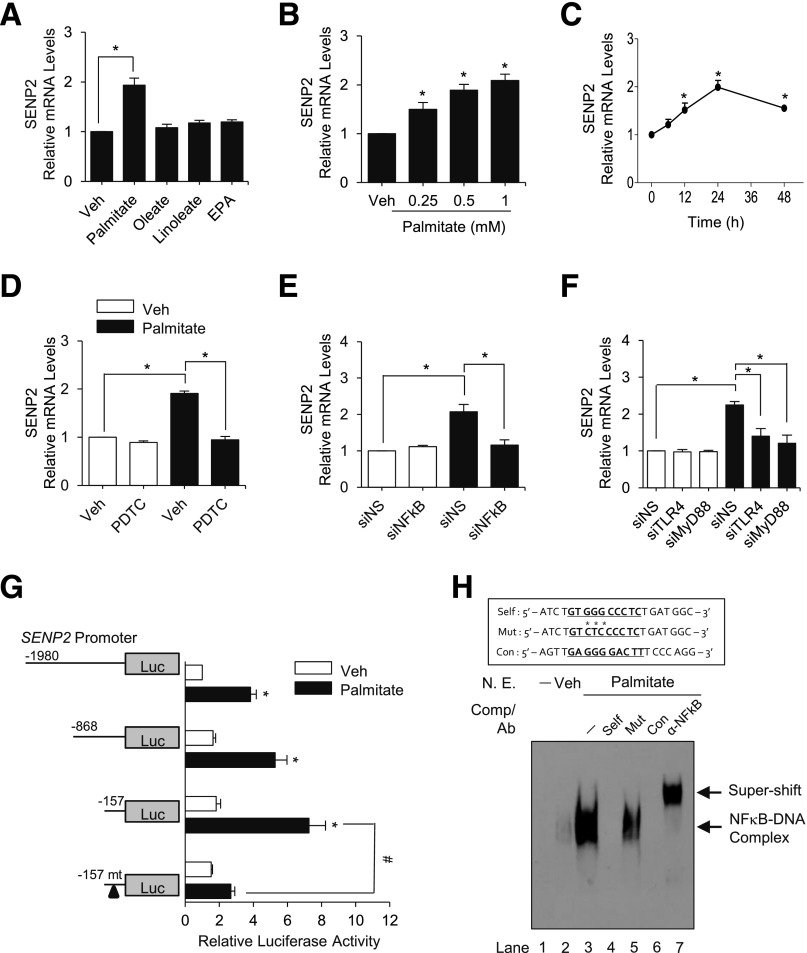
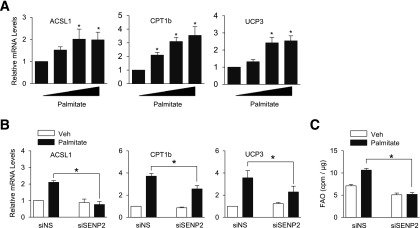
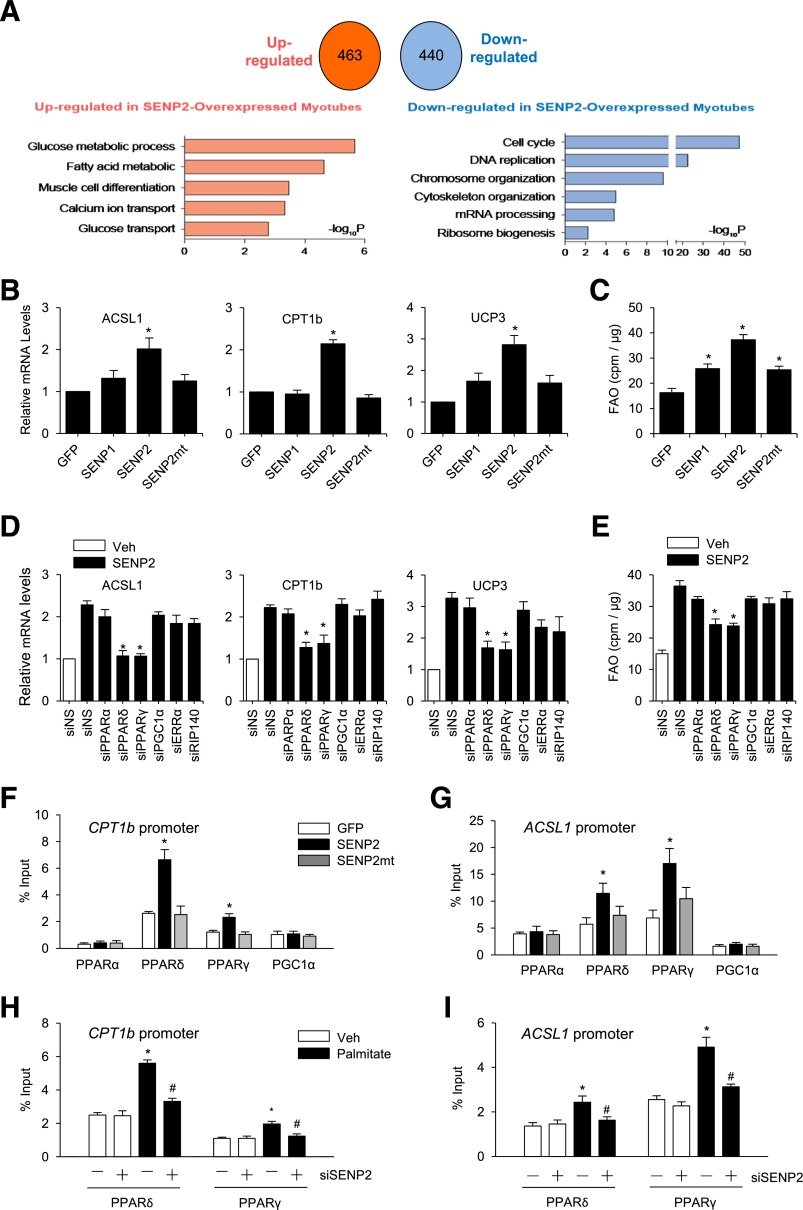
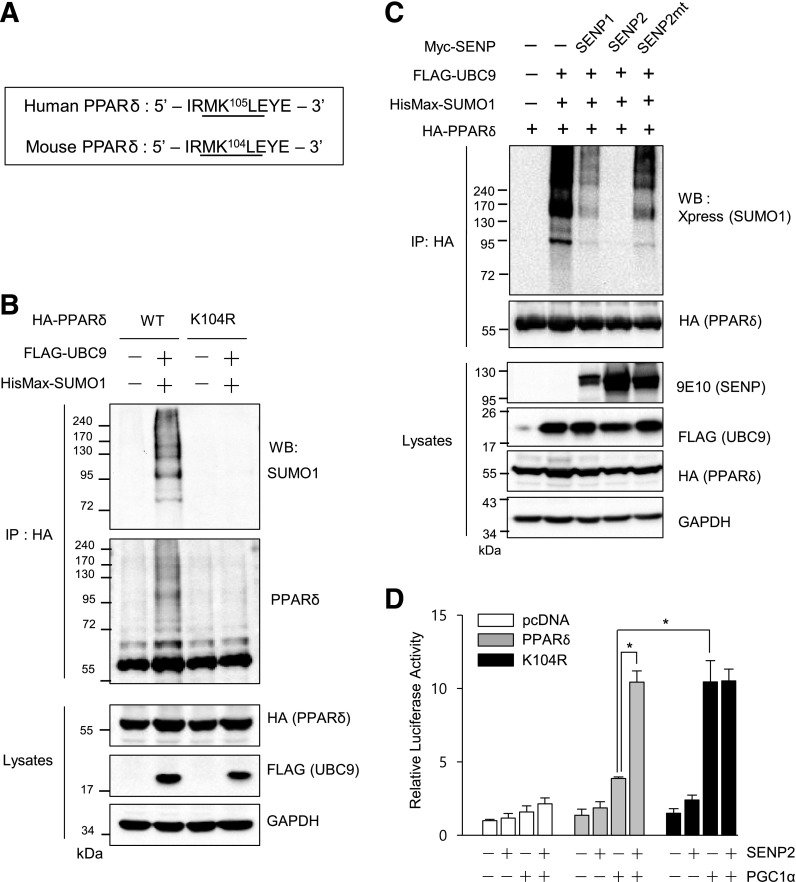
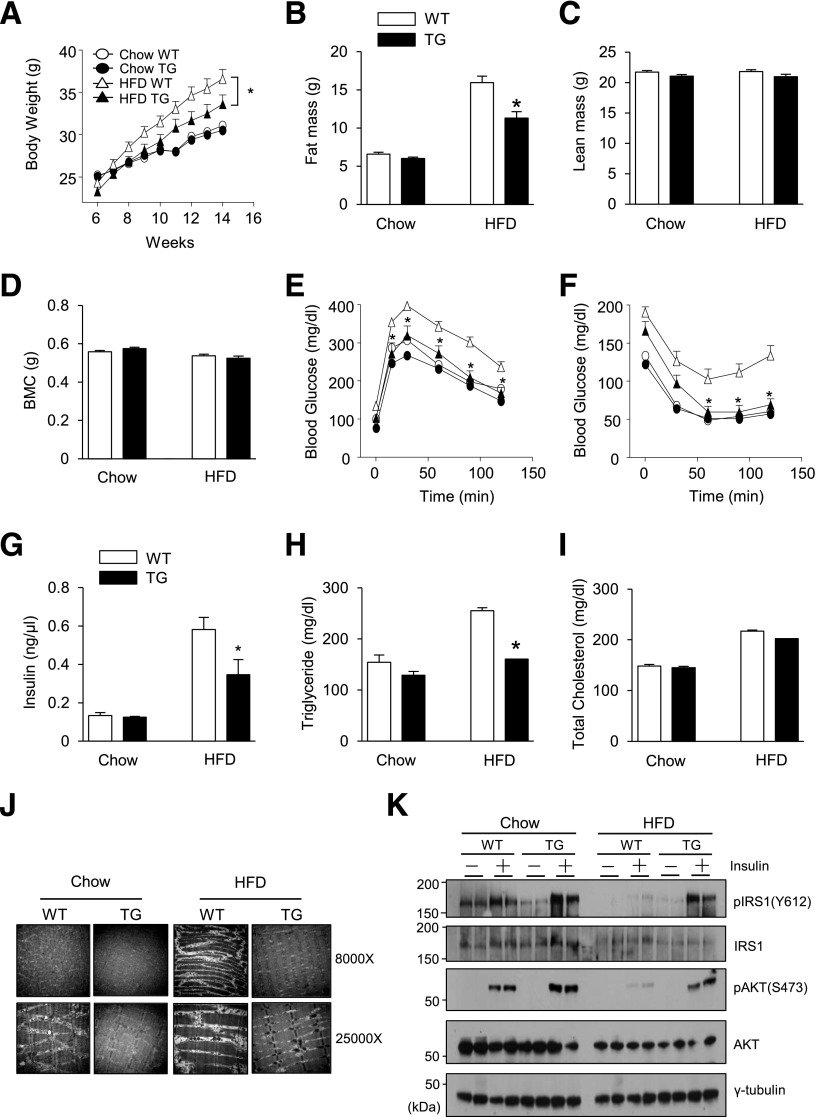
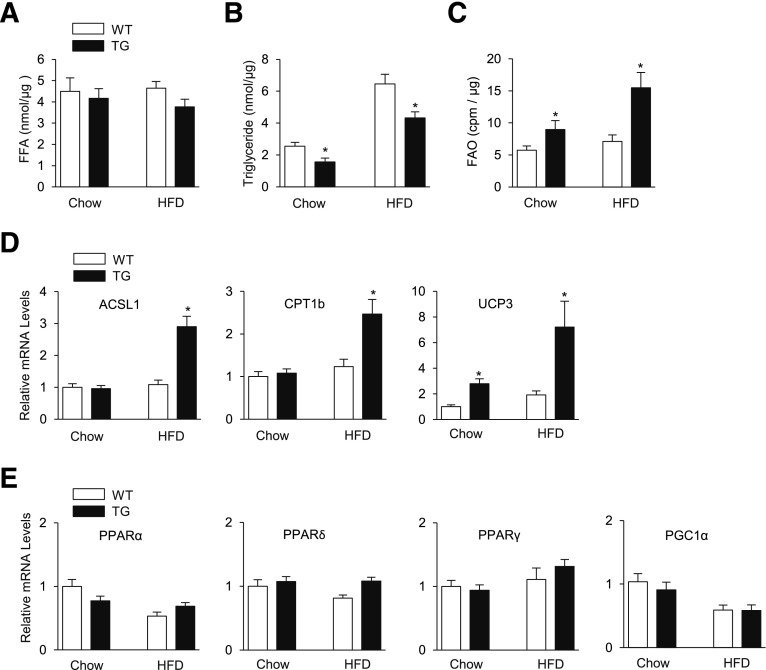
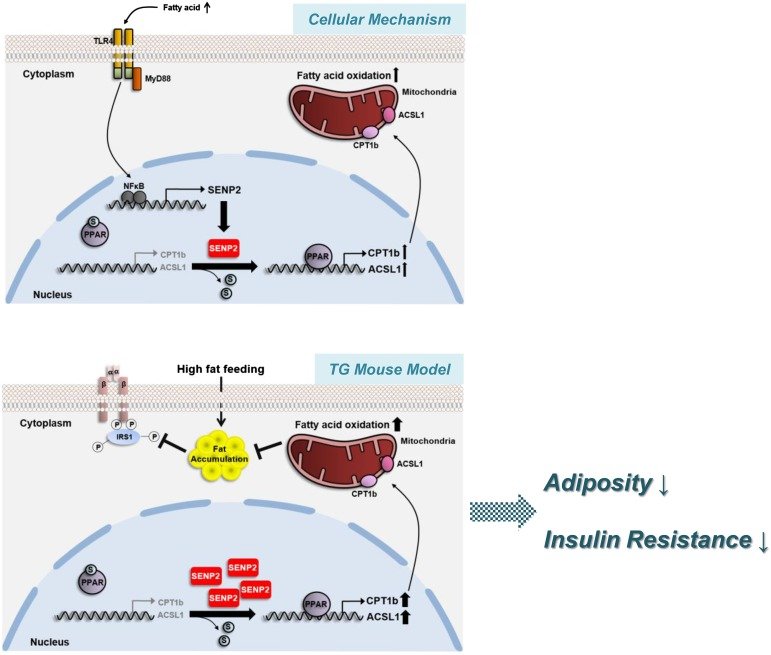
Figure 1Expression of SENP2 mRNA is regulated by palmitate-induced NF-κB activation. A: C2C12 myotubes were treated with various fatty acids (0.5 mmol/L) for 24 h. Free fatty acids (100 mmol/L in EtOH) were diluted in the culture medium containing fatty acid–free BSA in a 1:3 molar ratio. The mRNA levels of SENP2 were then determined by real-time PCR. Each Ct value was subtracted by Ct value of GAPDH (ΔCt) and then subtracted by the ΔCt of each control set (ddCt). Relative mRNA levels were expressed as 2−ddCt. The SENP2 mRNA level of untreated cells (vehicle [Veh]) was expressed as 1.0, and the others were expressed as its relative values. Data are the mean ± SEM of five independent experiments. *P < 0.05. B: C2C12 myotubes were treated with increasing amounts of palmitate for 24 h (n = 4). *P < 0.05 compared with untreated cells (Veh). C: C2C12 myotubes were treated with 0.5 mmol/L palmitate for increasing periods and then subjected to assay for SENP2 mRNA levels (n = 5). *P < 0.05 compared with untreated cells. D: C2C12 myotubes were treated with palmitate in the absence or presence of 10 μmol/L pyrrolidine dithiocarbamate (n = 4). *P < 0.05. E: C2C12 myotubes were transfected with siRNA against NF-κB (50 nmol/L) for 24 h and then treated with palmitate for 24 h (n = 3). *P < 0.05. F: C2C12 myotubes transfected with the indicated siRNAs were treated with palmitate (n = 4). *P < 0.05. G: C2C12 myoblasts were transfected with Luc reporter vectors harboring various deletions of promoter region in the SENP2 gene. After treatment with palmitate for 24 h, they were subjected to assay for Luc activity (n = 4). The arrowhead indicates the mutations shown in H. The Luc activity of the cells transfected with (−1980)-Luc without palmitate was set to 1, and the other values were expressed relative to that. *P < 0.05 compared with untreated cells; #P < 0.05. H: The putative NF-κB–binding sequence in the SENP2 promoter (−85 bp to −54 bp) is underlined in “Self.” The underline in “Con” (consensus) indicates the consensus NF-κB–binding sequence. *Mutated (Mut) bases (upper panel). Nuclear extracts were prepared from C2C12 myotubes that had been incubated without (Veh) and with palmitate for 24 h. They were then subjected to EMSA assay using a biotin-labeled probe (lower panel). For competition assays, unlabeled oligonucleotides (50-fold) (Self, Mut, and Con) were used as competitors (Comp). NF-κB antibody (Ab) was used for supershift. Lane 1 represented the probe only. siNS, nonspecific siRNA.Figure 2SENP2 is responsible for palmitate-mediated increase of FAO. A: Total RNAs were prepared from C2C12 myotubes that had been treated with 0.25, 0.5, or 1 mmol/L palmitate for 24 h. They were then subjected to real-time PCR (n = 4). *P < 0.05 compared with untreated cells. B and C: Myotubes were transfected with siRNAs against SENP2 (siSENP2). After incubation for 24 h, they were treated with 0.5 mmol/L palmitate (n = 5). The mRNA levels for the indicated proteins (B) and FAO (C) were then determined. siNS, nonspecific siRNA. *P < 0.05.Figure 3SENP2 increases FAO by promoting PPARδ- and PPARγ-mediated expression of FAO-associated enzymes. A: Total RNA was isolated from C2C12 myotubes that had been infected with Ad-GFP or Ad-SENP2 for 3 days and then subjected to microarray. Differentially expressed genes were identified as those with false discovery rates <0.05 and fold change larger than the cutoff of 1.5. B: C2C12 myotubes were infected with Ad-GFP, Ad-SENP1, Ad-SENP2, or Ad-SENP2mt for 3 days. Total RNAs were obtained from the cells and then subjected to real-time PCR (n = 4). C: Cells prepared as in B were subjected to FAO assay (n = 5). *P < 0.05 compared with Ad-GFP infected cells. D and E: C2C12 myotubes transfected with the indicated siRNAs were infected with Ad-GFP or Ad-SENP2. siNS, nonspecific siRNA. After incubation for 48 h, the mRNA levels of FAO-associated enzymes (n = 4) and FAO (n = 6) were determined. *P < 0.05 compared with cells transfected with nonspecific siRNA and Ad-SENP2. F and G: C2C12 myotubes infected with Ad-GFP, Ad-SENP2, or Ad-SENP2mt were subjected to ChIP-qPCR analysis with the CPT1b promoter region (F) and ACSL1 promoter region (G). Data are the means ± SEM (n = 4). *P < 0.05 compared with Ad-GFP–infected cells. H and I: C2C12 myotubes were treated with siSENP2 for 24 h followed by treatment of palmitate (500 μmol/L) for 24 h and then subjected to ChIP-qPCR (n = 3). Veh, vehicle. *P < 0.05 compared with nonspecific siRNA without palmitate. #P < 0.05 compared with nonspecific siRNA with palmitate.Figure 4SENP2 promotes the PPARδ activity by desumoylation. A: The putative sumoylation sequences of human and mouse PPARδ are shown. B: HA-tagged PPARδ and its K104R mutant were expressed in MCF7 cells with HisMax-SUMO1 and FLAG-UBC9. Cell lysates were subjected to immunoprecipitation (IP) with anti-HA antibody followed by Western blotting (WB) with anti-SUMO1 and anti-PPARδ antibodies. Cell lysates were also directly probed with the indicated antibodies. C: HA-PPARδ, HisMax-SUMO1, and FLAG-UBC9 were expressed with Myc-tagged SENP1 or SENP2 or its mutant (SENP2mt). Immunoprecipitation was then carried out as in B. D: COS7 cells were treated with siRNAs (50 nmol/L) against PPARγ to minimize the effect of endogenous PPARγ. The following day, cells were transfected with pPPRE-TK–Luc and expression vectors of SENP2, PGC1α, PPARδ, or PPARδ K104R. Luc activity of cells transfected with pPPRE-TK-Luc only was expressed as 1.0, and the others were expressed as its relative values (n = 4). *P < 0.05.Figure 5Muscle-specific SENP2 overexpression alleviates HFD-induced obesity and insulin resistance. A: WT and mSENP2-TG (TG) mice at 8 weeks were fed with a standard chow diet or HFD, consisting of 60% fat and 6.8% sucrose, for the next 12 weeks. Their body weights were measured every day for 14 weeks (n = 15–20/group). Data are the mean ± SEM. *P < 0.05. B–D: Body fat mass (B), lean mass (C), and bone mineral contents (BMC) (D) were measured after feeding the mice with chow or HFD for 10 weeks using DXA scanning. *P < 0.05. E and F: Glucose tolerance test (E) and insulin tolerance test (F) were performed. *P < 0.05. G–I: The levels of insulin (G), triglycerides (H), and total cholesterol (I) in serum were measured. *P < 0.05. Note that the P values were in comparison with WT mice fed with HFD (B and E–H). J: Sections of gastrocnemius muscle tissues were obtained and then subjected to electron microscopy. K: Mice were treated with insulin for 20 min before sacrifice. Extracts prepared from the gastrocnemius muscle were subjected to immunoblot with respective antibodies.Figure 6SENP2 overexpression increases FAO by upregulating expression of FAO-associated enzymes in muscle. A–C: WT and mSENP2-TG (TG) mice were fed with chow or HFD for 12 weeks. The levels of free fatty acids (FFA) (A), triglycerides (B), and FAO (C) in their gastrocnemius muscle were determined (n = 8/group). D and E: Total mRNAs were isolated from the muscles of the mice and subjected to real-time PCR (n = 10–14/group) using primers for FAO-associated enzymes (D) and PPARs and PGC1α (E). The mRNA level seen in chow-fed WT mice muscle was expressed as 1.0, and the others were expressed as its relative values. Data are the mean ± SEM. *P < 0.05 compared with WT mice.Figure 7Schematic model shows the role of SENP2 in the control of lipid metabolism in skeletal muscle. Upon sensing by saturated free fatty acids, TLR4/MyD88 activates NF-κB for expression of SENP2 mRNA, which would increase the cellular level of SENP2 protein for desumoylation of PPARδ and PPARγ. These transcription factors are then recruited to the promoters of the genes encoding FAO-associated enzymes, such as ASCL1 and CPT1b, which leads to increase of FAO (the upper panel). Muscle-specific overexpression of SENP2 in TG mice increases the expression of FAO-associated enzymes and thereby increases FAO. This increase would elevate fat utilization and suppress its accumulation, which could alleviate HFD-induced obesity and insulin resistance (lower panel). S, SUMO.
그림 출처: PubMed Central 공개 논문 (PMC4477359)
그 밖의 정보
출판 형태
Journal Article, Research Support, N.I.H., Extramural, Research Support, Non-U.S. Gov't