
ESMO Open. 2021;6(6):100309.
Pan-Asian adaptation of the EHNS-ESMO-ESTRO Clinical Practice Guidelines for the diagnosis, treatment and follow-up of patients with squamous cell carcinoma of the head and neck.
제1저자 김범석 · 교신저자 김범석
소속 (25)
- Department of Internal Medicine, Seoul National University Hospital, Seoul, Korea. Electronic address: bhumsuk@snu.ac.kr.
- Service d'Oncologie Médicale, Institut Roi Albert II, Cliniques Universitaires Saint-Luc, Brussels, Belgium.
- Division of Medical Oncology, Department of Internal Medicine, Yonsei Cancer Center, Yonsei University College of Medicine, Seoul, South Korea.
- Head and Neck Cancer Medical Oncology Department, Fondazione IRCCS Istituto Nazionale dei Tumori and University of Milan, Milan, Italy.
- Department of Head and Neck Surgery, Poznan University of Medical Sciences, The Greater Poland Cancer Centre, Poznan, Poland.
- Department of Radiation Oncology, Centre Léon Bérard, Lyon, France.
- Division of Hematology and Medical Oncology, Department of Internal Medicine, Kangbuk Samsung Hospital, Sungkyunkwan University School of Medicine, Seoul, South Korea.
- Department of Radiation Oncology, LMU Hospital, Munich, Germany.
- Department of Medical Oncology, Shanghai East Hospital, Tongji University School of Medicine, Shanghai, China.
- Medical Oncology, Basavatarakam Indo American Cancer Hospital and Research Institute, Hyderabad, India.
- Department of Head and Neck Medical Oncology, National Cancer Center Hospital East, Chiba, Japan.
- Clinical Oncology, Prince Court Medical Centre, Kuala Lumpur, Malaysia.
- Department of Medical Oncology, National Cancer Centre, Singapore, Singapore.
- Institute of Clinical Medicine, National Yang Ming Chiao Tung University, Taipei, Taiwan.
- Division of Hemato-oncology, Department of Internal Medicine, Keelung Chang Gung Memorial Hospital and Chang Gung University College of Medicine, Taoyuan, Taiwan.
- Division of Medical Oncology, National Cancer Centre, Singapore, Singapore.
- Clinical Oncology Unit, Faculty of Medicine, University of Malaya, Kuala Lumpur, Malaysia.
- Oncology/Hematology, Cancer Center, Kobe University Hospital, Kobe, Japan.
- Department of Medical Oncology, Kidwai Memorial Institute of Oncology, Bangalore, India.
- Department of Clinical Oncology, Union Hospital, Tongji Medical College, Huazhong University of Science and Technology, Wuhan, China.
- Department of Oncology and Hemato-Oncology, University of Milan, Milan, Italy; Istituto Europeo di Oncologia, IRCCS, Milano, Italy.
- Department of Oncology, Centre Hospitalier Universitaire Vaudois (CHUV), Lausanne, Switzerland.
- Department of Oncology, Asan Medical Center, University of Ulsan College of Medicine, Seoul, Korea.
- Department of Gastroenterology and Gastrointestinal Oncology, National Cancer Center East, Chiba, Japan.
- ESMO, Lugano, Switzerland.
Abstract
The most recent version of the European Society for Medical Oncology (ESMO) Clinical Practice Guidelines for the diagnosis, treatment and follow-up of squamous cell carcinoma (SCC) of the oral cavity, larynx, oropharynx and hypopharynx was published in 2020. It was therefore decided by both the ESMO and the Korean Society of Medical Oncology (KSMO) to convene a special, virtual guidelines meeting in July 2021 to adapt the ESMO 2020 guidelines to consider the potential ethnic differences associated with the treatment of SCCs of the head and neck (SCCHN) in Asian patients. These guidelines represent the consensus opinions reached by experts in the treatment of patients with SCCHN (excluding nasopharyngeal carcinomas) representing the oncological societies of Korea (KSMO), China (CSCO), India (ISMPO), Japan (JSMO), Malaysia (MOS), Singapore (SSO) and Taiwan (TOS). The voting was based on scientific evidence and was independent of the current treatment practices and drug access restrictions in the different Asian countries. The latter was discussed when appropriate. This manuscript provides a series of expert recommendations (Clinical Practice Guidelines) which can be used to provide guidance to health care providers and clinicians for the optimisation of the diagnosis, treatment and management of patients with SCC of the oral cavity, larynx, oropharynx and hypopharynx across Asia.
Copyright © 2021 The Authors. Published by Elsevier Ltd.. All rights reserved.
Keywords
ESMOPan-Asianguidelineshead and necksquamous cell carcinomatreatment
Figures
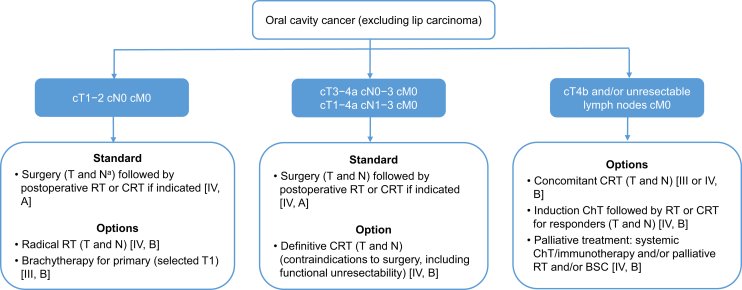
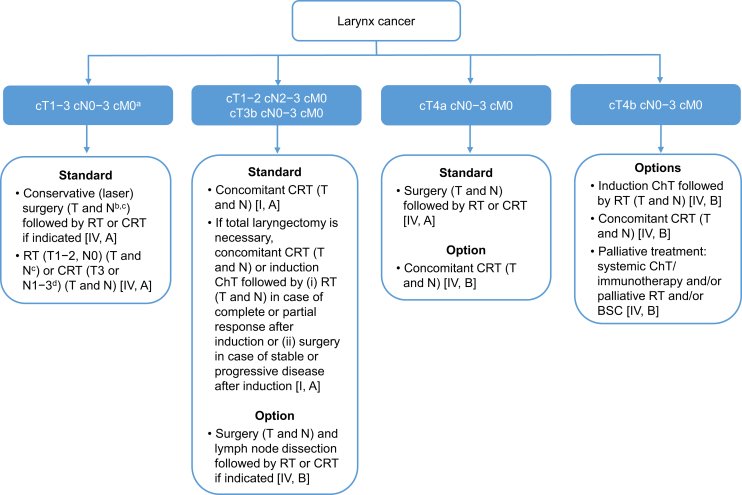
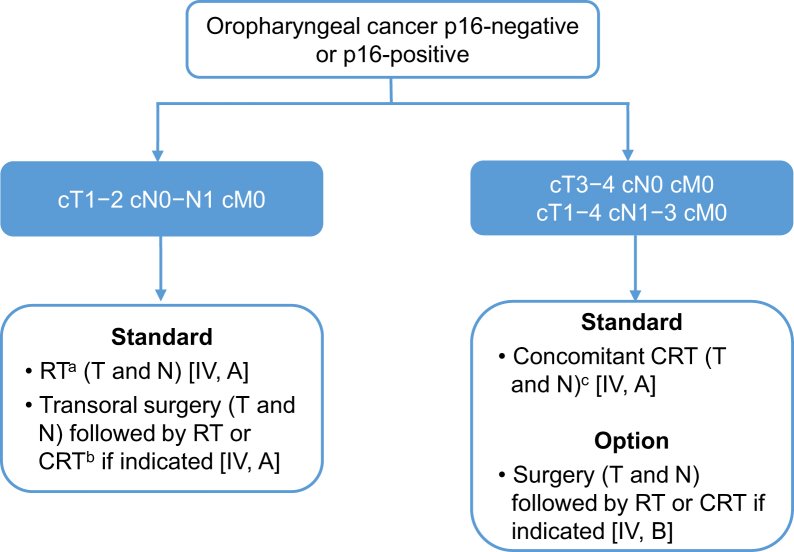
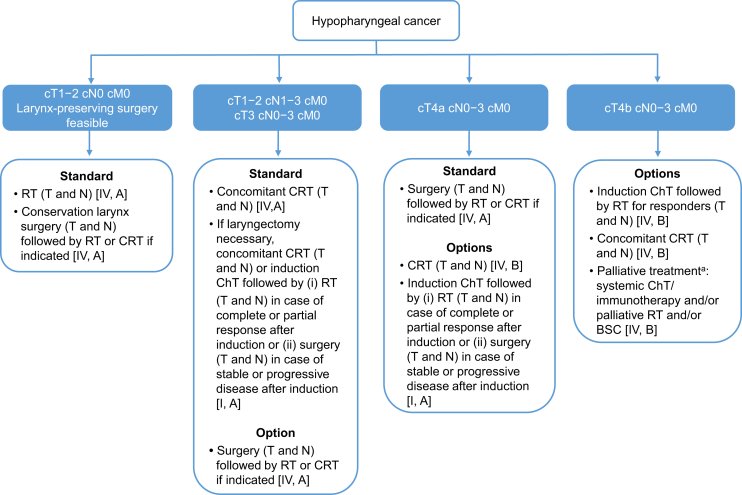
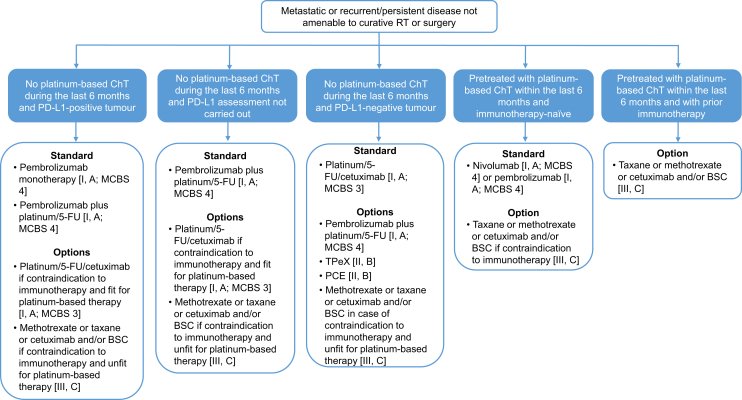
그림 출처: PubMed Central 공개 논문 (PMC8710460)
Conflict of interest statement
Disclosure BK declares grants or contracts from Merck Sharp & Dohme (MSD) Oncology, Ono Pharmaceutical and AstraZeneca, consulting fees from AstraZeneca, MSD Oncology, ABL Bio, Genexine, Cellid, Handok, Celid, Trial Informatics and CBS Bio, payment or honoraria from MSD Oncology and Merck. J-PM declares consulting fees/honoraria from Pfizer, Roche, AstraZeneca, Bayer, Innate, Merck Serono, Boehringer, Bristol Myers Squibb (BMS), Novartis, Janssen, Incyte, Cue Biopharma, ALX Oncology, iTEOS, TheRNA and NEKTAR, support for attending meetings and/or travel from Amgen, Pfizer and MSD and participation at a Safety or Advisory Board for PsiOxus. LL declares institutional grants or contracts from AstraZeneca, BMS, Boehringer Ingelheim, Celgene International, Eisai, Exelixis Inc, Debiopharm International SA, Hoffman-La Roche Ltd., IRX Therapeutics Inc., Medpace Inc., Merck-Serono, MSD, Novartis, Pfizer, Roche Spa and Buran and receipt of honoraria or fees (for public speaking/teaching in medical meetings and/or for providing expert opinion in Advisory Boards) for AstraZeneca, Bayer, BMS, Eisai, MSD, Merck-Serono, Boehringer Ingelheim, Hoffman La Roche Ltd., Novartis, Roche, Debiopharm International SA, Sobi, Incyte Biosciences Italy SRL, Doxa Pharma, Amgen, Nanobiotics and GlaxoSmithKline (GSK). CB declares payment or honoraria from Merck KGaA, BMS and Roche. MT declares consulting fees from Ono Pharmaceuticals, MSD, BMS and Merck Biopharma, and honoraria from Eisai, Ono Pharmaceuticals, BMS and Merck Biopharma. MA declares consulting fees from MSD, AstraZeneca, Eli Lilly, DKSH, Eisai, Roche, Novartis and Merck, payment or honoraria from MSD, AstraZeneca, Eli Lilly, DKSH, Eisai, Roche, Novartis and Merck, support for attending meetings and/or travel from MSD, Roche, Elekta/Abex and AstraZeneca, and is the president of the Malaysian Oncological Society. MKA declares honoraria for presentations from Pfizer and Boehringer Ingelheim, sponsorship for meetings from AstraZeneca, Boehringer Ingelheim and DKSH. QSNg declares support for attending meetings and or travel from BMS, Boehringer Ingelheim, MSD and Astellas, and participation in Safety or Advisory Boards for MSD and Boehringer Ingelheim. WIWZ declares honoraria for lectures from Amgen Malaysia, DKSH Malaysia, Eisai Malaysia, Eli Lilly Malaysia, Ipsen Malaysia, MSD Corp., a subsidiary of Merck & Co., Inc., Kenilworth, NJ, USA, Merck Serono Malaysia, Pfizer Malaysia and Roche Malaysia, travel grants from Amgen Malaysia, Celgene Malaysia, Eisai Malaysia, Eli Lilly Malaysia, MSD Corp., a subsidiary of Merck & Co., Inc., Kenilworth, NJ, USA, and Roche Malaysia, participation on an Advisory Board for Celgene Malaysia, Roche Malaysia, Eli Lilly Malaysia, Eisai Malaysia and MSD Corp., a subsidiary of Merck & Co., Inc., Kenilworth, NJ, USA, and is a member of ASCO AP Regional Council and Greater Petaling Cancer City Challenge UICC. NK declares institutional grants or contracts from Ono Pharmaceutical, BMS, AstraZeneca, Pfizer, Chugai Pharmaceutical, Rakuten Medical, Bayer and Adlai Nortye, payment or honoraria from Ono Pharmaceutical, BMS, Merck Biopharma, MSD, Eisai and Bayer, participation on a Data Safety Monitoring Board or Advisory Board for Bayer and Adlai Nortye. GC declares institutional grants from Merck, consulting fees from BMS, Pfizer, MSD, AstraZeneca, Daichii Sankyo, Lilly, Novartis and Seattle Genetics, payment or honoraria from AstraZeneca, Roche and Daichii Sankyo. SP declares fees for consultancy/advisory roles from AbbVie, Amgen, AstraZeneca, Bayer, Beigene, Biocartis, Boehringer Ingelheim, BMS, Clovis, Daiichi Sankyo, Debiopharm, ecancer, Eli Lilly, Elsevier, Foundation Medicine, Illumina, Imedex, Incyte, Janssen, Medscape, MSD, Merck Serono, Merrimack, Novartis, PharmaMar, Phosplatin Therapeutics, PER, Pfizer, PRIME, Regeneron, Roche/Genentech, RTP, Sanofi, Seattle Genetics, Takeda, speaker roles for AstraZeneca, Boehringer Ingelheim, BMS, ecancer, Eli Lilly, Illumina, Imedex, Medscape, MSD, Novartis, PER, Pfizer, Prime, Roche/Genentech, RTP, Sanofi, Takeda and the receipt of grants/research support: (Sub) investigator in trials (institutional financial support for trials) sponsored by Amgen, AstraZeneca, Biodesix, Boehringer Ingelheim, BMS, Clovis, GSK, Illumina, Lilly, MSD, Merck Serono, Mirati, Novartis, and Pfizer, Phosplatin Therapeutics, Roche/Genentech. TWK declares institutional grants or contracts from Roche, and sanofi-aventis. TY declares institutional grants or contracts from Taiho Pharmaceutical, Sumitomo Dainippon, Ono Pharmaceutical, Chugai Pharmaceutical, Amgen, Parexel International, MSD, Daiichi-Sankyo and Sanofi. All other authors have declared no conflicts of interest.
그 밖의 정보
- 출판 형태
- Practice Guideline, Research Support, Non-U.S. Gov't, Journal Article
- 저널
- ESMO open · eISSN 2059-7029
- 전자 출판
- 2021-11-26
- MeSH
- Carcinoma, Squamous Cell* / diagnosis / therapy · Follow-Up Studies · Head and Neck Neoplasms* / diagnosis / therapy · Humans · Medical Oncology · Squamous Cell Carcinoma of Head and Neck / diagnosis / therapy
- 참고문헌
- 48편