
J Clin Biochem Nutr. 2015;57(2):129-34.
Effect of administering a multi-species probiotic mixture on the changes in fecal microbiota and symptoms of irritable bowel syndrome: a randomized, double-blind, placebo-controlled trial.
제1저자 윤혁, 박영수 · 교신저자 이동호
소속 (3)
- Departments of Internal Medicine, Seoul National University Bundang Hospital, Gyeonggi-do 463-707, Korea.
- Departments of Internal Medicine, Seoul National University Bundang Hospital, Gyeonggi-do 463-707, Korea ; Department of Internal Medicine and Liver Research Institute, Seoul National University College of Medicine, Seoul 110-744, Korea.
- Cell Biotech, Co., Ltd., Seoul 415-872, Korea.
Abstract
We assessed the effect of multi-species probiotic mixture on the changes in fecal microbiota and irritable bowel syndrome (IBS) symptoms. Eighty-one IBS patients were randomly assigned to receive either probiotic mixture (n = 39; containing Lactobacillus acidophilus, L. rhamnosus, Bifidobacterium breve, B. actis, B. longum, and Streptococcus thermophilus) or placebo (n = 42) for 4 weeks. A questionnaire regarding general symptom relief was administered. The change in total symptom scores (sum of 10 IBS symptoms) and subtotal scores in 4 domains (pain, constipation, diarrhea, and bloating/gas) were evaluated. The change in fecal flora was determined by quantitative real-time PCR. The concentration of probiotic strains significantly increased after ingestion in probiotics group (B. bifidum, p = 0.043; B. lactis, p<0.001; L. acidophilus, p = 0.016; L. rhamnosus, p<0.001). The proportion of patients with adequate symptom relief was higher in probiotics group than in placebo group (74.4% vs 61.9%, p = 0.230). The decrease in total symptom score over time was not significantly different between the groups (p = 0.703). Among subtotal scores of 4 IBS symptom domains, the time effect was significantly different for diarrhea-symptom score between the groups (p = 0.017). A 4-week administration of multi-species probiotic mixture significantly increased the fecal concentration of most probiotic strains and improved diarrhea-symptom scores in IBS patients.
Keywords
diarrheafecal microbiotairritable bowel syndromeprobioticstreatment
Figures
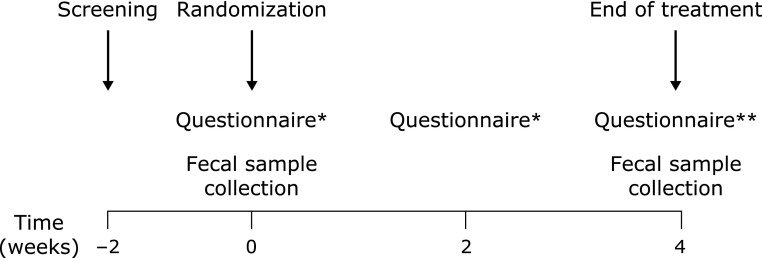
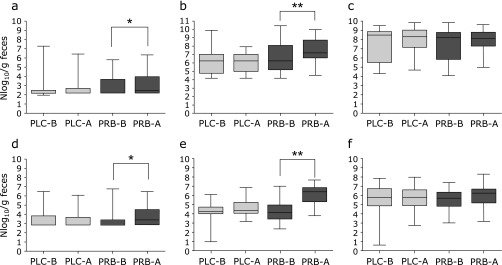
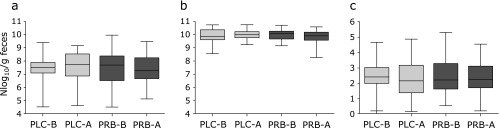
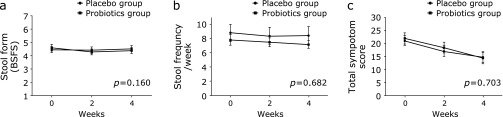
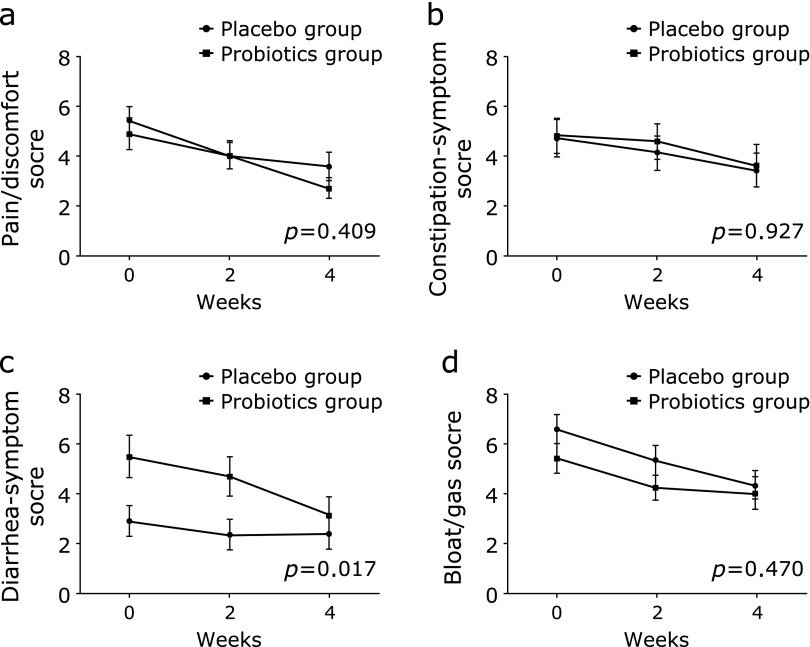
그림 출처: PubMed Central 공개 논문 (PMC4566021)
그 밖의 정보
- 출판 형태
- Journal Article
- 저널
- Journal of clinical biochemistry and nutrition · ISSN 0912-0009
- 전자 출판
- 2015-06-30
- 참고문헌
- 24편