
Korean Circ J. 2023;53(10):655-676.
Sex Differences in Coronary Artery Disease: Insights From the KoRean wOmen'S chest pain rEgistry (KoROSE).
제1저자 김학령 · 교신저자 김명아
소속 (2)
- Division of Cardiology, Department of Internal Medicine, Seoul National University College of Medicine, Seoul Metropolitan Government-Seoul National University Boramae Medical Center, Seoul, Korea.
- Division of Cardiology, Department of Internal Medicine, Seoul National University College of Medicine, Seoul Metropolitan Government-Seoul National University Boramae Medical Center, Seoul, Korea. kma@snu.ac.kr.
Abstract
Interest in sex differences in coronary artery disease (CAD) has been steadily increasing. Concurrently, most of the data on these differences have primarily been Western-oriented. The KoRean wOmen'S chest pain rEgistry (KoROSE), started in 2011, has since published numerous research findings. This review aims to summarize the reported differences between men and women in CAD, integrating data from KoROSE. Cardiovascular risk in postmenopausal women escalates dramatically due to the decrease in estrogen levels, which normally offer cardiovascular protective effects. Lower estrogen levels can lead to abdominal obesity, insulin resistance, increased blood pressure, and endothelial dysfunction in older women. Upon analyzing patients with CAD, women are typically older and exhibit more cardiovascular risk factors than men. Diagnosing CAD in women tends to be delayed due to their symptoms being more atypical than men's. While in-hospital outcome was similar between sexes, bleeding complications after percutaneous coronary intervention occur more frequently in women. The differences in long-term prognosis for CAD patients between men and women are still a subject of ongoing debate. Pregnancy and reproductive factors also play a significant role as risk factors for cardiovascular disease in women. A notable sex disparity exists, with women found to use fewer cardiovascular protective drugs and undergo fewer interventional or surgical procedures than men. Additionally, women participate less frequently than men in clinical research. Through concerted efforts to increase awareness of sex differences and mitigate sex disparity, personalized treatment can be provided. This approach can ultimately improve patient prognosis.
Copyright © 2023. The Korean Society of Cardiology.
Keywords
Coronary artery diseaseSex differencesWomen's health
Figures
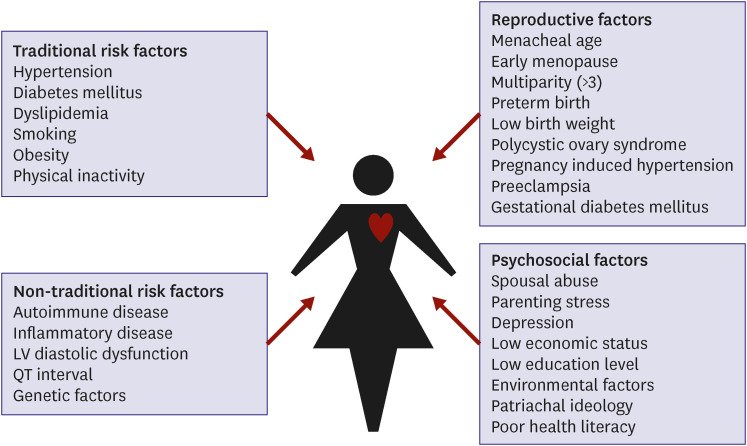
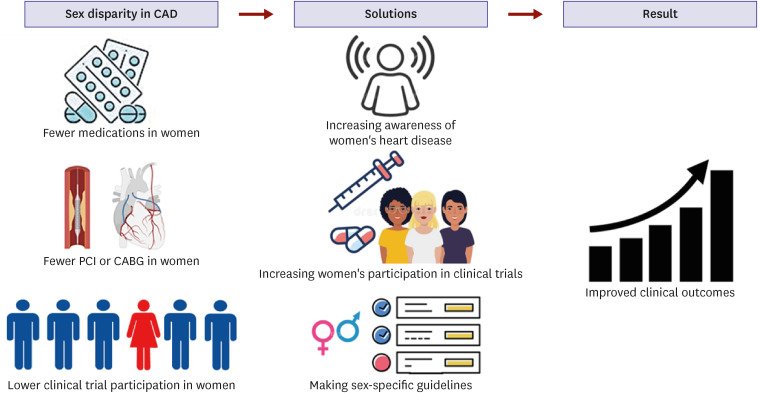
그림 출처: PubMed Central 공개 논문 (PMC10625849)
Conflict of interest statement
The authors have no financial conflicts of interest.
그 밖의 정보
- 출판 형태
- Journal Article, Review
- 저널
- Korean circulation journal · ISSN 1738-5520
- 참고문헌
- 160편